The Silk Road Journal · Buying · Britain · Gulf, Asia and the US
Tattersalls Horses in Training Sale 2026: what Gulf, Asian and US buyers should know
Four days in Newmarket. About a thousand horses that already race, with form you can read, ratings you can check and, now and then, a wind problem you can hear. Here is how an owner in Dubai, Riyadh, Doha, Hong Kong, Tokyo or Kentucky buys well there, without getting up at 5am to bid against himself.
Khalid, Mrs Lau, Bill from Kentucky and the Cousin Who Has Read One Racing Post are invented. Facts are sourced at the end; dates, rules and charges can change, so anything marked "check official site" should be checked at tattersalls.com. Nothing here is financial, tax or legal advice. No horse in this article is for sale, and we never pick lots in public.
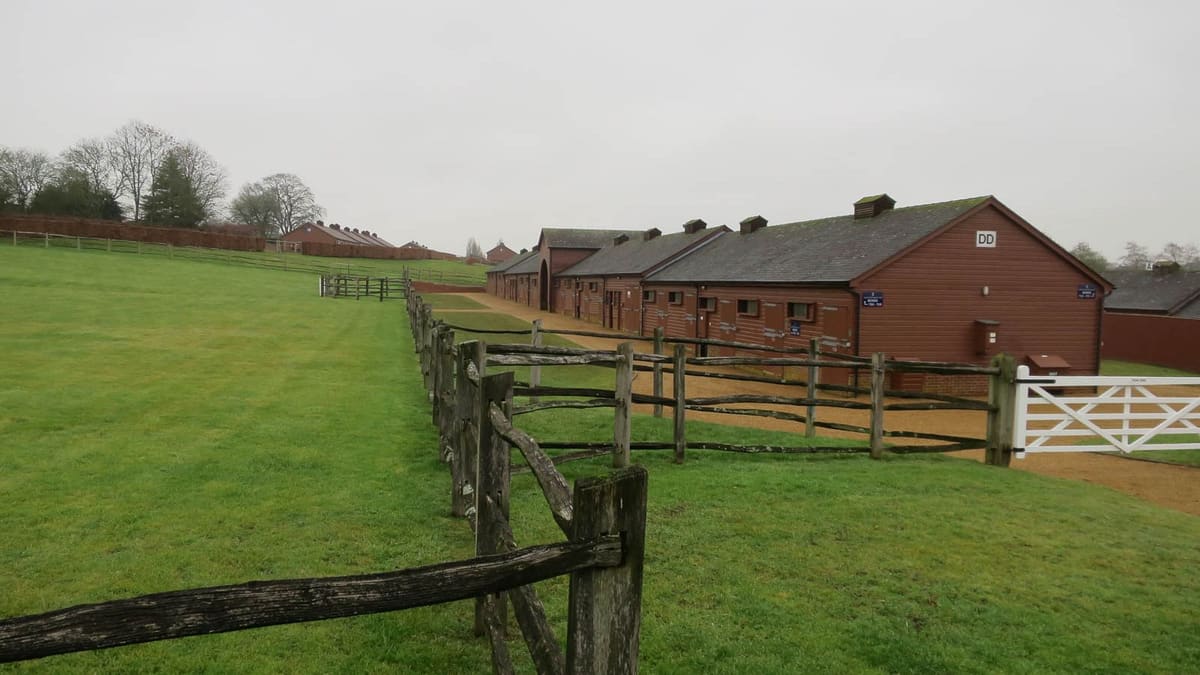

The Tattersalls Autumn Horses in Training Sale runs from Monday 26 to Thursday 29 October 2026 at Park Paddocks, Newmarket, from 9.30am UK time each day (check official site). It is the world's largest sale of horses in training: horses that already race, plus fillies and mares. In 2025, 1,009 horses sold, with a median of 15,000 guineas (1 guinea = £1.05). Register with Tattersalls well before you bid, have your own vet read the X-rays and scope, bid to a written limit, and plan the flight, quarantine and trainer before the hammer falls. Missed the ring? Some unsold horses can be bought privately just after the sale.
Short on time? Our Tattersalls buyer desk does the homework for you: shortlist, independent vet, registration help and bidding in your name, with your written OK. Email us by Sunday 25 October so we can check your lots before they sell.
Rowan is our AI assistant. Answers in seconds.
Khalid (invented, 47, runs a logistics group, owns two horses in the UAE through a partnership) wants a horse for the second half of the Meydan season. Mrs Lau (invented, Hong Kong, holds a Private Purchase permit and very strong opinions about turf) wants a horse with a rating she can show the Jockey Club. Bill (invented, Kentucky, has bought dirt horses for thirty years) wants "one of those European turf horses everyone keeps beating us with". All three, it turns out, want the same sale.
His Cousin Who Has Read One Racing Post told Khalid that "the bargains are in the last session". Sometimes. Mostly, the bargains are wherever somebody did the homework. This guide is the homework.
What is the Horses in Training Sale?
It is Tattersalls' big autumn auction of horses already in training: Flat and jumps horses with race records, plus fillies and mares from good families. Tattersalls calls it the world's largest horses in training sale. The minimum bid is 1,000 guineas.
- Where: Park Paddocks, Newmarket, Suffolk, about 100 km north-east of London. Newmarket is the home of British Flat racing, so there are more horses than people, and the horses walk with more confidence.
- When: 26 to 29 October 2026, from 9.30am UK time each day (check official site). The catalogue went online on 30 September.
- Who sells: British and Irish trainers and owners, big racing operations thinning their strings at the end of the European Flat season, and breeders selling fillies.
- Who buys: buyers from more than 30 countries in 2025, including owners and agents from the Gulf, Asia and America, plus British jumps buyers looking for Flat horses to switch codes.
- Why it matters to you: a horse with form and an official rating is much easier to judge for the races you want than a yearling who has never run.
Tattersalls is one of many places we look. For the full list, see the sales we buy from, and for this autumn in one page, our Tattersalls buyer desk.
What time is the sale where you live?
British clocks go back on Sunday 25 October, so sale week runs on UK winter time (GMT). The sale starts each day at 9.30am in Newmarket, which is:
| You are in | Sale starts at | Honest comment |
|---|---|---|
| Dubai, Abu Dhabi | 1.30pm | After lunch. Civilised. |
| Riyadh, Doha, Kuwait, Bahrain | 12.30pm | Lunch at the desk. |
| Hong Kong, Singapore | 5.30pm | Bidding with dinner. |
| Tokyo | 6.30pm | Bidding instead of dinner. |
| New York, Kentucky | 5.30am | Coffee first. Then more coffee. |
| Los Angeles | 2.30am | This is why agents exist. |
Each day has hundreds of lots, so your horse may come up hours after the start. Your agent tells you roughly when.
What did horses sell for last year?
In 2025, 1,009 horses sold for 33,867,500 guineas, with an average of 33,565 guineas and a median of 15,000 guineas, according to TrueNicks. The top price was 950,000 guineas, paid on behalf of a Qatar-based racing operation.
| Autumn Horses in Training 2025 | Figure | What it tells you |
|---|---|---|
| Horses sold | 1,009 | Enormous choice. Too much to read alone. |
| Turnover | 33,867,500 gns (about US$46.7m), down 5% | A deep, international market |
| Average | 33,565 gns (about US$46,300), down 4% | Pulled up by a few expensive horses |
| Median | 15,000 gns (about US$20,700), down 6% | Half the horses sold for this or less |
| Top price | 950,000 gns | The Gulf shops at the top end too |
US$ figures are TrueNicks' conversions at the 2025 rate. The median is the number for most of us; the top price is the one your Cousin will quote. A budget from US$50,000 shops comfortably above the median, where horses usually have a real rating. That does not mean a cheap horse cannot win, or that a dear one will. For more, read bloodstock sale prices 2026.
Which kind of horse suits a Gulf, Asian or US owner?
Start with where the horse will race, then work backwards. The UAE and Saudi seasons want a horse ready this winter. Hong Kong wants a horse that fits its permit and rating rules. American owners usually want a turf horse with a European rating for US turf races.
| You race in | What to look for | Watch out for |
|---|---|---|
| UAE (Meydan, Abu Dhabi, Jebel Ali) | Rated Flat horses who handle a fast surface; some may try dirt | The flight, quarantine and settling time eat into a season that ends with the Dubai World Cup on 27 March 2027 |
| Saudi Arabia, Qatar, Bahrain | Horses with a rating that fits local handicaps and conditions races | Import rules and race eligibility differ by country (check official site) |
| Hong Kong | Horses that meet Hong Kong Jockey Club permit rules for a Private Purchase (PP) or Private Purchase Griffin (PPG) | You need the permit and HKJC approval; not every horse qualifies |
| Japan | Rated horses that suit JRA or NAR races you are registered for | Registration and quarantine take months; plan before you buy |
| USA | European turf horses with form at a trip that suits US turf races | USDA import and quarantine; mares and entires older than about two years face extra CEM testing |
| Britain, Ireland, France | Horses to keep racing in Europe with a licensed trainer | Training bills start the day after the sale |
More detail: buying a horse to race in Dubai 2026-27, buying for the Saudi Cup and Riyadh season, Hong Kong PP and PPG permits explained, buying from Japan and buying European horses from the USA.
Bill from Kentucky asked whether European turf horses can run on dirt. Some do, most prefer not to, and nobody can promise which kind yours is until it tries. Buy the horse for the races it already does well.
How do you read a Horses in Training catalogue page?
For a horse in training, the race record matters more than the pedigree. Read the official rating, the trip and ground it wins on, how recently it ran, and who is selling and why. Then read the pedigree to see if the family stays, sprints or likes soft ground.
- The official rating: the handicapper's number for how good the horse is. Check it on the British Horseracing Authority's site, and check that it fits the races you want at home.
- The race record: wins, places, distances, going (ground). A horse who has won three times on soft ground at 2,400 metres is telling you something.
- Recent form: a horse who has not run since spring may have had a reason. Ask.
- The seller: a big operation selling surplus horses is normal at this sale. A small owner selling the stable star is also normal. Both are worth one polite question: why now?
- Wind and medical notes: in Britain, wind operations on runners must be declared to the BHA. Look for them in the horse's record, and ask your vet to read the files lodged in the Tattersalls Repository.
- Gelding, colt or filly: geldings travel and race abroad more simply. Fillies and mares can have a breeding value later.
Full guide: how to read a sales catalogue page in 10 minutes. The Cousin read the pedigree, saw a famous stallion, and stopped. The horse had not finished in the first eight in two years. Famous fathers do not run.
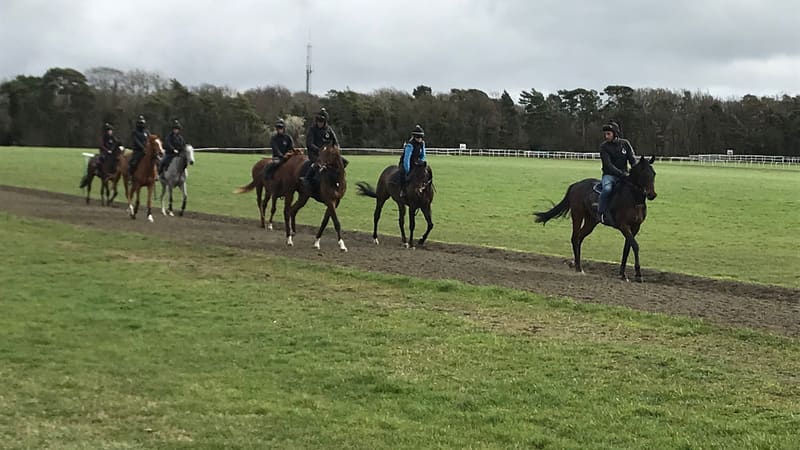

How do you register and bid from abroad?
Register with Tattersalls as a new buyer well before you bid. If an agent bids for you, a Purchasers Authorisation must be lodged and accepted first. The horse is bought in your name, and you pay Tattersalls directly.
- New Buyer Form. Passport or ID, addresses, how you will pay, the amount in pounds, bank details and bloodstock references. Your bank sends a banker's reference straight to Tattersalls. You cannot buy until Tattersalls confirms in writing.
- Purchasers Authorisation. If someone bids for you, you sign this with a payment reference, and it is lodged before the sale. Without it, the bidder and the buyer can both be liable for the horse. We always lodge it first.
- Live online bidding is offered for registered buyers (check official site). Useful at 2.30am in Los Angeles, dangerous at 2.30am in Los Angeles.
- Late? If you are not registered by sale week, email us at once. We ask Tattersalls what is still possible, such as a deposit agreed before bidding. If it is too late, buying an unsold horse after the sale is often the answer (see below).
- Travel help. Buyers from outside the British Isles who spend 10,000 guineas or more may get help with travel costs through Tattersalls' Inward Buyers' Initiative (check official site for the terms).
Step by step, with the forms: how to buy at Tattersalls from overseas.
The Silk Road Letter
Twice a month: the sales worth watching, one buying tip and one real market number (plus the odd catalogue joke). Free with it: our 2026-27 sale calendar (PDF) and a one-page guide to what a racehorse really costs. We email a link to confirm first. Unsubscribe in one click.
How do you vet a horse in training at Tattersalls?
Have your own vet read the X-rays and scope reports the seller lodged in the Tattersalls Repository, and examine the horse where the seller allows. Know the return rules before you bid: some conditions let you return a horse within strict time limits, and wind disputes at this sale go to a vet panel.
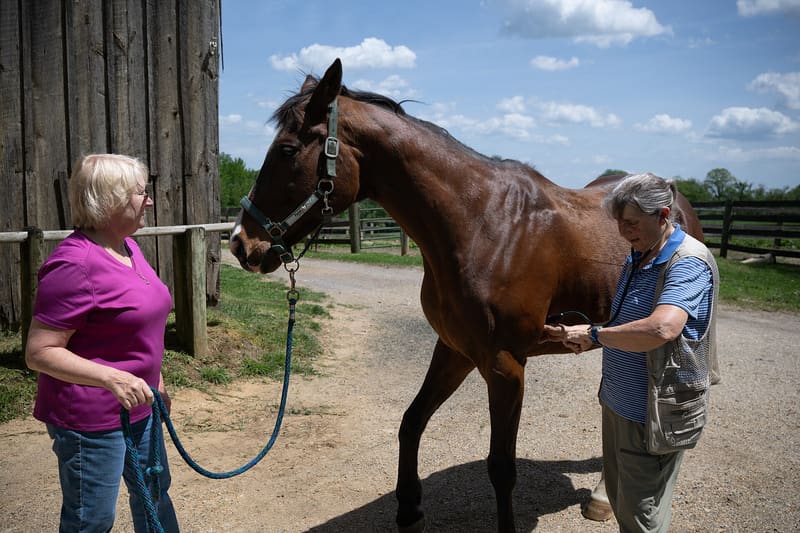

- The Repository: sellers lodge X-rays and scopes there, and only vets can view them. Your vet reads them before you bid, not after.
- A pre-bid inspection needs the seller's approval, and it is not the same as a full purchase examination. Know which one you got.
- Wind: a horse in training is bought to gallop, so it has to breathe. At this sale, wind disputes go to a vet panel and the horse is normally tested at the gallop on Newmarket Heath. The losing side pays the testing fee (£650 plus VAT in Tattersalls' published conditions; check official site).
- Other returns: some conditions allow a horse to be returned within set time limits (for example, the 7th day for certain conditions). Miss the deadline and the horse is yours. Read the Conditions of Sale.
- The legs, the walk, the eye: watch the horse walk and trot up. A horse in training has a job; you want to see it can still do it.
With us, nothing is bid on without an independent vet first. More in racehorse vetting explained and protecting a racehorse purchase.
Guineas, VAT and the real bill
Tattersalls sells in guineas: one guinea is £1.05, and you pay in pounds. Tattersalls' 5% commission is paid by the seller, and the buyer pays a £3 per-lot contribution to Retraining of Racehorses. VAT can apply to the lot, but a horse exported from the UK can usually be zero-rated with proof of export.
A worked example: a 40,000-guinea horse going to the Gulf
| Item | Amount |
|---|---|
| Hammer price | 40,000 guineas |
| In pounds (× 1.05) | £42,000 |
| Retraining of Racehorses contribution | £3 |
| UK VAT, if the lot carries it | 20% may be charged; usually zero-rated or refunded with proof of export (see below) |
| Our fee: 5% of the price, minimum US$5,000 | US$5,000 here (5% of about US$55,000 is less than the minimum) |
| Then: vet, insurance, export papers, flight, quarantine | Quoted to you in writing before you commit |
- Exchange rate: in 2025 one guinea was worth about US$1.38 (TrueNicks' conversion). Check the rate on the day and ask for every cost in one currency.
- VAT on export: HMRC Notice 703 lets goods exported from the UK be zero-rated with proof of export, normally within 3 months. Ask Tattersalls and your shipper how they handle it on your horse before you bid. You may then pay import duty or VAT at home.
- Payment: due straight after the purchase, paid by you to Tattersalls. Tattersalls charges no interest if payment clears within 28 days of the last day of the sale; after that, 1.5% a month.
- Risk passes at the fall of the hammer. Insure the horse from that moment.
- Fraud warning: Tattersalls says its bank details never change in the middle of a transaction. Any email saying otherwise is fraud. Phone them.
For a full year of costs, read what a racehorse really costs and ownership costs in 2027, or try the cost calculator.
Buying an unsold horse after the sale
Some horses do not reach their reserve and leave the ring unsold. The owner often still wants to sell, and a serious offer during or just after the sale can work for both sides. It is a quieter, slower way to buy, with more time to vet.
- We watch every session for you and note the unsold horses that fit your brief.
- We approach the seller or consignor with your OK, and check whether the deal must go through Tattersalls under its Conditions of Sale.
- Vet first, sign second. An independent vet works for you before anything is agreed.
- You pay the seller (or Tattersalls) directly. Your money never goes through us.
- Honest note: there is no promise that a horse will be for sale, or at what price. Some owners would rather take the horse home than take less.
Mrs Lau prefers this route. "In the ring, everyone is excited," she says. "After the ring, everyone is reasonable." More in buying a proven racehorse privately.
Rowan is our AI assistant. Answers in seconds.
Export and quarantine: getting the horse home
Before the horse leaves Newmarket you need a Pass Out from Tattersalls, an export health certificate from the UK government (APHA) and the import permit for your country. Blood tests, a flight with a professional horse shipper and quarantine at both ends follow. Plan it before you bid, because it decides when the horse can race.
- UK side: the export health certificate is applied for through APHA's online service, and the official vet receives it about 7 working days before export. EIA blood tests are usually needed within 30 days of travel (check official site).
- UAE: import approval, quarantine on arrival and registration with the Emirates Racing Authority, plus a licensed UAE trainer (check official site).
- Saudi Arabia, Qatar, Bahrain: each has its own import permit, quarantine and racing registration. Ask the shipper and the racing authority before you bid.
- Hong Kong: HKJC approval for the horse under your PP or PPG permit, pre-export isolation and the Club's own import process.
- USA: USDA APHIS import rules apply, with import quarantine at an approved facility. Mares and entires older than 731 days from CEM-affected countries, which include Britain, need extra CEM testing and quarantine. Geldings are simpler (check official site).
- Japan: notice to the Animal Quarantine Service months before arrival, pre-export isolation and import quarantine.
We arrange the paperwork and a professional shipper, and quote you before you commit. See racehorse transport. Bill asked how long his horse would be "in jail". Not long, if it is planned. Much longer, if it is planned after the sale.
After the hammer: trainer, insurance, plan
Insure from the fall of the hammer, pay, collect the Pass Out, and move the horse to a licensed trainer: in Britain or Ireland while the export is arranged, or straight to the trainer at home. Licensed trainers train; we place and supervise.
- Day 1: insurance from the fall of the hammer; payment to Tattersalls; the Pass Out.
- Week 1: the horse goes to a licensed trainer, or to pre-export isolation if it is flying.
- The first month: export papers, flight, quarantine, and a race plan you can read.
- Every month after: a short report on how the horse is, what it costs and what is next, if you choose our racehorse management.
Choosing the trainer matters as much as choosing the horse. See how to choose a racehorse trainer and our partner trainers.
Your timeline: from today to 29 October
| When | What to do |
|---|---|
| Today, 24 October | Email us your budget, racing country and goal. We start the shortlist. |
| Sunday 25 October | Register with Tattersalls (if not done); Purchasers Authorisation lodged; money lined up. |
| Before each horse is sold | Inspection, vet reads the Repository, final shortlist with written limits. |
| 26 to 29 October | We bid in your name, only up to your limit. Pay straight after. |
| During and after the sale | Private offers on unsold horses that fit your brief. |
| November | Export papers, flight, quarantine, trainer. Or keep the horse racing in Europe. |
Not ready this week? The Tattersalls December Sales (23 November to 2 December) sell foals, mares and yearlings, and the whole November-December season has more chances.
How Silk Road Bloodstock works, plainly
5% of the purchase price, minimum US$5,000, agreed in writing before we bid or negotiate. You pay Tattersalls or the seller directly; your money never goes through us. At Tattersalls we act for you, the buyer, only.
- The fee: 5% of the purchase price, minimum US$5,000, in a written agreement. Budgets from US$50,000.
- Your money: you pay Tattersalls or the seller directly. It never goes through our account.
- Both sides: if we are ever paid by both buyer and seller, both are told in writing first. On a sale at Tattersalls we act for the buyer only, in line with the Bloodstock Industry Code of Practice.
- Your limit: we bid only up to your written limit. Not one guinea more without your clear "yes".
- The search: the best horses from sales and private yards all over the world. Newmarket is one place; if a better horse for you is elsewhere, we say so.
- After the sale: licensed partner trainers train; we place and supervise.
- The honest bit: we cannot promise a win, a price or a profit. Nobody honest can. Owning a racehorse is a passion, not a way to make money.
Full details: fees and process.
A plain word before Monday
The Horses in Training Sale is the most useful sale in the world for an owner who wants a horse to race soon, and one of the easiest places to buy the wrong one: a thousand horses, four days, and a ring that never stops. The owners who do well there decide where the horse will race first, read the record before the pedigree, let a vet read the files, and bid with a written limit.
Khalid bought one horse on Tuesday, after his vet turned down two on Monday. Mrs Lau bought nothing in the ring and one quietly on Friday. Bill bought a gelding with a rating and a long name nobody in Kentucky can pronounce. The Cousin said he would have bought the one with the famous father. The Cousin says that every year.
Want a horse in training found, checked and bought at Newmarket?
Email us your budget, where the horse will race and what you want it to do. We read the catalogue, see the horses, have an independent vet check each one and bid in your name to your written limit. Or we find you the right unsold horse after the sale. And if Tattersalls is the wrong sale for you, we will say so and show you the right one. Budgets from US$50,000.
Email info@silkroadbloodstock.com first, from anywhere in the world. Phone +971 52 311 2385 second. WhatsApp as backup.
5% fee (min US$5,000), agreed in writing. You pay Tattersalls or the seller directly; your money never goes through us. If we are ever paid by both sides, both are told in writing first.
Selling a horse in training instead?
We find the right buyer worldwide, including owners in the Gulf, Asia and the US. Licensed trainers train; we help you choose one from our partner trainers, place the horse and supervise the plan.
Know an owner who is thinking about Newmarket? Our introducer programme pays 20% of our fee on deals you introduce, paid from our fee and disclosed to the client in writing.
Related guides
- How to buy at Tattersalls from overseas
- Tattersalls December Sales 2026: a buyer's guide
- Yearling, breeze-up or horse in training?
- Buying a horse to race in Dubai 2026-27
- Hong Kong PP and PPG permits explained
- Do you need a bloodstock agent?
- Horses in training for sale
The Silk Road Letter
Twice a month: the sales worth watching, one buying tip and one real market number (plus the odd catalogue joke). Free with it: our 2026-27 sale calendar (PDF) and a one-page guide to what a racehorse really costs. We email a link to confirm first. Unsubscribe in one click.
Frequently asked questions
When is the Tattersalls Horses in Training Sale 2026?
Monday 26 to Thursday 29 October 2026 at Park Paddocks, Newmarket, from 9.30am UK time each day, according to Tattersalls. British clocks go back on 25 October, so that is 1.30pm in Dubai, 12.30pm in Riyadh and Doha, 5.30pm in Hong Kong and 5.30am in New York and Kentucky. Check tattersalls.com before you travel.
What is a guinea at Tattersalls?
Tattersalls auctions are conducted in guineas. One guinea is 1.05 pounds sterling, so a 20,000-guinea horse costs 21,000 pounds. Invoices and payments are in pounds.
What did horses sell for at the 2025 Horses in Training Sale?
According to TrueNicks, 1,009 horses sold for 33,867,500 guineas in 2025, with an average of 33,565 guineas and a median of 15,000 guineas. Buyers came from more than 30 countries. Last year's figures are not a promise for this year.
Can I buy a horse that did not sell at the auction?
Often, yes. Some horses do not reach their reserve and leave the ring unsold. A serious offer during or just after the sale can work for both sides. Check with Tattersalls whether the deal must go through them under the Conditions of Sale, and have your own vet check the horse first. There is no promise that any horse will be for sale.
Do I pay VAT if the horse is exported to the Gulf, Asia or the US?
A horse exported from the UK can usually be zero-rated for UK VAT with proof of export, normally within 3 months (HMRC Notice 703). You may then pay import duty or VAT in your own country. Ask Tattersalls and your shipper how they handle it before you bid.
How much does Silk Road Bloodstock charge?
5% of the purchase price, minimum US$5,000, agreed in writing before we bid or negotiate. Budgets from US$50,000. You pay Tattersalls or the seller directly; your money never goes through us. If we are ever paid by both sides, both are told in writing first.
Spotted an error? Email info@silkroadbloodstock.com and we will fix it within 48 hours.
Sources
Checked 24 October 2026. Dates, charges and rules can change; always check tattersalls.com and ask for terms in writing. Silk Road Bloodstock is not affiliated with Tattersalls.
- Tattersalls, Autumn Horses in Training Sale 2026 overview (26-29 October, 9.30am each day; catalogue online 30 September; minimum bid 1,000 guineas; "the world's largest horses in training sale")
- TrueNicks, Tattersalls HIT sale concludes with steady trade (2025: 1,009 sold, turnover 33,867,500 gns, average 33,565 gns, median 15,000 gns, top price 950,000 gns; buyers from more than 30 countries)
- Tattersalls, Conditions of Sale and purchaser information (guineas, New Buyer Form, Purchasers Authorisation, payment and interest terms, Repository, returns and the Wind Panel; check the current catalogue)
- Tattersalls, Inward Buyers' Initiative (travel help for buyers from outside the British Isles spending 10,000 guineas or more)
- HMRC Notice 703, VAT on goods exported from the UK (zero-rating with proof of export, normally within 3 months)
- GOV.UK, exporting horses and ponies (export health certificates through APHA)
- USDA APHIS, CEM testing of imported horses (quarantine and CEM rules for mares and stallions over 731 days from CEM-affected countries)
- Bloodstock Industry Code of Practice (BHA)