The Silk Road Journal · Buying
Yearling, Breeze-Up or Horse in Training: Which Fits Your Budget?
One horse buys you hope, one buys you a stopwatch, and one buys you the truth. Here is what each costs, and how long you wait for the first race.
A light-hearted guide. Faris, Auntie Mariam and the Man Who Knew the Sire are invented. Facts are linked and listed at the end. Nothing here is financial advice, and no horse comes with a promise.
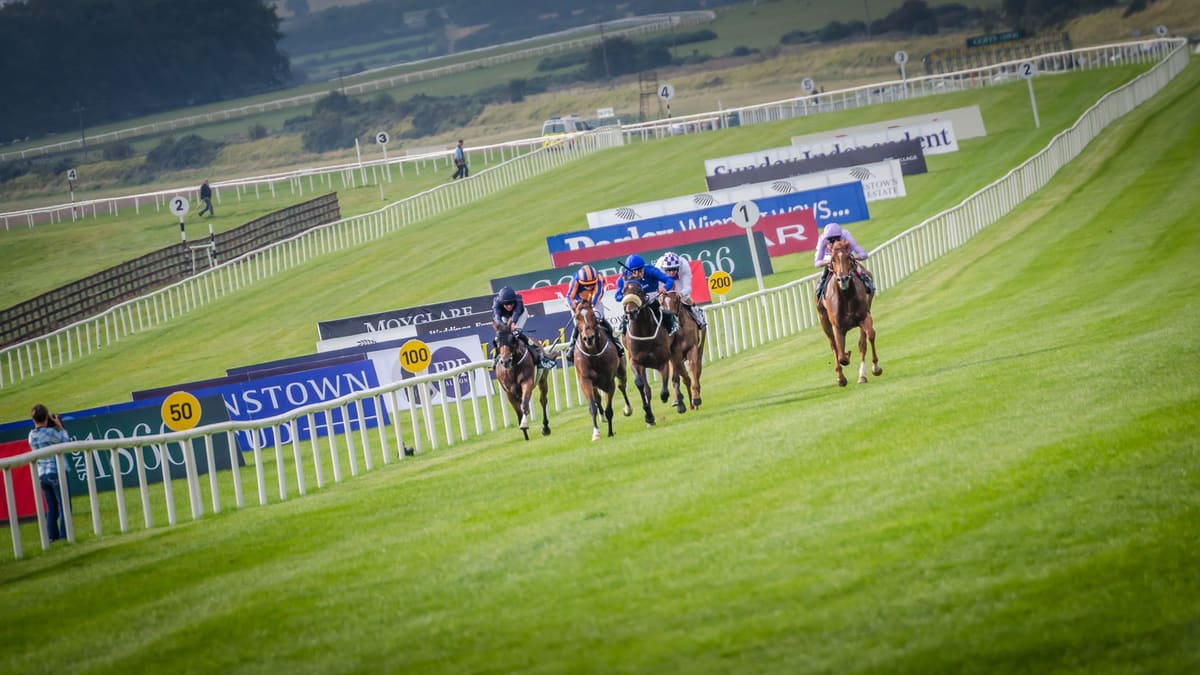

There are three main ways to buy a young racehorse at auction. A yearling is a one-year-old you will wait about a year to race. A breeze-up horse is a two-year-old you have seen gallop. A horse in training has already raced. The later you buy, the more you know and the sooner you run.
Faris has a budget, a spreadsheet and a Group 1 speech that is already two pages long. What he does not have is a horse. "Which kind?" asked Auntie Mariam. Faris said "a fast one", which is what everybody says, and which narrows the field to roughly every horse ever sold.
What is the difference between a yearling, a breeze-up horse and a horse in training?
It is the age, and how much you can see. A yearling has a pedigree and a walk. A breeze-up two-year-old has been ridden and galloped a short distance in public. A horse in training has a race record and, often, an official rating. Each step costs you less waiting and more certainty.
Think of it as buying a restaurant. The yearling is a plot of land with a lovely view. The breeze-up horse is a kitchen that has cooked one very fast omelette. The horse in training is a restaurant with reviews, some of which you may not enjoy reading.
Thoroughbreds in the Northern Hemisphere all share a birthday on 1 January, so a "yearling" sold in October is already counting down to being two.
What is a breeze-up sale?
A breeze-up is an auction of unraced two-year-olds. A few days before the sale, each horse is ridden at speed over a short distance in front of buyers, usually about two furlongs, well short of the shortest race. You see the horse move at speed before you bid, which a yearling sale cannot show.
Horse & Hound traces the idea to America in the 1970s, from where it spread to Europe. Some American sales publish times for each "breeze"; in Europe buyers watch the clock and, more usefully, the action. As one agent told Thoroughbred Daily News, the point is how the horse moves and gallops out, not just how fast it goes.
Here is the cautionary tale everyone tells. In 2006 a two-year-old called The Green Monkey breezed a furlong in 9.8 seconds and sold for US$16 million, still the world auction record. He ran 3 times and never won. A fast breeze is not a race, and a stopwatch is not a vet.
Yearling vs two-year-old vs horse in training: which costs more?
The horse in training is usually cheapest to buy, because its limits are known. At Tattersalls in Newmarket, the typical (median) price was 15,000 guineas for a horse in training in 2025, about 85,000 guineas for a Book 2 yearling in 2026, and 100,000 guineas at the 2026 Craven Breeze-Up.
| Sale | Type | Median |
|---|---|---|
| Tattersalls Autumn Horses in Training 2025 | Horse in training | 15,000 gns |
| Tattersalls October 2026, Book 2 | Yearling | about 85,000 gns (reported) |
| Tattersalls Craven Breeze-Up 2026 | Two-year-old (breeze-up) | 100,000 gns |
| Tattersalls October 2026, Book 1 | Yearling (top pedigrees) | 230,000 gns |
| Keeneland September 2025, USA | Yearling | US$80,000 |
| Arqana August 2026, France | Yearling (small elite sale) | €160,000 |
| Magic Millions Gold Coast 2026, Australia | Yearling | A$150,000 |
1 guinea = £1.05. Medians, not records: half the horses sold for more, half for less. Different sales are not like-for-like, so compare within one sale company where you can. The Man Who Knew the Sire compares them all at once, from memory, and is wrong in four currencies.
Cheap is not the same as good value. A 15,000-guinea horse in training is often cheap because everyone can already see roughly how good it is. The yearling's price is mostly hope, beautifully presented.
How much does it cost until the horse actually races?
Add the keep to the price. A yearling bought in autumn usually needs breaking in and many months of training before it can run, so budget roughly a year of fees first. A breeze-up horse is weeks or months away. A horse in training can often race soon after it settles with its new trainer.
For scale: a 2015 Racehorse Owners Association survey put a Flat horse in Britain at £22,595 a year in training, and a Racing Post analysis of 2018 data put training fees alone at about £24,000. Both are higher today. Ask any trainer for a written quote.
So a yearling at 85,000 guineas is really "85,000 guineas plus a year of hope, invoiced monthly". Auntie Mariam wrote that sentence on the spreadsheet in red. The Trainer Who Sighs read it and gave the long sigh, which in his glossary means "she is right".
The Silk Road Letter
Twice a month: the sales worth watching, what horses really cost, and the catalogue jokes nobody tells you. Free. Unsubscribe in one click.
How do the three compare side by side?
The table below sums it up. Yearlings offer the most upside and the longest wait. Breeze-ups show speed sooner, at a price. Horses in training show the truth, which is sometimes kind and sometimes very honest. None of them comes with a promise.
| Yearling | Breeze-up two-year-old | Horse in training | |
|---|---|---|---|
| Time to first run | Usually many months; often the next summer or later | Often weeks to a few months | Often within weeks |
| Total cost until racing | Price plus about a year of keep and training | Price plus a short run-in period | Price plus little or no wait |
| What you see before buying | Pedigree, conformation, walk, vet files | All of that, plus a short breeze | A race record and, often, an official rating |
| Risk | Highest: talent and soundness unproven | Medium: speed shown, racing unproven | Lowest on ability, but ceiling usually known |
| Who it suits | Patient owners who enjoy the whole journey | Owners who want two-year-old races this season | Owners who want to race now, on a clear budget |
Where are the main sales for each type around the world?
The big sale companies run all three types. Yearling sales cluster in late summer and autumn in the north, early in the year in Australia. Breeze-ups run mainly in spring. Horses-in-training sales come in autumn and at other points of the year. Our sales calendar lists dates.
- Britain and Ireland: Tattersalls (October Yearling Sale, the Craven Breeze-Up, Autumn Horses in Training) and Goffs, which also runs yearling, breeze-up and horses-in-training sales.
- France: Arqana, with its August yearlings and a May breeze-up in Deauville.
- USA: Keeneland (the September Yearling Sale, the biggest Thoroughbred auction by turnover in 2025) and Fasig-Tipton, whose Midlantic two-year-olds in training sale runs in May.
- Australia: Magic Millions (the Gold Coast Yearling Sale) and Inglis, whose Ready2Race is a breeze-up two-year-old sale.
- Japan: the JRHA's Select Sale in Hokkaido each July, for yearlings and foals.
We do not buy from one country; we look for the best horse for your budget wherever it is. More on that on our worldwide page, and on how to judge a lot in our guide to reading a sales catalogue page.
What vetting does each type need?
All three need an independent vet, but the focus differs. For a yearling, the vet weighs X-rays, the airway and conformation. For a breeze-up horse, add how it coped with the gallop. For a horse in training, ask about its racing history, wind and any time off. A vetting is an opinion, never a guarantee.
At Tattersalls, sellers may lodge X-rays and scope videos in a repository that only registered vets can view; for a horse in training, X-rays must be taken within 14 days of the sale. After a horses-in-training sale, a buyer can refer a horse for its wind to a vets' panel; the losing side pays £650 plus VAT. The 2026 breeze-up conditions also include a repository and wind returns.
The vet will look for a long time and then say "hmm". It remains the most expensive word in English, and the cheapest one to hear before you sign. Our full guide: racehorse vetting explained.
So which one should I buy?
Choose by time and temperament, not only budget. If you want to race this season, buy a horse in training. If you want two-year-old races and can pay for a shown gallop, look at breeze-ups. If you love the long road and can wait a year, a yearling is the classic start.
Whatever you choose, set the total budget first: the price, the fee, the vet, transport, and a written trainer's quote for the first year. Leave room for the costs nobody mentions. Licensed trainers train the horse; our job is to help you choose the horse and the trainer, and to supervise the plan.
Owning a racehorse is a passion, not a way to make money. Most horses do not cover their costs. The right choice is the one you will still enjoy on a wet Tuesday when nothing is happening, because most Tuesdays in racing are exactly that. The full numbers are in our guide to what a racehorse really costs.
Faris chose in the end. Auntie Mariam approved the budget. The Group 1 speech is now three pages, but it is filed under "later".
Tell us your budget. We will tell you which horse fits.
We help clients all over the world buy yearlings, breeze-up two-year-olds and horses in training, with independent vets and trainer partners. Email us your budget, your timeline and where you want to race. We will give you an honest answer, including "wait" when that is the right one.
Email info@silkroadbloodstock.com first, from anywhere in the world. Phone +971 52 311 2385 (UAE) second. WhatsApp as backup.
5% fee (min US$5,000), agreed in writing. You pay the seller directly; your money never goes through us. If we are ever paid by both sides, both are told in writing first.
Selling a horse?
List it free, wherever it is trained. You pay 5% only if it sells to a buyer we introduce (including through our site), within 6 months of the introduction.
Related guides
- What does a racehorse really cost? The honest 2026 guide
- How to read a sales catalogue page in 10 minutes
- Racehorse vetting: what a vet check can and can't tell you
- The sales we buy from · Buying worldwide
The Silk Road Letter
Twice a month: the sales worth watching, what horses really cost, and the catalogue jokes nobody tells you. Free. Unsubscribe in one click.
Frequently asked questions
Is a yearling cheaper than a two-year-old?
Not always. In 2026 the Tattersalls October Book 2 yearling median was reported at about 85,000 guineas and the Tattersalls Craven Breeze-Up median was 100,000 guineas. A yearling also needs about a year of keep before it races.
What is a breeze-up sale?
An auction of unraced two-year-olds. Before the sale, each horse gallops a short distance, usually about two furlongs, in front of buyers, so you see it move at speed before you bid.
What is the cheapest way to buy a racehorse?
Usually a horse in training. The 2025 Tattersalls Autumn Horses in Training median was 15,000 guineas, and the horse can often race within weeks. Cheaper horses usually have a known ceiling, shown by their rating.
Does Silk Road Bloodstock train horses?
No. Licensed trainers train. We help you choose the horse and the trainer, and we supervise the plan.
Spotted an error? Email info@silkroadbloodstock.com and we will fix it within 48 hours.
Sources
Checked 22 October 2026. 1 guinea = £1.05.
- Horse & Hound, what is a breeze-up sale (two furlongs; began in America in the 1970s)
- Thoroughbred Daily News, Midlantic under-tack show (how buyers watch breezes)
- The Green Monkey: Wikipedia and Racing Post
- Tattersalls Autumn Horses in Training 2025 (TrueNicks)
- Tattersalls October 2026 Book 2
- Tattersalls October 2026 Book 1 (TDN)
- Tattersalls Craven Breeze-Up 2026 (TTR AusNZ)
- Keeneland September 2025: NKyTribune and Thoroughbred Daily News
- Arqana August 2026 (TDN)
- Magic Millions Gold Coast 2026 (TTR AusNZ)
- Arqana Breeze Up, Deauville, May 2026, and Fasig-Tipton Midlantic dates (TDN)
- Inglis Ready2Race sale
- JRHA Select Sale 2026, Hokkaido (TDN)
- ROA, the cost of ownership (2015 survey)
- Racing Post, owners' returns (2018 data)
- Tattersalls, Notices to Purchasers: Repository and Repository Rules
- Tattersalls, Guidance for Purchasers (wind returns £650 + VAT)
- Tattersalls, Breeze Up Sales 2026 Sale Information Notice