The Silk Road Journal · Buying
What Does a Horse Really Cost? An Honest (and Slightly Painful) Guide
Owning a racehorse is one of the great pleasures in life. It is also the only pleasure that sends you hope, invoiced monthly.
A light-hearted look at the horse world. Faris, Layla, Auntie Mariam and the other characters are invented. Facts are sourced at the end. Nothing here is financial advice.
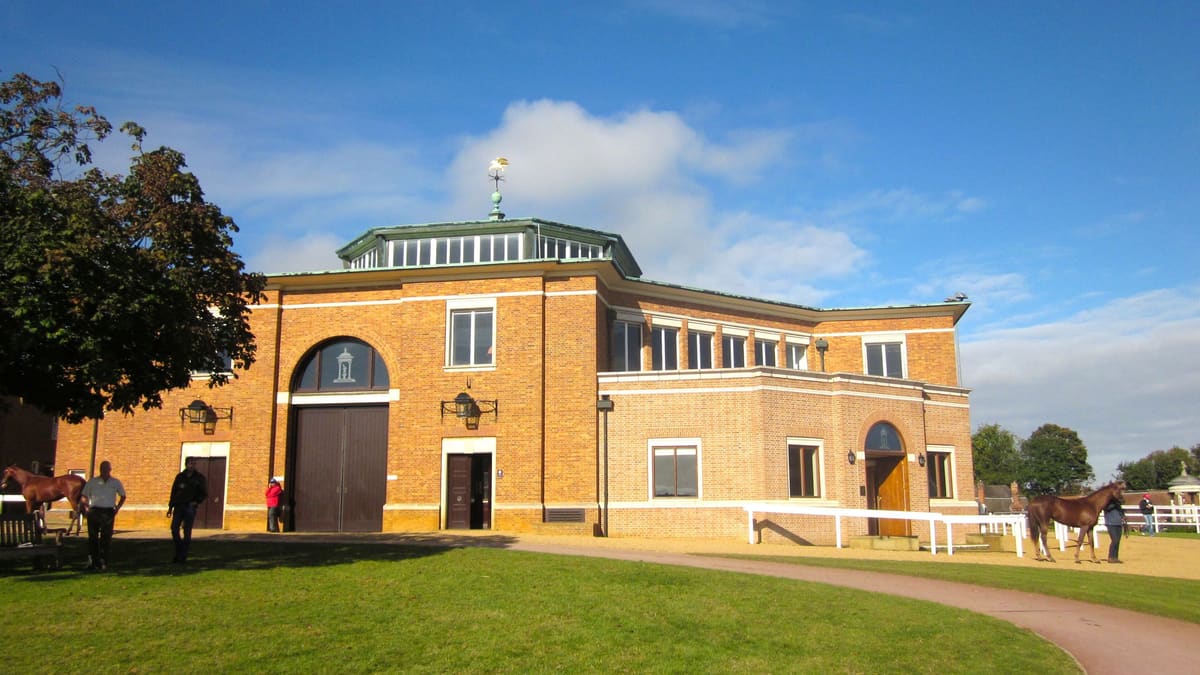

This is the honest guide to what a horse really costs, from the first cup of coffee to the day you sell.
1. Can I really own just one racehorse?
Yes. Many owners start with one horse, either alone or with partners. But plan for 2 bills, not 1: the price of the horse, and the cost of keeping it in training every year. A British owners' survey put that yearly cost at £22,595 for a Flat horse in 2015. It is higher today.
Most expensive decisions begin with coffee. This one begins in the family majlis on a warm Thursday evening in Dubai. The gahwa is poured, the dates go round, and the talk turns, as it always does, to horses.
Meet Faris. He is 41, clever, and runs a sensible family business. His name means "horseman", which he has never yet had to prove. He is also invented, which will spare him a great deal of embarrassment over the next 9 chapters.
"I would like a horse," he tells the room. "Just one. Nothing silly. Just one good horse."
There is a short silence. It is the silence of a room in which several uncles have said exactly the same sentence, and several of them still have the paperwork.
In 2015 UNESCO listed Arabic coffee as "a symbol of generosity". In this majlis the generosity runs to advice as well, and the advice is about to flow.
The experts arrive (they always do)
First comes the Man Who Knew the Sire. Every majlis has one, and every sale has three. He knew the sire personally, and the sire's father, and he hints that some of them still ask his opinion.
"Buy the son of a champion," he says. "Fast horses have fast children." This is true in the way that tall parents have tall children: often, but never when you have already paid.
Then comes Auntie Mariam. She has never owned a horse, but she has kept the family accounts for 30 years, so she is the only person in the room who has read every invoice.
"Just one horse," she says. "That is what your uncle said. Now he has 4 horses, a vet on speed dial and no free Saturdays."
One horse, two bills
Here is the most useful sentence in this article. The cheapest part of owning a horse is buying it.
The price is one bill: large, paid once, and signed while excited. The second bill, for keeping the horse in training, arrives every month, and nobody signs that one while excited.
In 2015 the Racehorse Owners Association (ROA) in Britain surveyed its members. A Flat horse cost an average of £22,595 a year to keep in training, and a jumper cost £16,325. Those figures are more than 10 years old, and very little in racing has become cheaper since, apart from advice.
Introducing the Cost-Meter
Faris likes numbers, so at the end of most chapters we will keep a Cost-Meter: a running total of what his "just one horse" has cost. The numbers are illustrative, built from the real costs in each chapter, and like a taxi in traffic, the meter only moves one way.
Cost-Meter: US$0 (plus 3 cups of gahwa and one long look from Auntie Mariam)
That night, Faris opens a sales catalogue on his phone. The introduction says every Thoroughbred in the book traces its male line back to 3 Eastern stallions.
"So," he says to nobody, "I am buying back the family business." He had no idea yet what the family business charges.
2. Where did the Thoroughbred come from?
Every Thoroughbred traces its male line to 3 founding stallions brought to England from the East (the Ottoman world and Arabia) in the late 1600s and early 1700s: the Byerley Turk, the Darley Arabian and the Godolphin Arabian. They were crossed with English mares. About 95% of male lines trace to the Darley Arabian, by one 2005 estimate.
الخيل والليل والبيداء تعرفني
"The horse, the night and the desert know me." (al-Mutanabbi, 10th century)
The Thoroughbred's family story has been tidied up for 300 years, and it is still wonderfully untidy. It starts with 3 stallions, none of them born in England.
The Byerley Turk: the war horse
The oldest of the three is the Byerley Turk. Legend has it he was taken at the Siege of Buda (in today's Hungary) in 1686, and later carried Captain Robert Byerley as an army horse in Ireland, though historians still argue about the details.
His father-to-son line has almost vanished, and his blood lives on mainly through daughters. He is the founding father who did his best work as a grandfather, which any grandparent will tell you is the easier job.
The Darley Arabian: the champion who never ran
In 1704 a merchant named Thomas Darley bought a young stallion in Aleppo, in Syria, and shipped him home to his brother in Yorkshire.
The Darley Arabian never ran a race. Yet scientists at the British Association science festival in Dublin in 2005 estimated that about 95% of male Thoroughbreds trace back to him, father to son. It is the most successful racing career in history, with zero races.
Then comes the twist. A 2017 DNA study in Current Biology (Wallner and colleagues) found that the Thoroughbred's father-to-son line appears to come from the Turkoman horse of Central Asia, not the Arabian. A 2020 study in Scientific Reports (Cosgrove and colleagues) found little sign of Arabian DNA in the Thoroughbred at all.
So the most famous "Arabian" in racing may have come from a wider family of eastern horses than his name suggests, from Central Asia to Aleppo. Either way, the East gave the breed its founder.
The Godolphin Arabian: from cart to legend
The third founder was foaled around 1724, probably in Yemen. Legend has it he was sent to France as a gift, failed to impress, and ended up pulling a cart until an Englishman, Edward Coke, spotted him and bought him.
He later passed to the Earl of Godolphin, and his line runs through Man o' War, one of the great American champions.
Legend also says his closest friend was a stable cat, often called Grimalkin. So one of the founders of the breed kept a cat as his closest companion, and stable cats have been quietly in charge ever since.
Eclipse, and a vetting 240 years late
Four generations on came Eclipse, the great-great-grandson of the Darley Arabian. He raced in 1769 and 1770, was never beaten, and retired largely because nobody wanted to race against him.
His skeleton is kept at the Royal Veterinary College in London, and in 2012 DNA work confirmed that most of it, including the head, is genuine. So Eclipse finally passed a vetting, about 240 years after his last race.
The 300-year round trip
The part Faris likes best is that the bloodline has come home. Dubai's Godolphin racing operation, founded in 1992, takes its name from the Godolphin Arabian, and the Darley breeding operation is named after the Darley Arabian. Today some of the best Thoroughbreds in the world race each winter in Dubai and Riyadh.
"3 stallions came from the East. 300 years later, their descendants fly back business class, and complain about the hay."
Reading the family tree
A pedigree is a family tree lying on its side: dad's family on top, mum's below. "By Galileo out of Kind" means the father is Galileo and the mother is Kind, the parents of Frankel, who was unbeaten in 14 races. Like any family tree, it is impressive at the top and complicated in the middle.
Pedigree shapes the chances. It never guarantees them. The 2005 Dublin research suggested genes explain only about a third of racing performance, and the rest is training, health, temperament and luck.
Cost-Meter: US$0 (history, happily, is free; pedigree is not)
Faris scrolls past the history to the prices. The first number he sees has 7 digits, so he puts the phone face down and pours more coffee.
3. How much does a racehorse cost to buy?
Anything from a few thousand to several million. At the 2026 Tattersalls October Yearling Sale in Newmarket, the median price across all books was a record 80,000 guineas (£84,000). The median is a better guide than the average, which a few very expensive horses pull up. Our buying budgets start from US$50,000.
The next morning Faris makes a spreadsheet. By dinner it has a column titled "Questions for the Man Who Knew the Sire", with 31 entries and no answers.
Average or median? The most useful number in this article
Sale results usually show 2 numbers. The average adds up every price and divides by the number of horses, while the median is the middle price: half the horses sold for more, and half for less.
The difference matters. At the Keeneland September Yearling Sale in Kentucky in 2025, 3,070 horses sold for a record US$531.5 million, the highest total for any Thoroughbred auction in the world. The average was about US$173,000, but the median was US$80,000.
That gap is where the very big spenders live. The typical horse costs the median, not the average, so if you remember one number from a sale report, make it that one.
Sale averages around the world: average vs median
| Sale | Total | Average | Median | Median as a share of the average |
|---|---|---|---|---|
| Keeneland September, USA (2025) | US$531.5m (including post-sale deals) | US$173,134 | US$80,000 | 46% |
| Tattersalls October, Britain (2026) | 211.0m gns | 149,883 gns (about US$208,000) | 80,000 gns (about US$111,000) | 53% |
| Arqana August, France (2026, 233 sold) | €65.9m | €279,283 | €160,000 | 57% |
| Magic Millions Gold Coast, Australia (2026) | about A$213m (our calculation from 932 sold) | A$228,407 (about US$148,000) | A$150,000 (about US$98,000) | 66% |
At every sale the median sits well below the average. Arqana August is a small elite sale, which is why its average is highest. Conversions are rough, at October 2026 rates (£1 = US$1.32, A$1 = about US$0.65, 1 guinea = £1.05); euro figures are shown in euros; shares and conversions are our calculation. Sources: Thoroughbred Daily News, Tattersalls, TTR AusNZ.
A word about guineas
Newmarket still sells horses in guineas, and one guinea is £1.05. In our view, it is the most elegant way ever invented to say "plus 5%".
The 2026 Tattersalls October Yearling Sale took 211.0 million guineas and set records for both its average (149,883 guineas) and its median (80,000 guineas). The sale is split into "books", with the grandest pedigrees in Book 1, and the 2026 medians tell you a lot:
- Book 1: median 230,000 guineas
- Book 2: a record median, reported at about 85,000 guineas
- Later books: much less again
What your money buys: the typical price, step by step
| Sale (median price) | Median |
|---|---|
| Tattersalls Autumn Horses in Training 2025: a horse already racing | 15,000 gns |
| Tattersalls October 2026, Book 2: a yearling | about 85,000 gns (reported) |
| Tattersalls Craven Breeze-Up 2026: a 2-year-old | 100,000 gns |
| Tattersalls October 2026, Book 1: a yearling | 230,000 gns |
Medians, so each figure is the typical horse at that level, not the record. 1 guinea = £1.05. Sources: TrueNicks, Tattersalls, TTR AusNZ, Thoroughbred Daily News.
The records, and what they teach
In 1985 a yearling called Seattle Dancer sold at Keeneland for US$13.1 million. At the time, that money bought a yearling or a small island, and only one of them needed new shoes.
Then there is the Green Monkey. In 2006 he sold as a 2-year-old for US$16 million at the Fasig-Tipton Calder sale, still the world auction record, after breezing a furlong in 9.8 seconds at the sale's under-tack show.
He ran 3 times and never won. A fast breeze is not a race, and a record price is not a promise.
The Sales Translation Table
Faris's spreadsheet now has a tab for sales English, a language spoken only around horse sales. Here is our free guide.
| What you hear at the sales | It usually means |
|---|---|
| "Scopey" | Tall. No promises. |
| "Late-maturing" | See you in 2 years. |
| "Will appreciate a trip" | Not quick. Needs a longer race. |
| "Typey" | Looks lovely in photographs. |
| "From the family of a Group winner" | Has ancestors. |
| "Related to Galileo" | Related to a stallion with hundreds of children, a bit like being related to the internet. |
The bold print in a catalogue is called black type. It marks relatives who won or placed in the top races: the family's trophy cabinet. Check how many trophies are recent, and how many belong to a great-great-aunt.
Faris's Group 1 Daydream begins here. In his head he is already thanking "my team", whom he has not yet met.
Cost-Meter: US$0 (but the budget now has a number: about US$150,000 for the horse)
Faris picks a sale: October, in Newmarket. He books a hotel, a warm coat and, on advice, a vet, who turns out to be the most important booking of the three.
The Silk Road Letter
Twice a month: the sales worth watching, what horses really cost, and the catalogue jokes nobody tells you. Free. Unsubscribe in one click.
4. What happens at a horse sale?
Buyers inspect the horses in the sale company's barns, often with a vet. At major Thoroughbred sales, sellers lodge X-rays in a repository that buyers' vets can study. The horse then walks into the ring and is sold by auction to the highest bidder. Set your limit before you go in, and keep to it.
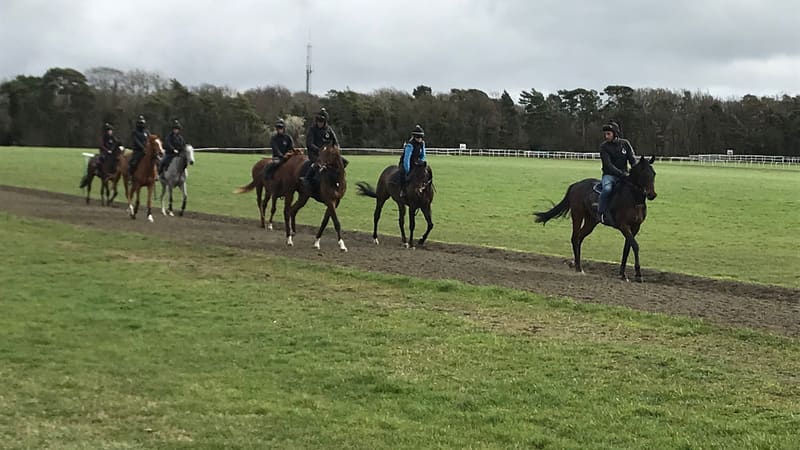

Newmarket in October is cold in a way that surprises people from Dubai. Faris arrives in a coat so warm it has its own weather.
"Could we see him walk again?" is the most common sentence at any sale. A sale is the only shop where the product is calmer than the customers.
The page behind the page
Before Faris falls in love, the vet studies the X-rays in the sale's repository. Faris looks at them too, reading them the way most of us read a menu in a language we do not speak: he points at things and nods.
The vet looks for a long time, the way an art valuer studies a painting he is about to call "interesting". Then he says "hmm". In our experience, "hmm" is the most expensive word in the English language.
Wind, eyes and teeth
An endoscope (a thin camera passed up the nose) lets the vet check the larynx. A horse that "makes a noise" when galloping may have a wind problem.
For a private purchase, the British Equine Veterinary Association describes 2 levels of vetting:
- 2-stage: an exam at rest, then a walk and trot in hand. About an hour: the polite introduction.
- 5-stage: adds hard exercise, a rest and a final trot-up. Up to about 2.5 hours: the full family dinner, with questions.
Stage 1 includes the eyes in a dark box, the heart, the lungs and the teeth. Yes, the vet checks the horse's teeth before your bank checks your credit. At a 5-stage a blood sample is usually taken and stored, so that it can be tested later if questions come up.
Here is the bit people forget. A vetting is not a pass or a fail. It is the vet's opinion on whether the horse suits your plans on that day, and "sound" means only that no lameness was found at the time. "Sound in wind and limb" is a sentence, not a promise.
In the ring
The auctioneer speaks at roughly the speed of light. By the time your brain catches up with your raised hand, you own a bay colt and a strong opinion about bidding.
Faris spends the first hour afraid to scratch his nose. (Relax: auctioneers are very good at telling a bid from an itch.) An agent's job is to raise your hand slowly and lower it quickly. We set the limit with you before the horse walks in, and we keep to it when the room gets loud.
The hammer falls. Faris's horse is a bay yearling colt with a kind eye and, the consignor says, "scope". The price, in our story, is about US$140,000. He signs, shakes hands and takes 26 photographs of the horse eating hay.
Cost-Meter: about US$147,000 (US$140,000 for the horse and a US$7,000 agent's fee; vet and sale charges quoted in writing before the sale)
That evening, Auntie Mariam sends a short message: "Congratulations. Now you have to keep it." She is right, as usual, and the first invoice is already on its way.
5. How much does it cost to keep a racehorse each year?
In Britain, an owners' survey in 2015 put the yearly cost at £22,595 for a Flat horse and £16,325 for a jumper. It is higher today. The main costs are training fees, vet, farrier, insurance, transport, race entries and jockey fees. Ask the trainer for a written quote before the horse arrives.
Faris's colt moves into a licensed trainer's yard near Newmarket, run by a trainer who says very little and notices everything. We do not train horses; licensed trainers do. Our job is to help choose the right trainer, place the horse there, and keep an eye on everything for the owner.
Four weeks later the first invoice arrives, and Faris reads it slowly, with growing respect.
The receipt
Here is a year in training in Britain. The comic labels are ours; the numbers are not.
| Item | What it costs | Source and year |
|---|---|---|
| Training fees ("bed, board and personal trainer") | About £24,000 a year (fees alone, 2018 data; the 2015 survey total was lower) | Racing Post analysis of 2018 data |
| Ireland, for comparison | About €50 a day on average | Irish Times, January 2026 |
| Newmarket gallops ("gym membership") | £165 + VAT a month (2025), about £2,376 a year including VAT | Jockey Club Estates, 2025 |
| Jockey ("the chauffeur") | £173.54 a ride on the Flat, £235.90 over jumps | ROA, 2026 |
| Entry handling ("the admin") | £28.08 an entry | ROA, 2026 |
| Colours ("the outfit") | From £73.17 a year | ROA |
| Insurance ("the just-in-case") | About 3-3.8% of the horse's value a year | New Zealand insurer guide |
| Vet, farrier, dentist, transport ("doctor, shoes, dentist and taxi") | Ask for a written quote | No reliable public figure |
A year in training, itemised: the receipt
| Item | Cost |
|---|---|
| Training fees (2018 data) | about £24,000 a year |
| Newmarket gallops (2025, including VAT) | about £2,376 a year |
| Jockey, per ride (2026) | £173.54 Flat · £235.90 jumps |
| Entry handling (2026) | £28.08 an entry |
| Colours | from £73.17 a year |
| Insurance | about 3-3.8% of value a year |
| Vet, farrier, dentist, transport | written quote |
| Benchmark total, Flat horse (ROA 2015 survey, dated) | £22,595 a year |
| The punchline, per horse in Britain | Amount |
|---|---|
| Prize money: £194.7m paid in 2025 across 21,728 horses in training at some stage (our calculation) | about £8,960 |
| Yearly cost of keeping one in training (2015 survey) | about £22,600 |
The joy is the reward; the money rarely is. Sources: Racing Post, Jockey Club Estates, ROA, Equine Insurance NZ, British Horseracing Authority.
A racehorse eats, sleeps, sees the dentist and has regular pedicures. It is, in short, a teenager with better posture and a bigger allowance.
Insurance: a careful list of things it will not pay for
The core policy is mortality and theft cover, and the sum insured usually follows the purchase price. Vet fees and "loss of use" are extras, and anything found at the vetting is usually excluded. One US broker quotes from about 6.5% a year for racehorses, so rates vary widely by country and cover.
So the policy is a precise, beautifully printed list of everything it will not pay for. Read it anyway: it is the most useful document you will ever find boring.
The Glossary of Sighs
Trainers speak a quiet language, and owners soon learn to grade the sighs the way experts grade perfume.
- The short sigh: it is raining, and the ground will be soft.
- The long sigh: the vet is coming, and so is the vet's invoice.
- The double sigh: the owner has started planning the Group 1 celebration.
Faris's Group 1 speech now thanks the farrier by name.
Cost-Meter: about US$188,000 (horse and fee US$147,000, plus a first year of training, gallops, insurance, vet and farrier at roughly US$41,000; illustrative)
One Friday in winter, Faris flies home to watch the Arabian races in Dubai. A grey mare walks past him in the parade ring, moving like a poem, and he forgets the invoice completely. That is exactly how these things begin.
6. What is an Arabian horse, and what does one cost?
The Arabian is the desert horse, bred for centuries by Bedouin families who traced each horse's family through its mother. Today Arabians race and compete in shows. At the 2025 Arqana Purebred Arabian Sale in France, 97 lots were offered and the average was €53,986. The record at Poland's famous Pride of Poland sale is €1.4 million, set in 2015.
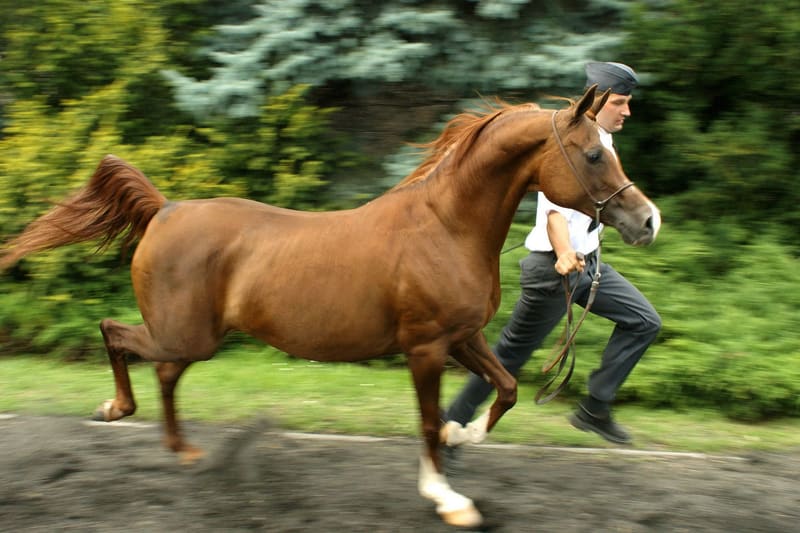

If horses came to dinner, you could tell the 3 kinds apart at once. The Thoroughbred is the athlete, who checks his watch and leaves before dessert. The sport horse is the engineer, who asks how high the ceiling is. The Arabian is the poet, who walks in last while the whole room turns to look.
Faris has just met the poet.
Mum decides the family name
For centuries, Bedouin breeders traced a horse's family, or strain, through the mother, often for 7 generations or more. The stallion did not decide the family name. The mare decides the family name. The stallion simply gets the bigger photograph.
The classic strains are often called Al Khamsa, "the five". Lists differ, but they usually include Kuhaylan (often called the original), Saqlawi, Abayyan, Hamdani and Hadban, and some lists add Dahman.
Even the writer Carl Raswan admitted that in modern pedigrees a strain name says little about a horse's actual blood. A strain name is a proud heritage label, and a beautiful one. The papers tell you the rest.
What "purebred" means
The World Arabian Horse Organization (WAHO) defines a purebred Arabian as a horse in a stud book that WAHO accepts.
Critics call this circular, and some breeders in the Gulf and Syria prefer the stricter idea of asil, meaning pure desert breeding. For a buyer, the story matters, and the stud book proves it, so ask which stud book and check the papers.
Racing and shows
Arabians have their own top races. The Dubai Kahayla Classic opens Dubai World Cup night at Meydan. In Britain, Doncaster has hosted the UAE President Cup UK Arabian Derby on St Leger day, and Newbury hosts the Dubai International Arabian Races.
In the show ring, Arabians are judged on type, movement and presence. The European show body, ECAHO, has zero tolerance for banned substances, and it also bans coat dyes, hoof paint, cosmetic surgery and mane and tail extensions. An Arabian show horse must win on natural beauty alone.
History's most famous small Arabian, Marengo, stood about 14.1 hands. Legend has it that Napoleon rode him at Austerlitz, though historians dispute parts of the story. Either way, greatness is not measured in hands.
What Arabians cost
Most good Arabians sell far below the records, but the records show where the ceiling is.
- 2007: the stallion Dahess sold for €1,050,000 at the Arqana Arab Sale in Saint-Cloud.
- 2015: Pepita sold for €1.4 million at the Pride of Poland sale, a record for that auction. The sale took about €4 million in total.
- 2025: the Arqana Purebred Arabian Sale opened the Arc weekend in Paris. It offered 97 lots, sold about 85% of them, turned over a record of nearly €4 million (up 10%) and averaged €53,986.
Before you buy one, check the stud book, passport, DNA and chip: our guide on how to buy a purebred Arabian horse has the full papers checklist.
الخيل أعلم بفرسانها
"Horses know their riders best." An old Arabic saying: ask the one who truly knows.
With Arabians, the one who truly knows is often the breeder. We listen hard to breeders before we ever look at a price.
Cost-Meter: about US$188,000 (unchanged; Faris only looked. For 4 hours. Then he asked for the breeder's number)
Faris tells his cousin Layla, a show jumper, about the grey mare. She laughs at him kindly.
"Wait until you see where racehorse blood really ends up," she says. "Come to my show on Saturday, and bring your chequebook, for my vet."
7. What does a sport horse cost, and can a former racehorse jump?
Sport horses (show jumpers, dressage horses and eventers) range from a few thousand euros to millions. At the Aloga auction, the top dressage price was €750,000 in 2025, and a show jumper made €2.4 million at the PSI auction in 2018. Many former racehorses find second careers, and dressage is the most popular among those registered in Britain.
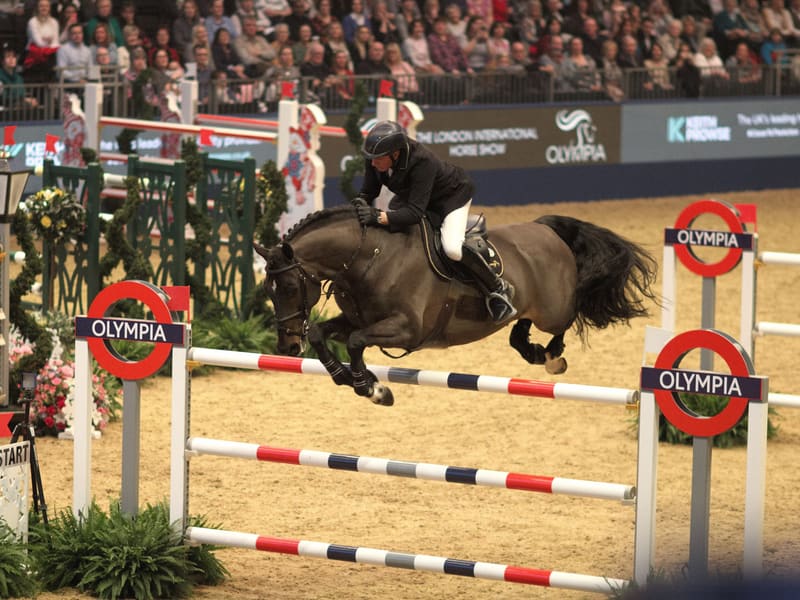

Layla rides a warmblood mare whose pedigree has "xx" scattered through it like raisins in a cake. In sport-horse papers, "xx" means Thoroughbred.
"You see?" says Layla. "Your racing family is in here too."
The racehorse's second act
Some of the greatest jumpers began as racehorses who were simply not fast enough. Snowbound raced in California under the name Gay Vic, took 3 years to win even a maiden race, and had 2 tendon injuries. In 1968 he won the Olympic individual gold medal in show jumping, the first for a US rider.
Touch of Class raced under the name Stillaspill. At the 1984 Los Angeles Olympics the horse won individual and team gold and, according to the Show Jumping Hall of Fame, jumped the first double-clear rounds in Olympic history.
Neither horse was a failure. They were simply in the wrong job, until somebody noticed. In our view, that is the whole art of buying horses in one sentence.
How racing blood got into the jumping ring
European breeders have long added Thoroughbred blood to their warmbloods. Ladykiller xx, born in 1961, was brought into the Holstein breed, and a 2019 study of the top 100 jumpers found him the most common close Thoroughbred ancestor, appearing 32 times.
Cottage Son xx ran only once, came to Germany aged 15, and sired the mothers of 2 giants of jumping breeding, Lord and Ramiro. One race, then a dynasty: the Darley Arabian would approve.
The Arabian is in the mix too: the Trakehner stud book is closed except to approved Thoroughbred and Arabian lines, and breeders use the Trakehner to refine other warmbloods. At the 2018 World Equestrian Games, the top 25 eventers averaged about 62% Thoroughbred blood. So the athlete, the poet and the engineer are not strangers after all. They are one big family, and like every big family, each branch claims the best ancestor.
The sport-horse Translation Table
Sport-horse adverts have their own language, and Layla kindly translated a few for Faris.
| The advert says | It usually means |
|---|---|
| "Amateur-friendly" | Has met an amateur once. It went well. |
| "Scopey" | Will clear the fence, and possibly the next field. |
| "Sensitive" | Has opinions about the colour of the poles. |
| "Not a novice ride" | Bring a very good instructor. |
| "Price on request" | Please sit down first. |
The X-ray saga
A new German X-ray guideline for pre-purchase exams started on 1 April 2026, raising the standard set from 18 views to 22 for warmbloods aged 3 and over.
A careful buyer can now own more pictures of a horse's fetlocks than of their last family holiday. Two vets may give 3 opinions on one image, which is why you want a vet who works only for you.
What sport horses cost
- Foals at dressage auctions: around €15,000-€22,000 (2024-25).
- Aloga auction: top dressage price €300,000 in 2024 and €750,000 in 2025 (the auction sells jumpers too).
- PSI auction, 2018: a show jumper sold for €2.4 million.
- Private sale record: in 2013 the show jumper Palloubet d'Halong was reportedly sold for about €11 million, an unofficial figure.
The Gulf in the arena
Saudi Arabia won team bronze in show jumping at London 2012, the Kingdom's first Olympic team medal. Saudi Arabia and the UAE both qualified teams for show jumping at Paris 2024. Abu Dhabi's Al Shira'aa has sponsored England's Hickstead Derby since 2017. The 300-year round trip, it turns out, has a jumping lane.
Cost-Meter: about US$188,000 (unchanged. Layla's horse is on Layla's meter, but she showed Faris her X-ray invoice anyway, out of family kindness. He felt much better)
On Sunday morning Faris's phone buzzes with a message from the trainer: "He's ready. First run in 3 weeks." Faris begins writing a much longer speech.
The Silk Road Letter
Twice a month: the sales worth watching, what horses really cost, and the catalogue jokes nobody tells you. Free. Unsubscribe in one click.
8. Will my racehorse win?
Nobody can promise that, and you should be wary of anyone who does. Studies differ, but roughly 70 in every 100 foals ever start in a race, and somewhere between about 24 and 48 ever win one. Only about 2 or 3 win a stakes race. Good buying improves the chances. It cannot remove the luck.
Race day. Faris's colt, now 2, runs in a maiden race at a quiet British course on a grey spring afternoon.
His Group 1 speech is now 11 minutes long, and it thanks the trainer, the farrier, the vet, Auntie Mariam and, after some research, a cat called Grimalkin.
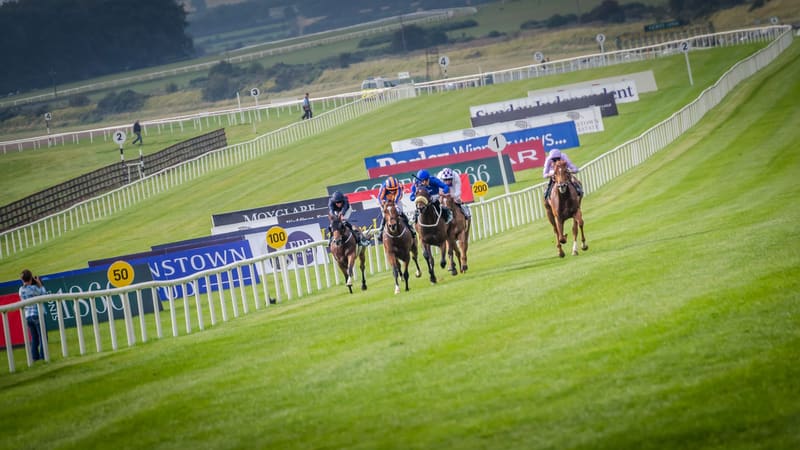

The parade ring
In the parade ring, the trainer says 4 sensible words, and the jockey arrives in Faris's new colours.
The colt looks as if he does this every day. Faris looks as if he has never done anything before.
The colt starts slowly, finds his stride and finishes 4th of 12, running on at the end. The trainer gives a small nod, which in trainer language is a standing ovation.
Afterwards Faris learns the owner's list of reasons: the ground, the pace and, once, a bird. Horses never read their own pedigree, which explains a great deal.
The honest numbers
100 foals: who makes it?
| Stage | Out of every 100 foals |
|---|---|
| Ever start in a race | about 70 |
| Ever win a race | about 24 to 48, depending on who's counting |
| Win a stakes race | about 2 to 3 |
The win figure is a range, not a single number: studies of different years disagree. Sources: Commonwealth (Jockey Club data), Equine Ink, University of Sydney.
The win figure depends on who is counting: about 24 in 100 in recent North American data (which includes young crops still racing), nearer 48 in data from the 1990s.
So many horses never win at all. Every yearling is a Derby winner until it meets a starting gate. That is not a reason to stay away, but it is a reason to buy carefully and to love the horse you get.
Cheap champions, and why they are rare
- Northern Dancer failed to reach his US$25,000 reserve as a yearling in 1962, partly because buyers thought him too small. He won the 1964 Kentucky Derby in record time and became one of the great sires.
- Mine That Bird cost US$9,500 as a yearling in 2007 and won the 2009 Kentucky Derby by nearly 7 lengths.
- Rich Strike was claimed for US$30,000 and won the 2022 Kentucky Derby.
These horses are famous because they are rare. A 2026 America's Best Racing article argued that a big auction price is rarely a good guide to Kentucky Derby success. But a cheap horse is not a smart horse. Treat these stories as luck plus good judgement, never as a plan.
Prize money versus costs
In 2025, British racing paid £194.7 million in prize money, when 21,728 horses were in training at some stage. That works out at about £8,960 per horse (our calculation), while the yearly cost of keeping one in training (£22,595 in the 2015 survey) is well over twice that.
So here is the plainest sentence in this article. Most racehorses do not pay for themselves, and owning one is a passion, not a way to make money. The joy is the reward; the money rarely is.
The races everybody dreams about
The Gulf now hosts the biggest dreams in racing.
The world's richest races (purses)
| Race | Purse, in US$ |
|---|---|
| Saudi Cup, Saudi Arabia | US$20m |
| The Everest, Australia (A$20m) | about US$13m |
| Dubai World Cup, UAE | US$12m |
| Japan Cup, Japan (¥1.09bn) | about US$7.3m |
| Breeders' Cup Classic, USA | US$7m |
| King George, Britain (£2m) | about US$2.6m |
Purses only, converted at rough October 2026 rates (£1 = US$1.32, A$1 = about US$0.65, US$1 = about ¥150). Sources: Arab News, WAM, Gulf News, JRA, Thoroughbred Daily News, Wikipedia.
The Saudi Cup, run at King Abdulaziz Racecourse in Riyadh, carries a US$20 million purse and is the richest race in the world. At about £15 million, it would keep one horse in British training, at 2015 costs, for roughly 660 years: a measure of how seriously the Kingdom takes the sport.
The Dubai World Cup was first run on 27 March 1996 at Nad Al Sheba, and was won by Cigar. Its 30th running, at Meydan on 28 March 2026, carried a US$12 million purse; Magnitude, from the USA, won US$6.96 million, and Japan's Forever Young was 2nd.
The racing season in Dubai and Riyadh runs through the winter, and horses fly in from Europe, America, Japan and Australia. Most of them arrive with more air miles than their owners, and far less jet lag.
Cost-Meter: about US$189,000 (jockey fee, entry and transport added. The small prize cheque has been framed; the meter ignores it, out of respect)
Two seasons later (and about US$80,000 more on the Cost-Meter), the colt is a good, honest racehorse who has won once and placed often. Faris adores him, but the colt might be happier with an owner who races more often. So Faris asks the question every owner asks eventually: how do I sell a horse well?
9. How do I sell a horse, and what does an agent charge?
Decide the route first: a public sale, such as a horses-in-training sale, or a private sale. Prepare honest paperwork, recent videos and vet records, and price the horse on recent results. With us, listing is free. You pay 5% only if the horse sells to a buyer we introduce (including through our site), within 6 months of the introduction.
Horse trading is one of the oldest trades in the world, and over the centuries it has grown its own hopeful language. You will hear "he just needs a run" and "I would never sell him, except to you". They are not lies, exactly. They are hopes, wearing a suit.
What agents charge, and why it should be written down
At auction, the usual agent's fee is 5% of the hammer price. In private deals, fees vary more and are often paid by the seller. Whatever the deal, good practice is simple: the fee is agreed in writing, and any payment from the other side is disclosed first.
So our buyer terms are short and on paper:
5% fee (min US$5,000), agreed in writing. You pay the seller directly; your money never goes through us. If we are ever paid by both sides, both are told in writing first.
For sellers, the terms are at the top of this chapter. Our 5% is written down, so you always know exactly what our advice costs.
How to sell a horse well: 7 steps
- Choose the route. A public sale gives you a date and a crowd; the median at the 2025 Tattersalls Autumn Horses in Training Sale was 15,000 guineas. A private sale gives you more control and more time.
- Sort the paperwork. The passport, registration and ownership records must all match.
- Gather the vet records. Recent X-rays and a scope save weeks of questions.
- Film good videos. Walk, trot and canter, in good light, without filters.
- Describe the horse honestly. Use the Translation Table in reverse: "stays well, not quick" beats "will appreciate a trip".
- Price on recent results. Look at what similar horses sold for this year, not at what you paid.
- Check your training agreement. Trainers often take a 5% commission when a horse in their yard is sold, so know this before you agree a price.
Faris sells
Faris lists his colt. In our story, a buyer finds him through our site, the buyer's vet does a full check, and the deal is signed within a week. Real sales can take much longer.
For the first time, the Cost-Meter shows a minus sign, although it does not reach zero. Faris decides it was the best money he ever spent, which is the only honest way to measure it.
Cost-Meter: about US$270,000 before the sale, a little lower after it, and finally switched off (Faris keeps the framed prize cheque)
The yearling with "scope"
This story began with "just one horse", and Faris's next chapter begins with a yearling with "scope". This time he knows what the word means, and what it does not.
The mother has produced runners. The X-rays are clean, and the vet's "hmm" was a short one. A licensed trainer has been chosen, the yearly budget is written down, and there is a plan for life after racing. That is the yearling we would actually buy.
A few plain words
Now, without the jokes.
Horses are not numbers on a spreadsheet. They are living athletes, and they depend on people to make good decisions for them, from the day they are sold to the day they retire.
Racing is a first career, not a whole life. In Britain, more than 14,500 former racehorses were registered with Retraining of Racehorses by 2024, and dressage is their most popular new discipline. The best buy is a horse with a plan for its second career, and an owner who has one too.
Silk Road Bloodstock is a small team working with clients worldwide. We help clients buy and sell Thoroughbreds, Arabians and sport horses at the public sales and from private yards, working with licensed trainers and independent vets. We place your horse, supervise the plan and report to you plainly.
We cannot promise you a winner, because nobody honestly can. What we can promise is honest advice, fees in writing, an independent vet, and a clear answer when the answer is no.
If you are thinking about your first horse, or your next one, start with a conversation. Tell us your budget, your country and what you hope for, and we will tell you what is realistic, and what it will cost each year, before you spend anything.
The door, like the door of a good majlis, is open, and the coffee is on us.
The end. The horse is still in the box.
Racing will always be a little absurd. Buying and selling should not be.
Email info@silkroadbloodstock.com first, from anywhere in the world. Phone +971 52 311 2385 (UAE) second. WhatsApp as backup.
Buy with us.
Tell us your budget (from US$50,000), your discipline and how much drama you can tolerate. We search the sales and private yards worldwide and send you a shortlist, wherever you live and race. No result is promised. Honest advice is.
5% fee (min US$5,000), agreed in writing. You pay the seller directly; your money never goes through us. If we are ever paid by both sides, both are told in writing first.
Sell with us.
List your horse free, wherever it is trained, and we will show it to serious buyers around the world. You pay 5% only if it sells to a buyer we introduce (including through our site), within 6 months of the introduction.
P.S. You do not need to speak sales English. Just email info@silkroadbloodstock.com with a budget and a smile, and we will translate over coffee.
Related guides
- What does a bloodstock agent do? (And what 5% pays for)
- Racehorse vetting: what a vet check can and can't tell you
- How to sell a racehorse in training: auction, private or agent
- Owning a racehorse in Dubai: your first season, 2026-27
The Silk Road Letter
Twice a month: the sales worth watching, what horses really cost, and the catalogue jokes nobody tells you. Free. Unsubscribe in one click.
Frequently asked questions
How much does a racehorse cost?
From a few thousand to several million. The 2026 Tattersalls October Yearling Sale median was 80,000 guineas (£84,000). Our buying budgets start from US$50,000.
How much does a racehorse cost per year?
A 2015 ROA survey put it at £22,595 for a Flat horse in Britain. It is higher today, so ask the trainer for a written estimate.
What does a bloodstock agent charge?
5% fee (min US$5,000), agreed in writing. You pay the seller directly; your money never goes through us. If we are ever paid by both sides, both are told in writing first.
Can owning a racehorse make money?
Most do not cover their costs. British prize money in 2025 was about £8,960 per horse in training (our calculation), against £22,595 a year in costs in the 2015 survey. We never promise wins or returns.
Does Silk Road Bloodstock train horses?
No. Licensed trainers train. We choose the trainer with you, place the horse and supervise the plan.
Can I sell my horse through you?
Yes. Listing is free. You pay 5% only if it sells to a buyer we introduce (including through our site), within 6 months of the introduction.
Do you only work with clients in Dubai?
No. Dubai is our base, not our limit. We help clients all over the world buy and sell horses, by email and video call. Our fees are in US$. Email info@silkroadbloodstock.com first.
Spotted an error? Email info@silkroadbloodstock.com and we will fix it within 48 hours.
Sources
Checked 22 October 2026. Old cost surveys are labelled with their year in the text. Currency conversions use rough October 2026 rates (£1 = US$1.32; A$1 = about US$0.65; US$1 = about ¥150; 1 guinea = £1.05).
Gulf culture
- UNESCO lists Arabic coffee and the majlis (2015)
- al-Mutanabbi, "The horse, the night and the desert know me"
- "Horses know their riders best" (Lane's Lexicon)
History and pedigree
- Darley Arabian
- Byerley Turk
- Godolphin Arabian
- The foundation stallions (KentuckyDerby.com)
- The foundation sires (Kentucky Derby Museum)
- Grimalkin legend
- 95% of male lines and genes explaining about a third of performance, 2005 Dublin research (Reuters via NBC News)
- Sporting Life on the founding sires
- Turkoman origin of the Thoroughbred male line: Wallner et al., "Y Chromosome Uncovers the Recent Oriental Origin of Modern Stallions", Current Biology 27(13):2029-2035 (2017)
- Little Arabian DNA in the Thoroughbred: Cosgrove et al., Scientific Reports (2020): DOAJ and Springer
- Eclipse skeleton DNA (University of Cambridge, 2012)
- Eclipse research (University of Huddersfield)
- Godolphin (founded 1992)
- 1996 Dubai World Cup
- Frankel
- Northern Dancer: Wikipedia and Horse Canada
Sale prices and records
- Keeneland September 2025: NKyTribune and Thoroughbred Daily News
- Tattersalls October 2026 totals
- Tattersalls October 2026 Book 1
- Tattersalls October 2026 Book 2
- Tattersalls October 2026, final days
- Tattersalls Autumn Horses in Training 2025
- Tattersalls Craven Breeze-Up 2026
- Arqana August 2026
- Magic Millions Gold Coast 2026
- Auction records history, including Seattle Dancer (Racing Post)
- The Green Monkey: Wikipedia and Racing Post
Vetting, costs and insurance
- BEVA pre-purchase examination, the 5 stages
- University of Liverpool, pre-purchase examinations
- Cambridge Equine Hospital, vettings
- ROA, the cost of ownership (2015 survey; 2026 riding and entry fees; colours; trainers' 5% sale commission)
- Racing Post, owners' returns (2018 data)
- Irish Times on training fees (January 2026)
- Jockey Club Estates, Newmarket gallops
- Equine Insurance NZ, Thoroughbred insurance guide
- Marshall & Sterling, horse insurance
- Agent fees: Gayle Van Leer and ROA
Arabians
- Al Khamsa strains
- The battle to define the Arabian horse (New Lines Magazine)
- What is a purebred Arabian (In The Focus)
- Asil and WAHO (Daughter of the Wind)
- ECAHO medication and show rules
- Marengo
- UAE President Cup UK Arabian Derby at Doncaster (ARO Racing, 2025)
- UAE President Cup UK Arabian Derby (Qatar Tribune)
- Arabian races at Newbury (Gulf News)
- Dahess, Arqana 2007
- Pride of Poland 2015 (Pepita, sale record; total €3,995,000)
- Higher Arabian prices at US auctions in the 1980s: Sports Illustrated, "Beauty and the Beastly" (1986)
- Arqana Purebred Arabian Sale, 2025 results (reported in the Qatar Tribune 2026 preview)
Sport horses
- Snowbound: Wikipedia and Chronicle of the Horse
- Touch of Class
- Thoroughbred blood in jumpers, 2019 (Horse Magazine)
- Cottage Son (Horse Magazine)
- Trakehner
- Thoroughbred blood at the 2018 WEG
- German X-ray guideline, 2026 (Examion)
- Palloubet d'Halong: Horse & Hound and Chronicle of the Horse
- PSI 2018: World of Showjumping and Eurodressage
- Aloga and dressage auction prices (Eurodressage): 2024, 2025 and 2026
- Saudi Arabia at London 2012
- Saudi Arabia and the UAE qualify for Paris 2024 (OCA)
- Al Shira'aa and Hickstead
Winning, prize money and big races
- Thoroughbred success funnel (Commonwealth)
- Jockey Club foal data (Chronicle of the Horse)
- Win rates, 1990s crops (Equine Ink)
- University of Sydney, racing myths (2016)
- Jockey Club foal crop figures
- Mine That Bird
- Rich Strike (Racing Post, 2022)
- Auction price and Derby success (America's Best Racing, 2026)
- BHA 2025 racing report
- Saudi Cup: Wikipedia and Arab News
- Dubai World Cup 2026 (WAM)
- Dubai World Cup 2026 result (Gulf News)
- Dubai World Cup 2026 prize money (Gulf News)
- The Everest
- Japan Cup 2025 (JRA)
- 2025 Breeders' Cup
- King George prize money from 2026 (TDN)