The Silk Road Journal · Buying
What Does a Bloodstock Agent Do? (And What 5% Pays For)
People nod at "bloodstock agent" the way they nod at "actuary". Here is the job, item by item, and the one sentence every agent should put in writing.
A light-hearted guide. Faris, Auntie Mariam and the Man Who Knew the Sire are invented. Facts are sourced at the end. Nothing here is legal or financial advice.
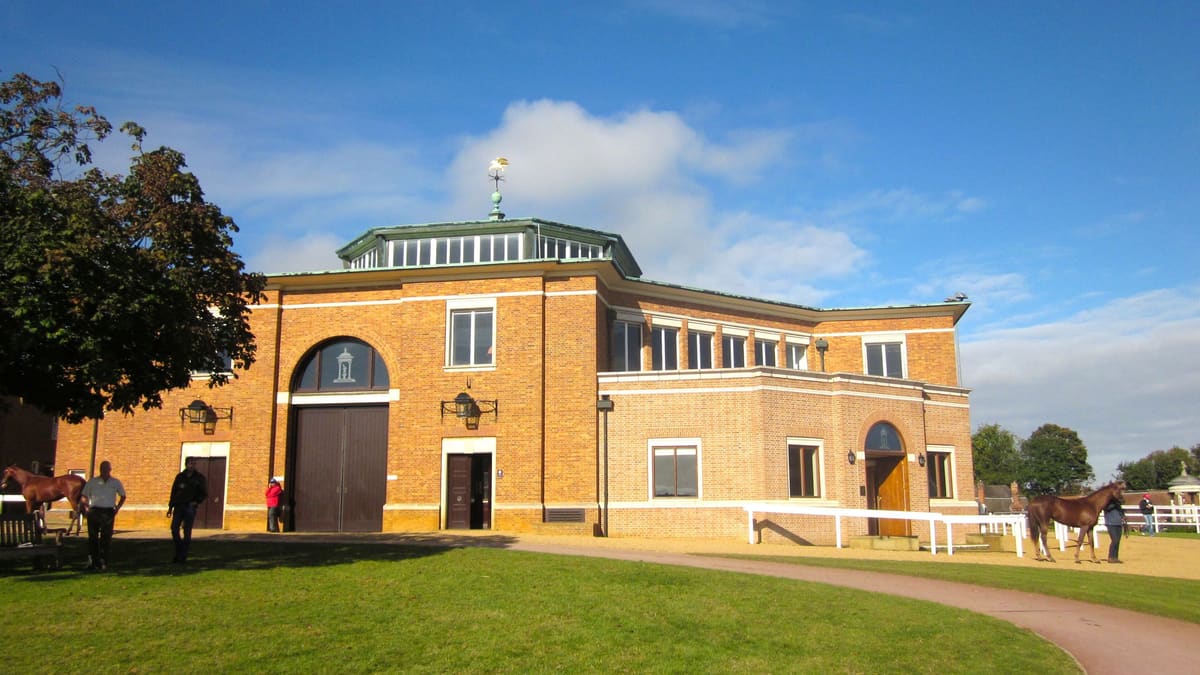

A bloodstock agent finds, checks and buys horses for you, or sells yours. At auction the usual fee is about 5% of the price. It pays for shortlisting, vetting, bidding, paperwork and the trip to wherever the horse will race. A good agent tells you in writing who pays them. If anyone else pays them too, you must know first.
When I tell people I am a bloodstock agent, they nod the way people nod at "actuary". Then they ask if I ride the horses. I do not. The horses and I agreed this long ago. Everyone is happier.
Faris asked a better question in the family majlis: "So what do you actually do for 5%?" Auntie Mariam put down her coffee. She wanted it itemised. Quite right.
What does a bloodstock agent do before a sale?
Before a sale, an agent turns your wish into a short list. That means reading catalogues, race records and vet files.
- The brief: what the horse is for, and the full budget, including a year of keeping costs.
- The shortlist: most horses are crossed out at a desk. It is the quietest part of the job, and the most useful.
- The inspection: we see each horse walk.
- The vet: an independent vet checks the horse. At Tattersalls, only registered vets may view the X-rays in the sale's repository.
- The top price: agreed with you, in writing, before the sale.
Catalogues speak their own language. "Scopey" means tall, no promises. "Will improve with time" means not yet. Our guide to reading a sales catalogue page translates the rest.
What does an agent do at the auction and after?
At the auction, the agent bids for you, within your limit. After the hammer, the agent handles paperwork, insurance, transport and the move to a trainer.
Faris fears he will buy a filly by scratching his nose. Relax. Auctioneers know a bid from an itch. Still, it helps if only one of you bids.
Sale houses add costs. At Arqana in France, buyers pay 6% commission plus VAT (20% for racehorses), on top of any agent's fee.
Then the passport and ownership are transferred. Licensed trainers train; we place, supervise and report. The horse will fly more than you this winter, and it will not even pack.
How are bloodstock agents paid at auction and in private sales?
At auction, the usual agent's fee is 5% of the hammer price, normally paid by the buyer. Private sales run about 5% to 10%, often paid by the seller. Big regular buyers often pay less.
Some sale houses also pay agents. Arqana says it pays 5% of the purchase price "to the bloodstock agent or trainer" who acted for the buyer. That is open and published, and exactly why you should ask your agent about it.
The arithmetic, with our own fee: a horse at US$200,000 means a fee of US$10,000. A horse at US$60,000 would mean US$3,000, so our minimum of US$5,000 applies.
The Mariam Audit. Auntie Mariam reads our fee line aloud: "5%. In writing. Minimum 5,000 dollars. And who else pays you?" Silence. Then: "Good. Now show me the vet's bill." She is always right.
The Silk Road Letter
Twice a month: the sales worth watching, what horses really cost, and the catalogue jokes nobody tells you. Free. Unsubscribe in one click.
What does the 5% actually pay for?
Our honest list. Anything marked "no" you pay directly, to whoever did the work.
| The job | What we do | In the 5%? |
|---|---|---|
| Brief call | Budget, aims, a year of costs | Yes (the first call is free) |
| Shortlist | Catalogues, race records, pedigrees | Yes |
| Inspection | See the horse, send notes and video | Yes. Any travel costs are agreed with you in writing before we travel |
| Vetting | Book an independent vet, read the report | Our time, yes. The vet's bill, no |
| Bidding | Bid within your written limit | Yes |
| The horse | The price itself | No: you pay the seller or sale house |
| Sale-house costs | Buyer's commission, VAT | No |
| Paperwork | Passport, ownership, sale forms | Yes |
| Transport, insurance | Arrange and check | Our time, yes. The bills, no |
| Trainer | Place the horse with a licensed trainer partner, report to you | Our time, yes. Training fees, no |
| Saying "no" | Telling you when to walk away | Yes. Often the best value here |
| Coffee | Roughly 3 litres per sale | Yes, regrettably |
For the full picture of buying and running costs, see what a racehorse really costs.
Secret commissions: why do written terms matter?
Because only paper proves whose side your agent is on. In Britain and Ireland, the Bloodstock Industry Code of Practice covers all sales after 16 August 2021.
- Bribery is banned, including "luck money": a payment from a seller to a buyer's agent to steer a purchase.
- Collusive "bidding up" is banned: pushing a price up with no plan to buy.
- Conflicts need consent. An agent must not act where their interests clash with yours, including for both sides, without your "prior informed consent". That consent must be "evidenced in writing and explicit".
- Breaches have teeth: BHA bans from racecourses, and up to 10 years in prison for bribery in the UK.
Now the calm part. In Britain, you do not need a licence to be a bloodstock agent. A 2019 BHA review recommended licensing, but the 2021 Code did not include it.
So, for now, your written terms do the job a licence would. A spoken promise, as the old joke goes, is worth the paper it is written on.
When do you not need a bloodstock agent?
You may not need one if you know horses, have a trusted vet, and buy from a trainer you know. Or if the horse is cheap.
Honest arithmetic: on a US$20,000 horse, our minimum fee is a quarter of the price. A sensible trainer and a good vet may be enough. The Man Who Knew the Sire says you never need an agent. He is right about twice a year, usually in someone else's year.

How do I choose a bloodstock agent? 8 questions to ask
Ask every agent these, including us. A good agent answers in writing, without sighing.
- What is your fee, in writing?
- Who else might pay you on this deal?
- Will you ever act for the seller too, and how will I be told?
- Do you own any part of a horse you might show me?
- Is the vet independent of the seller?
- Does my money ever pass through you?
- What do I pay if we do not buy?
- When did you last tell a client not to buy, and why?
Question 9 is optional: "Did you know the sire?" I do not recommend it. The answer takes an hour.
The straight part
Nobody can promise you a winner, or that a horse will be worth more later. Owning a racehorse is a passion, not a way to make money.
What a good agent can do is narrow the field, check the facts, hold your limit and do the paperwork. A good agent also tells you who pays them, before you sign. If they cannot say it in one sentence, keep looking. Ours is below, and we will tell you when the answer is no.
I still do not ride the horses. I read about them, check them, and sometimes say no to them. Auntie Mariam says that last part is the only bit worth 5%.
Want a horse found, checked and bought properly?
We source Thoroughbreds from all over the world for owners wherever they live, with independent vets and licensed trainer partners. Email us your budget and plans for a free 20-minute call, by phone or video, in your time zone.
Email info@silkroadbloodstock.com first, from anywhere in the world. Phone +971 52 311 2385 second (Dubai, GMT+4). WhatsApp as backup.
5% fee (min US$5,000), agreed in writing. You pay the seller directly; your money never goes through us. If we are ever paid by both sides, both are told in writing first.
Selling a horse?
List it free. You pay 5% only if it sells to a buyer we introduce (including through our site), within 6 months of the introduction.
Related guides
- What does a racehorse really cost? The honest 2026 guide
- Racehorse vetting: what a vet check can and can't tell you
- How to read a sales catalogue page in 10 minutes
The Silk Road Letter
Twice a month: the sales worth watching, what horses really cost, and the catalogue jokes nobody tells you. Free. Unsubscribe in one click.
Frequently asked questions
How much does a bloodstock agent charge?
About 5% of the hammer price at auction, and often 5-10% in private sales.
Who pays the bloodstock agent?
Usually the buyer at auction, often the seller in private sales.
Do bloodstock agents need a licence?
Not in Britain. Written terms are your protection.
Can an agent act for both buyer and seller?
In Britain and Ireland, only with your prior informed consent, in writing.
Do you work with owners outside the UAE?
Yes. We are based in Dubai and buy for owners all over the world. Most clients never need to visit: we send notes, video and the vet's report by email.
Spotted an error? Email info@silkroadbloodstock.com and we will fix it within 48 hours.
Sources
Checked 22 October 2026.
- Bloodstock Industry Code of Practice (sales in Britain and Ireland after 16 August 2021)
- Racehorse Owners Association, "New Bloodstock Industry Code of Practice", 4 August 2021
- Thoroughbred Daily News, "Banishment of Bribery, Bidding-Up Key in New Bloodstock Industry Code", 4 August 2021 (luck money, sanctions, up to 10 years for bribery)
- Racing Post, "Expanded bloodstock code outlawing malpractice in the industry is released", 4 August 2021 (licensing recommended, not included)
- Arqana, buyer information (5% to the buyer's agent or trainer, 6% buyer's commission, VAT)
- Gayle Van Leer, Ownership 101: bloodstock agents (5% at auction, 5-10% private; undated)
- Tattersalls, Notices to Purchasers: Repository and Repository Rules (vets only)