The Silk Road Journal · Arabians
How to Buy a Purebred Arabian Horse: Papers, Prices and Pitfalls
An Arabian arrives with beauty, history and a folder. Here is how to check the folder: the papers, the prices, the vet and the flight home, wherever home is.
A light-hearted look at the horse world. Faris, Auntie Mariam, the Man Who Knew the Sire and the Vet Who Says "Hmm" are invented. Facts are sourced at the end. Nothing here is financial advice.
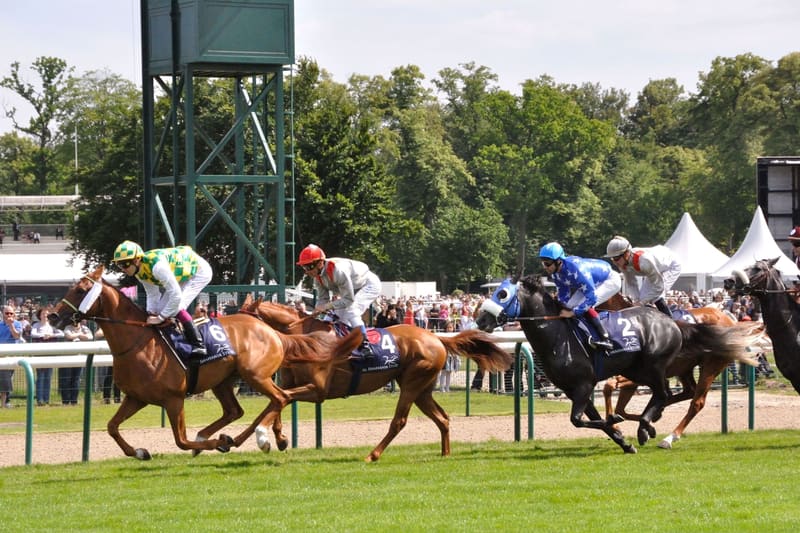

To buy a purebred Arabian, first decide the job: racing, showing or breeding. Then check four things before any money moves: a WAHO-recognised stud book, the passport, a DNA parentage record and a microchip that matches the passport. Then get an independent vet. At the 2025 Arqana Purebred Arabian Sale, the average price was €53,986.
An Arabian horse arrives with three things: beauty, history and a folder. Buyers fall in love with the first two. I fall in love with the folder, which is why I am rarely the most popular person in the parade ring.
Faris, our invented first-time buyer, has already met the beauty. A grey mare walked past him at Meydan and he forgot his own phone number. Auntie Mariam has asked for the folder. She is right, as usual.
What does "purebred Arabian" actually mean?
A purebred Arabian is a horse registered in a stud book that the World Arabian Horse Organization (WAHO) accepts. That is the whole rule. It is administrative, not poetic.
Critics call it circular, and some breeders in the Gulf and Syria prefer the stricter idea of asil, pure desert breeding. Both views deserve respect. For a buyer, the heritage is the reason to fall in love, and the stud book is the proof you can take to a registry.
So "purebred" is not a feeling. It is a page, with a number on it. The horse is magnificent either way. The number is what the next buyer will ask for.
Racing, show or breeding: which Arabian are you buying?
These are three different markets, with different prices and different papers that matter most. Decide first, or you will pay show prices for a racehorse, or the other way round.
- Racing Arabians are judged by the clock and their race record. The top race is the Dubai Kahayla Classic, a US$1 million Group 1 for purebred Arabians over 2,000m on dirt at Meydan, run on Dubai World Cup night.
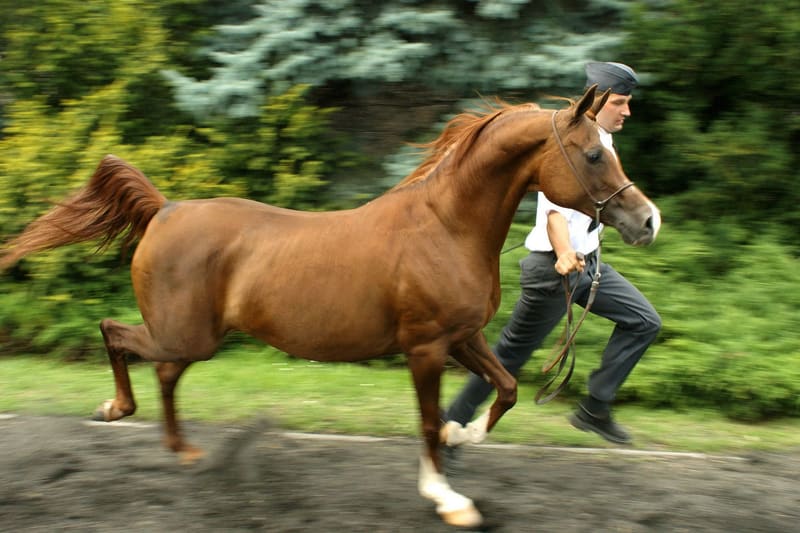
- Show Arabians are judged on type, movement and presence. The European show body, ECAHO, has zero tolerance for banned substances and bans coat dyes, hoof paint, cosmetic surgery and mane and tail extensions. The Arabian show ring is stricter than most red carpets.
- Breeding Arabians are judged on family. Bedouin breeders traced a horse's strain through the mother, often for seven generations or more. The mare decides the family name. The stallion simply gets the bigger photograph.
Endurance Arabians are a separate world with their own rules, and this guide does not cover them.
Which papers should you check before you buy?
Check the stud book, the passport, the DNA parentage record and the microchip, and make sure all four describe the same horse. If one disagrees, stop. Here is our papers checklist.
| Paper | What to ask | Pitfall it catches |
|---|---|---|
| Stud book registration | Which stud book, which country, which number? Is that stud book on the WAHO list? | A non-WAHO register sold as "purebred"; a part-bred passed off as pure |
| Passport | Do the name, colour, sex, date of birth and markings diagram match the horse in front of you? | The right papers for the wrong horse |
| DNA parentage | Has parentage been verified by DNA against sire and dam? | A "by a famous stallion" claim nobody has tested |
| Microchip | Scan it on the day, on video. Does the number match the passport? | A second chip, or a chip from a different horse |
| Special claims | "Straight Egyptian" or similar: is there a certificate from the body that defines it? | A lovely story with no paper |
| Transfer | Will the old registry send an export certificate to the new one? | A horse you own but cannot register |
Sales English has its own translator. "Papers to follow" means papers have not arrived. "Purebred, you can see it" means you can see it, but the registry cannot. And "straight Egyptian, trust me" means please ask for the certificate, gently.
The Man Who Knew the Sire says DNA is unnecessary because "the head tells you everything". The head is beautiful. It is not admissible at a registry.
Where are purebred Arabians sold?
Most good Arabians change hands at a handful of specialist auctions or by private sale. The main public sales are:
- Arqana Purebred Arabian Sale, Saint-Cloud, France, which opens Arc weekend each autumn.
- Pride of Poland, Janów Podlaski, for show and breeding horses.
- Katara and QREC auctions in Doha, Qatar.
- EAHS auctions in the UAE, and the ADIHEX auction in Abu Dhabi.
Online listings exist, but many are leisure or endurance horses. Much of the best trading is private, which is exactly where a folder matters most.
The Silk Road Letter
Twice a month: the sales worth watching, what horses really cost, and the catalogue jokes nobody tells you. Free. Unsubscribe in one click.
How much does a purebred Arabian cost?
Most good Arabians sell for tens of thousands of euros, and a very few for over €1 million. Here are dated, public figures:
- 2025, Arqana Purebred Arabian Sale: 97 horses offered, about 85% sold, record turnover of nearly €4 million (up 10%), average €53,986.
- Feb 2025, Katara auction, Doha: top price QAR 1.1 million, for a mare.
- Sept 2025, ADIHEX, Abu Dhabi: best bid AED 600,000, which the owner declined.
- 2015, Pride of Poland: the mare Pepita made €1.4 million, the sale record.
- 2007, Arqana: the stallion Dahess sold for €1,050,000.
Our rough guide for racing Arabians (our experience, not a published price list): about US$50,000 buys a two-year-old or a placed horse in training near the sale average; about US$100,000 buys a better two-year-old or a three-year-old with winning form. Group 1-level horses are almost always private deals, at around US$500,000 and up.
Auntie Mariam reads the list aloud, then the Mariam Audit: "And the vet? And the flight? And the feed?" Silence follows. She is, again, right. For the running costs, see what a horse really costs.

Should you vet an Arabian before you buy?
Yes, always, with a vet who works for you and not the seller. A pre-purchase vetting checks heart, eyes, wind and soundness, and can add X-rays.
Ask for a blood sample to be taken and stored, so it can be tested later if needed.
The Vet Who Says "Hmm" will look at the X-rays for a long time. "Hmm" is the most expensive word in English, and the cheapest one to hear before you sign. For a show horse, we also bring an independent Arabian specialist to judge type and movement. Our vetting guide covers the rest.
How do you import an Arabian horse to the UAE?
Get a UAE import permit from the Ministry of Climate Change and Environment (MOCCAE) before the horse travels, plus an official health certificate from the exporting country's government vet. Horses arrive by air only, not by sea, and spend time in isolation before export and after arrival.
Not bringing your horse to the UAE? Every country has its own permit, tests and quarantine. We check the current rules for the destination before you bid, wherever that is.
Then register the horse with the Emirates Arabian Horse Society (EAHS), which runs the UAE stud book and an online e-studbook. Racing Arabians also need the Emirates Racing Authority registry. The horse flies business class with a groom, which Faris finds personal.
Exact tests and isolation periods depend on the exporting country and change over time, so we check the current MOCCAE rules for every journey, and get shipper quotes in writing. See racehorse transport.
The straight part
Buying an Arabian is a joy, and it should stay one. Choose the job, check the folder, vet the horse, and plan the flight before you bid.
We cannot promise a winner or a champion; nobody honest can. What we can promise is papers checked at the source, an independent vet, fees in writing and a clear "no" when the answer is no. Licensed trainers train; we source, check and advise.
Faris bought nothing that day. He bought a folder instead, and Auntie Mariam has never been prouder.
Buy your Arabian with the folder checked.
Email us the job, the budget and the horse you dream about, wherever you live. We find purebred Arabians at the great sales and privately, check the papers at the source and bring an independent vet.
Email info@silkroadbloodstock.com first, from anywhere in the world. Phone +971 52 311 2385 second (Dubai, GMT+4). WhatsApp as backup.
5% fee (min US$5,000), agreed in writing. You pay the seller directly; your money never goes through us. If we are ever paid by both sides, both are told in writing first.
Selling an Arabian?
List your purebred Arabian free. We help find the right buyer anywhere in the world, with the fee in writing.
Related guides
- What does a horse really cost? The honest 2026 guide
- Racehorse vetting: what a vet check can and can't tell you
- How to read a sales catalogue page in 10 minutes
The Silk Road Letter
Twice a month: the sales worth watching, what horses really cost, and the catalogue jokes nobody tells you. Free. Unsubscribe in one click.
Frequently asked questions
How do I know an Arabian is really purebred?
Check it is registered in a WAHO-recognised stud book, with DNA-verified parentage and a chip that matches the passport. Confirm with the stud book directly.
What does a racing Arabian cost?
At the 2025 Arqana Purebred Arabian Sale the average was €53,986. Top horses sell privately for far more.
Can I buy an Arabian abroad and bring it to the UAE?
Yes. You need a MOCCAE import permit, an official health certificate, air transport and registration with EAHS (and the Emirates Racing Authority for racing).
Do you help sell Arabians too?
Yes. List your purebred Arabian free at /sell, or email info@silkroadbloodstock.com.
Do you work with owners outside the UAE?
Yes. We are based in Dubai and buy for owners all over the world. Most clients never need to visit: we send notes, video and the vet's report by email.
Spotted an error? Email info@silkroadbloodstock.com and we will fix it within 48 hours.
Sources
Checked 22 October 2026.
- WAHO definition and debate: In The Focus, "What is a Purebred Arabian?" (April 2021); Daughter of the Wind; Japanese Arabian Stud Book, 1981-2024 (WAHO definition, export certificates)
- Strains through the dam line: Al Khamsa, Wikipedia
- Dubai Kahayla Classic: Wikipedia; WAM, March 2026
- ECAHO rules: ECAHO medication rules
- Arqana 2025 figures: Gulf Times (2025 sale results)
- Pride of Poland 2015: PolskieAraby (2015); Polskie Radio (2015)
- Dahess 2007: PolskieAraby (2007)
- Katara 2025: The Peninsula, 4 February 2025
- ADIHEX 2025: Khaleej Times (September 2025)
- EAHS e-studbook: WAM; WAM, smart app
- ERA registry: Emirates Racing Authority, departments
- UAE import rules: Australian Government, MICoR, UAE live horses; USDA APHIS, UAE import conditions for horses (2009, historical)