The Silk Road Journal · Buying · Saudi Arabia
Buying a Horse for the Saudi Cup and the Riyadh Season 2027: A Buyer's Timeline
The Saudi Cup meeting is on 5 to 6 February 2027. Count backwards from that date, subtract the vet, the blood tests, the flight and the horse's opinion of all three, and the buying window turns out to be roughly now.
A light-hearted look at the horse world. Omar, his Very Confident Brother-in-Law and the majlis discussion are invented. Facts are sourced at the end. No betting tips, nothing here is financial or legal advice, and no horse in this article is for sale.
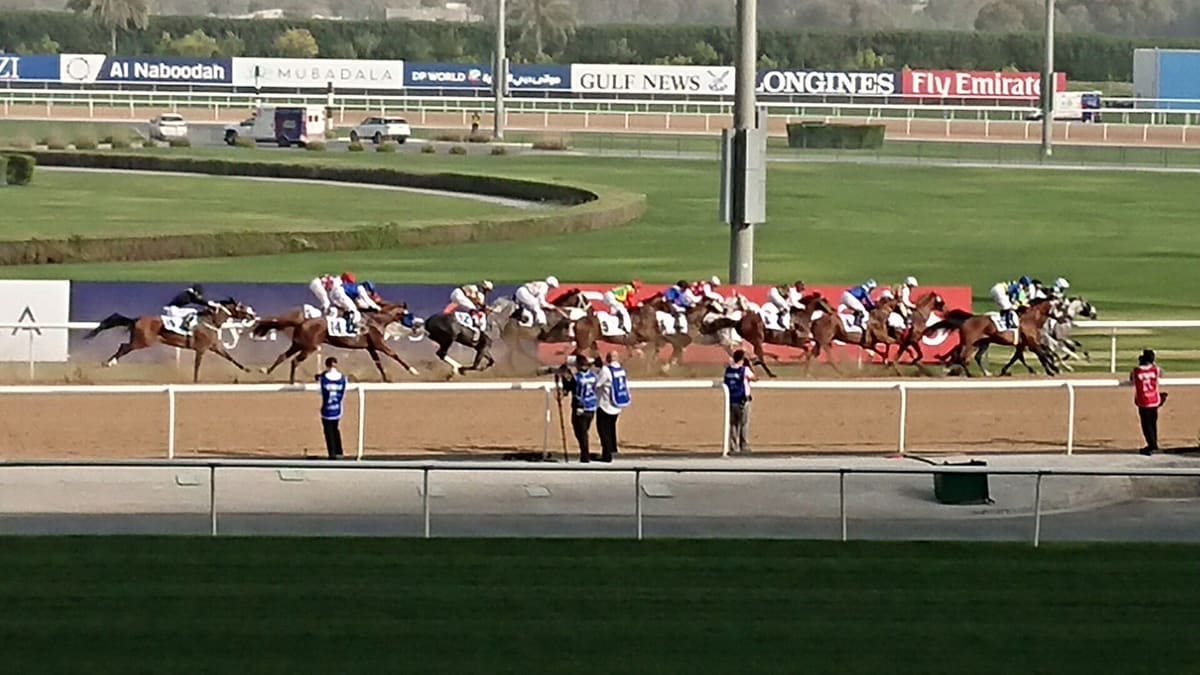

The 2026/27 Riyadh season runs from 16 October 2026 to 17 April 2027, and the Saudi Cup meeting is on 5 to 6 February 2027. If you want a runner this season, buy a sound horse already in training in the next few weeks, with form that fits real Riyadh races, and plan the health tests, permit and flight before you pay. The Saudi Cup itself is for top-class horses only; for most buyers the honest targets are the Riyadh season races or a properly planned Saudi Cup meeting in 2028.
Every autumn, in a majlis somewhere between Riyadh, Jeddah and Dammam, someone says: "This year, we should have a runner at the Saudi Cup." The coffee is poured. Everyone nods. Nobody opens a calendar.
Omar (invented, 44, runs a construction firm, has never missed a deadline in his life) said it first. His Very Confident Brother-in-Law (also invented) replied: "Easy. We buy the winner." This article is the polite version of the conversation that should have followed.
It works the same whether you live in Riyadh, Dubai, London, Cairo, Singapore or Kentucky. The horse goes to Riyadh. You go for the weekend, with a very good suit.
When does the 2026/27 Riyadh season run, and what are the big weekends?
The Jockey Club of Saudi Arabia (JCSA) runs 50 race days in Riyadh from 16 October 2026 to 17 April 2027, on Fridays and Saturdays, with reported prize money of about US$62.95 million. The Saudi Cup is on Saturday 6 February 2027.
| Date (as published) | What is on | The Brother-in-Law says |
|---|---|---|
| Fri 16 Oct 2026 | Riyadh season opens | "We are already late." (He is right, once.) |
| Fri 27 Nov 2026 | Crown Prince Cup | "Is our horse here yet?" |
| 18 to 19 Dec 2026 | Kings' Weekend | Buys a new bisht. |
| 8 to 9 Jan 2027 | Custodian of the Two Holy Mosques weekend | "This is the big one?" (A big one.) |
| 15 to 16 Jan 2027 | Prince Sultan bin Abdulaziz International Festival | Starts calling the horse "the champion". |
| 5 to 6 Feb 2027 | Saudi Cup meeting, King Abdulaziz Racecourse | Wears the bisht. |
| Fri 12 Mar 2027 | King Abdulaziz Cup | "Next year, the Saudi Cup." |
| Sat 17 Apr 2027 | Season ends | Asks what the horse does in summer. Good question. |
These dates come from the JCSA's published 2026/27 calendar as reported by Thoroughbred Daily News. Fixtures can move. Check the official JCSA website before you book anything. For a wider view of the winter, see our global owner's calendar and our guide for owners in Saudi Arabia.
Which route fits you: the Saudi Cup meeting, the Riyadh season, or 2028?
There are three honest routes. Pick one before you look at a single horse, because each needs a different horse, a different budget and a different timeline.
Route 1: a runner at the Saudi Cup meeting itself
The two-day meeting is one of the richest in the world. In 2026 it carried about US$39.6 million in prize money. The Saudi Cup is a Group 1 on dirt over 1,800 metres, worth US$20 million. Around it, the 2026 international races included the Group 1 Neom Turf Cup (US$3 million), the Group 2 Red Sea Turf Handicap (US$2.5 million), the Group 2 Riyadh Dirt Sprint (US$2 million), the 1351 Turf Sprint (US$2 million) and the Saudi Derby (US$1.5 million), which the Asian Pattern Committee has upgraded to Group 2 for 2027.
These races are entered by nomination, and horses are selected. For the 2026 meeting, Thoroughbred Daily News reported that 57 Group or Grade 1 winners from 22 countries were nominated. Read that sentence again, slowly, out loud, to the Brother-in-Law.
So this route needs a horse that is already high class. Those horses are rarely for sale in October, and when they are, the price arrives with its own security detail. It can be done. It is not where most buyers should start.
Route 2: a runner in the Riyadh season
Fifty race days, every Friday and Saturday, to mid-April. That is a lot of chances for a good, sound horse in training to race for real prize money, based with a licensed trainer in Saudi Arabia. The races are framed by the JCSA, so the trainer is the person who tells you which races a horse actually fits. Ask a licensed trainer in Riyadh to look at a horse's form before you bid.
This is the route most new owners should take this winter. A horse bought in late October or November can realistically aim at races from around the new year onwards, if the paperwork goes smoothly and the horse settles. "If" is doing a lot of work in that sentence, and we will get to it.
Route 3: plan properly for February 2028
Buy a younger horse this winter, give it a full season with a good trainer, find out what it is, and aim at the 2028 meeting only if it earns the right. This is the slowest route and, oddly, often the least stressful. Our guide to yearlings, breeze-ups and horses in training compares the options with real prices, and the Tattersalls December Sales guide covers the yearlings sold in late November.
What kind of horse should I buy for Riyadh?
For this season: a sound horse already in training, with form at the trip and on the surface it will race on in Riyadh, and a temperament that copes with a long flight and a new climate.
1. Dirt or turf: decide first
King Abdulaziz Racecourse races on dirt and turf, and the Saudi Cup itself is a dirt race. Many European horses have only raced on turf. Some take to dirt; some take one look at the sand flying back at them and decide they would rather be somewhere else. A turf horse with turf form is a known quantity. A turf horse "who will love the dirt" is a hope. Hopes are fine if the price reflects them. Our Breeders' Cup lessons for buyers look at turf, dirt and travel in more detail.
2. Form that fits real races
The smartest buy is rarely the best horse you can afford. It is the horse that fits the most races you can actually enter. A horse just good enough for a run of races in its band may get far more starts than a slightly better horse that meets the very best every time.
3. Distance and age
Look at the distances of the races you want, then buy a horse already proven at that trip. Remember that horses bred in the Northern Hemisphere add a year on 1 January, and those bred in the Southern Hemisphere add a year on 1 August, so check how race conditions treat them.
4. Sound, and a good traveller
Clean vetting matters most when a horse is about to fly a long way and race in a new place. So does temperament. A horse who loads calmly, eats away from home and does not sulk for a week is worth real money to a Riyadh plan. See racehorse vetting explained.
5. A summer plan
The Riyadh season ends in April. After that, the horse stays, travels back to Europe for summer racing, or is sold. Each has a cost. Decide before you buy, not in May.
What does the buying timeline look like, working back from February?
Plan backwards from the race, not forwards from the sale. The fixed dates below are published; the rest is our planning method, not a rule, and every horse and route is different.
| When | What happens | Omar does | The Brother-in-Law does |
|---|---|---|---|
| Now (late Oct) | Pick the route. Budget for the horse and for everything after it. Talk to a licensed trainer. Shortlist. | Sends a brief with numbers. | Sends a video of the 2020 Saudi Cup. |
| Late Oct to Nov | Autumn sales or a private deal. Independent vetting, then buy. Insure the horse the moment it is yours. | Signs. | Names the horse. It already has a name. |
| Next few weeks | Ask the shipper for the health and permit timeline. Blood tests, vaccinations and the health certificate are timed to the flight date. | Checks the permit is approved, not "nearly approved". | Asks if the horse can fly business. |
| Arrival | Arrival checks, then settling with the trainer. A new climate, a new routine, a new track. | Waits. | Visits. Twice a day. |
| Jan to Apr 2027 | Racing when the trainer says the horse is ready, not before. | Trusts the trainer. | Has views on the jockey's boots. |
| Late Dec to Jan (check official site) | For Route 1 only: nominations for the Saudi Cup meeting. In 2026, the list of nominations was reported on 2 January. | Reads the conditions. | Reads the prize money. |
We ask the shipper and the trainer for a written timeline before you buy. If the answer makes a December target look silly, we pick a later race or a different horse. We do not pick a different truth.
Which health rules catch buyers out?
The timing rules. Several tests and vaccinations have to fall inside set windows before the flight, so a horse bought in a hurry can be "ready" in every way except on paper.
The Saudi Ministry of Environment, Water and Agriculture (MEWA) publishes import conditions for horses travelling to race at the Saudi Cup. The version we read (written for an earlier edition) includes, among other things:
- 40 days of residence: the horse must have been kept in the country of origin, or an approved country, for the 40 days before it is sent.
- Blood tests inside 30 days: for horses from the UK and EU, negative tests for equine infectious anaemia, dourine and glanders within 30 days of shipment.
- The flu vaccine window: an equine influenza vaccination within 90 days before shipment, but not within the last 14 days. A vet who "just tops it up" the week before the flight has just moved your flight.
- Papers: a copy of the passport, a declared arrival date, a veterinary check on or just before shipping day, and an official health certificate from the exporting country.
Those were the rules for horses travelling to race at the meeting. A horse moving to Saudi Arabia to be based with a trainer for the season follows the import rules for that kind of move, and the JCSA also lists import permits among its responsibilities. Rules change, and they differ by country. Check the current conditions with MEWA, the JCSA and your shipper before you buy.
One more thing for Route 1. At the first Saudi Cup in 2020, the JCSA's published terms said it would arrange and pay for the shipping of invited horses. That was the inaugural edition. Do not budget on it: read the current conditions for 2027.

Where can I buy a horse for Riyadh this autumn?
The big horses-in-training sales in Europe are happening now, and private sales run all year, worldwide. We source from sales and sellers all over the world, not one country.
| Where | When (2026, as listed) | Why it matters for Riyadh |
|---|---|---|
| Tattersalls Autumn Horses in Training, Newmarket | 26 to 29 October | Europe's biggest sale of horses already racing. The timing still works for the second half of the Riyadh season. |
| Goffs Autumn HIT and Yearling Sale, Ireland | 2 to 5 November | Another large pool of horses in training, a week later. |
| Arqana Autumn Sale, Deauville | Mid-November (listed 16 to 19 November; check official site) | French-raced horses, including some in training. |
| Tattersalls December Sales, Newmarket | 23 November to 3 December | Mostly foals, mares and yearlings: better for Route 3. Some horses in training appear in the mares sale. |
| Private purchase, worldwide | Any time | Often the best route for proven dirt form, which is easier to find in some countries than others. |
Buying at a European sale from abroad means registering with the sale company before you bid, at least 7 days ahead at Tattersalls. If the dates are too tight, a private purchase may be faster. See buying at Tattersalls from overseas, buying a proven horse privately and our horses in training sales guide.
The Silk Road Letter
Twice a month: the sales worth watching, what horses really cost, and the catalogue jokes nobody tells you. Free. Unsubscribe in one click.
Who trains the horse, and how does ownership work?
A licensed trainer trains the horse. The JCSA regulates thoroughbred racing in Saudi Arabia, including licences, so your trainer will guide you through owner registration. For Route 1, the horse can also stay with its trainer abroad and travel for the meeting.
- Based in Riyadh for the season: choose a licensed trainer whose yard, reporting and race plan suit your horse. Our 12 questions to ask a trainer help.
- Based abroad, travelling for the meeting: common for international runners. The horse prepares at home and flies in for the weekend.
- Owner registration and colours: ask the trainer and the JCSA what you need and what it costs, in writing. Omar wanted green and white. He was not the first.
Licensed trainers train; we help you choose one, place the horse and supervise the plan. More in your first 90 days as an owner.
What will it cost, and what should I ask for in writing?
Costs vary by horse, trainer and route, so we will not guess. Ask for every item in writing before the horse travels.
- The horse: price, sale-house charges and any tax on export.
- Vetting: X-rays, a wind scope and blood tests, before you bid.
- Export and import: health certificate, tests, permit, flight and arrival costs.
- Training: the monthly fee and exactly what it includes.
- Extras: vet, farrier, race-day transport, insurance.
- The summer plan: stay, fly back or sell. Each has a cost.
- Our fee: 5% of the purchase price, minimum US$5,000, agreed in writing before we start.
Our racehorse management service starts from US$2,000 per horse per month. For worked examples, see what a racehorse really costs, or try the cost calculator.
Owning a racehorse is a passion, not a way to make money. Prize money is a lovely surprise, not a business plan. Omar's spreadsheet has a row for it. The row is called "inshallah".
A plain word before you buy
A runner in Riyadh this season is very achievable if you choose the right route, start now and let the timeline be honest. Most disappointments we see are not about the horse. They are about buying a Route 3 horse with a Route 1 dream, or buying the right horse three weeks too late.
We cannot promise a win, a place, a prize, an invitation or a rating. Nobody honest can, and we never give betting tips. What we can promise is a careful worldwide search, an independent vet, clear written terms, a licensed trainer you have chosen, and plain reports from the sale to the racecourse, by email, in your time zone.
Omar now has a timeline. The Brother-in-Law has been given an important job: choosing the restaurant for Saudi Cup night. Everyone is happier.
Plan your Riyadh season properly, from anywhere.
Email us your budget, your route and your dream race. We source the best horses in training from sales and sellers all over the world, with independent vets and licensed trainer partners. If this season is too tight, we will tell you, and plan 2028 properly.
Email info@silkroadbloodstock.com first, from anywhere in the world. Phone +971 52 311 2385 second (Dubai, GMT+4). WhatsApp as backup.
5% fee (min US$5,000), agreed in writing. You pay the seller directly; your money never goes through us. If we are ever paid by both sides, both are told in writing first.
Already own a horse, or want to sell one?
Licensed trainers train; we help you choose one, place the horse and supervise the plan. Selling? We find the right buyer, worldwide.
Know someone who wants a runner in Riyadh? Our introducer programme pays 20% of our fee on deals you introduce, paid from our fee and disclosed to the client in writing.
Related guides
- Buying a horse to race in Dubai in 2026/27: what to buy and when
- Buying a racehorse for Saudi Arabia: our service for owners
- Breeders' Cup 2026: lessons for buyers about horses that travel
- What does a bloodstock agent do? (And what 5% pays for)
The Silk Road Letter
Twice a month: the sales worth watching, what horses really cost, and the catalogue jokes nobody tells you. Free. Unsubscribe in one click.
Frequently asked questions
When is the Saudi Cup in 2027?
The Saudi Cup meeting is listed for 5 to 6 February 2027 at King Abdulaziz Racecourse in Riyadh, with the Saudi Cup itself on Saturday 6 February. Always check the Jockey Club of Saudi Arabia website for final dates.
Can I buy a horse now and run it in the Saudi Cup?
Only if the horse is already top class. The Saudi Cup and its big international undercard races are for high-class horses, entered by nomination and selection. For most buyers the realistic targets are races during the Riyadh season, which runs to 17 April 2027, or a properly planned run at the Saudi Cup meeting in 2028.
What health tests does a horse need to travel to Saudi Arabia?
The Ministry of Environment, Water and Agriculture's published Saudi Cup conditions include residence in the country of origin or an approved country for 40 days before dispatch, blood tests within 30 days of shipment, and an equine influenza vaccination within 90 days but not within 14 days of shipment. Check the current rules with the ministry and your shipper before you buy.
Where can I buy a horse in training this autumn for Riyadh?
The autumn horses-in-training sales in Europe, such as Tattersalls in Newmarket (26 to 29 October 2026), Goffs in Ireland (2 to 5 November 2026) and Arqana in Deauville (listed for mid-November), plus private purchases from sellers worldwide.
Does Silk Road Bloodstock train horses?
No. Licensed trainers train. We help you buy the horse, choose a licensed trainer, place the horse and supervise the plan.
Spotted an error? Email info@silkroadbloodstock.com and we will fix it within 48 hours.
Sources
Checked 23 October 2026. Dates and conditions are as published and can change; always check the official JCSA, ministry and sale company websites.
- Thoroughbred Daily News, "Saudi Derby upgraded as 2026-2027 Riyadh racing season revealed" (season 16 October to 17 April; 50 race days on Fridays and Saturdays; feature weekends; Saudi Cup meeting 5 to 6 February; Saudi Derby to Group 2)
- TradeArabia, Riyadh Racing Season to offer US$63m prize money (SAR236.3 million, about US$62.95 million)
- Thoroughbred Daily News, 2 January 2026 (57 Group 1 winners from 22 countries nominated; 2026 race values; US$39.6 million meeting)
- Wikipedia, Saudi Cup (Group 1, dirt, 1,800 metres, US$20 million)
- Ministry of Environment, Water and Agriculture, import conditions for horses racing in the Saudi Cup (40-day residence, tests within 30 days, influenza vaccination window); page written for an earlier edition
- Saudi Cup 2020 race details for the inaugural edition (JCSA to arrange and pay shipping for invited horses; historic terms)
- Saudipedia, Jockey Club (JCSA): racing regulations, licences and import permits
- Tattersalls, Autumn Horses in Training Sale
- Irish Thoroughbred Marketing, Irish horse sales 2026 (Goffs Autumn HIT and Yearling Sale 2 to 5 November 2026)
- Tattersalls, December Sales 2026 (23 November to 3 December, as listed)