The Silk Road Journal · Buying · Fees · Decisions
Do You Need a Bloodstock Agent? Agent vs Buying Yourself vs Letting Your Trainer Buy
There are three honest ways to buy a racehorse, and none of them is free. One costs you a fee, one costs you your weekends, and one costs you a little independence. Here is which is which, with the numbers, the conflicts and the bits most people find out after the hammer.
Yes, an agent wrote this. We have tried hard to be fair to the other two routes, and we say plainly when you do not need us. Khalid, his Cousin With a Spreadsheet and the Trainer Who Never Answers Before Ten are invented. Facts are sourced at the end. Nothing here is financial, tax or legal advice, and no horse in this article is for sale.
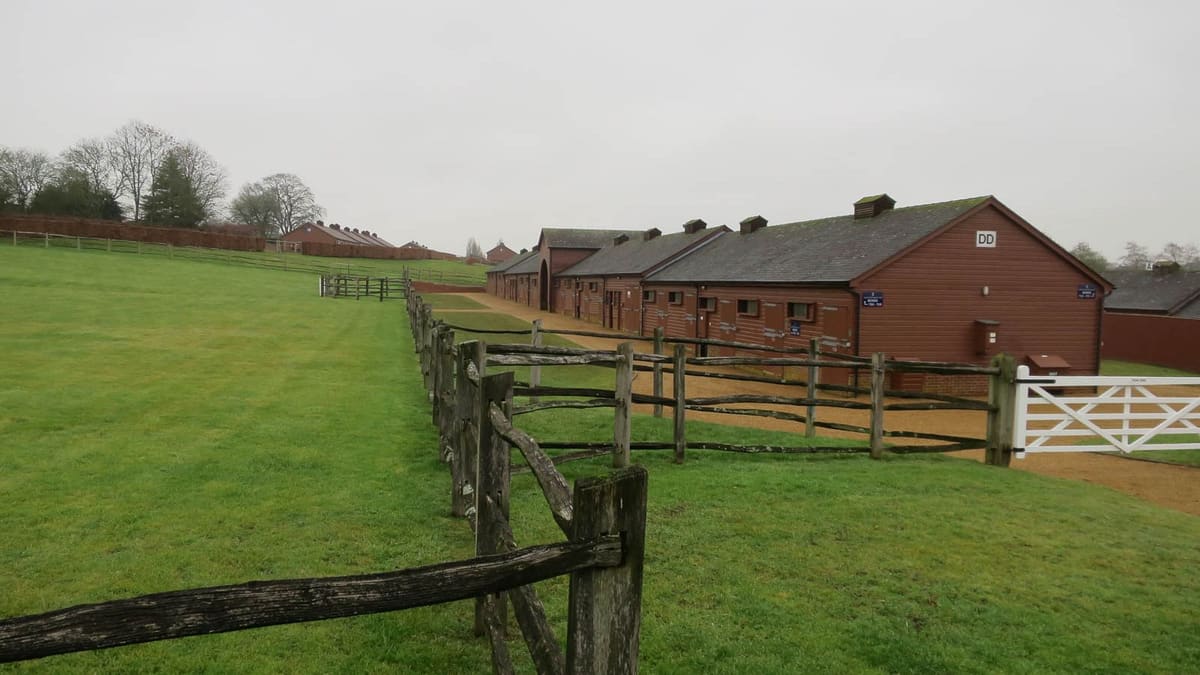

You do not legally need a bloodstock agent. You can buy a racehorse yourself, or let your trainer buy it for you. An agent usually charges about 5% of the price at auction (private sales are often 5% to 10%), and a trainer may charge a buying fee or nothing at all if they will train the horse. The real choice is about four things: who is on your side, who checks the horse, who can get you into the sale, and how much of your own time you can give. If you know horses, have your own vet and trainer, and are buying a cheaper horse, you may not need an agent. If you buy from abroad, spend more, or are short of time, an agent usually costs less than the mistakes.
Khalid (invented, 46, runs a logistics company in Abu Dhabi, owns half a horse through a syndicate and would like to own a whole one) asked three people how to buy his first horse. His Cousin With a Spreadsheet said: "Do it yourself, save the 5%." His trainer said: "Leave it to me." An agent said: "Let's talk." All three were right about something. None of them told him the whole story.
We wrote what a bloodstock agent does for people who have already decided to use one. This guide is for the step before: deciding whether to use one at all, by putting the three routes side by side.
What are the three ways to buy a racehorse?
Buy it yourself, let your trainer buy it, or hire a bloodstock agent who works for you. Many good owners mix them: an agent and a trainer together is the most common pairing at the big sales.
1. Buying it yourself
You read the catalogue, walk the barns, book the vet, register with the sale company, bid and sign. Nobody takes a commission. You also do all the work, carry all the risk of a bad read, and learn the hard lessons in public.
2. Letting your trainer buy
Your trainer picks horses that suit their yard and their style, bids for you and then trains the horse. They know what they like to train, which is a real strength. They are also choosing a horse they will be paid to train every month, which is not a scandal, just a fact worth knowing.
3. Using a bloodstock agent
An agent searches the sales and private yards for you, sees the horses, arranges an independent vet, bids to your written limit and handles the paperwork. A good agent is independent of any one yard, so they can choose from every horse, not only the ones a single trainer wants. The best agents also work closely with your trainer: the agent finds, the trainer approves, the licensed trainer trains.
Agent vs DIY vs trainer: the side-by-side table
The short version, honest in every direction. No route wins every row.
| Question | Buy it yourself | Your trainer buys | Bloodstock agent |
|---|---|---|---|
| Typical buying fee | None | Varies: a commission, or none if they train the horse | About 5% at auction; often 5-10% privately |
| Who they work for | You | You, and their yard | You, if terms are in writing |
| Main conflict to ask about | Your own heart (falling for a pretty head) | Choosing horses they will be paid to train | Being paid by the seller or the sale company too |
| Who checks the horse | You book your own vet | Trainer's eye, plus a vet they use | Agent's eye, plus an independent vet |
| Choice of horses | What you can see in the time you have | What suits their yard | Sales and private yards, worldwide |
| Access to the sale | Register and get credit yourself | Usually already set up | Usually already set up; signs in your name |
| Your time | Days per sale, plus homework | A few calls | A brief, a call, a written "yes" |
| Private sales | Hard without contacts | Through their network | A big part of the job |
| After the sale | You arrange transport, insurance, papers | Trainer arranges, you pay | Agent arranges, you pay suppliers directly |
| Best for | Experienced owners, cheaper horses | Owners loyal to one good trainer | Overseas buyers, bigger budgets, busy people |
A note on the "Who they work for" row: in Britain and Ireland, the Bloodstock Industry Code of Practice says anyone acting for a buyer must not act where their own interests clash with the buyer's, unless the buyer gives prior, informed consent in writing. That applies to agents and to trainers who buy for clients. It is the single most useful rule in this whole article.
What does each route really cost?
Agents: usually about 5% of the price at auction, paid by the buyer, and often 5% to 10% in private sales. Trainers: anything from a commission to nothing, depending on the trainer and whether they will train the horse. Buying yourself: no fee, but your time, travel and mistakes are not free either.
- Agent commission. A UK law firm's guide to racehorse ownership says bloodstock agents "will normally charge 5% of the purchase price". An American owners' guide puts the auction standard at 5% of the hammer price and private sales at 5% to 10%.
- Trainer buying fee. The same UK guide says trainers' terms of purchase vary, and they may charge no commission if the horse is to be trained by them. A New Zealand racing guide makes the same point: many trainers do not charge to help you buy, but expect to train the horse in return.
- Money from the sale company. Some sale companies publish a payment to whoever acted for the buyer. Arqana, in France, says it pays 5% of the purchase price to the buyer's bloodstock agent or trainer. That is open and published, and it is exactly why you ask anyone buying for you: "Who else pays you on this horse?"
- Buying yourself. No commission. But count flights, hotels, the days away from your business, and a vet for every horse you seriously consider, including the ones you do not buy.
A worked example: a US$150,000 horse in training
| Route | Buying fee | What you still pay |
|---|---|---|
| Buy it yourself | US$0 | Your travel and time, vets, sale-company charges, transport, insurance |
| Trainer, no commission | US$0 | The same costs, plus monthly training fees with that yard (which you were paying anyway) |
| Trainer, with a commission | Depends on their terms (ask in writing) | The same costs |
| Our fee (5%, min US$5,000) | US$7,500 | The same costs. You pay the seller and every supplier directly |
The horse costs the same on every route. What changes is who did the looking, who checked the horse, and whose side they were on. For the full picture of buying and running costs, read what a racehorse really costs, and for our own terms see fees and how we work.
Whose side is everyone on? Conflicts of interest, route by route
Every route has a conflict. The honest ones are disclosed in writing; the dangerous ones are the ones nobody mentions.
- Buying yourself: the conflict is you. You will fall in love with a horse in the first ten minutes and spend the next hour finding reasons. Write down three things that would make you walk away before you see any horse.
- Your trainer: a trainer earns from training fees for as long as the horse stays in the yard. That does not make them dishonest; most good trainers want a good horse more than anyone. It does mean you should ask: "Would you still recommend this horse if someone else trained it?"
- An agent: the risk is being paid by more than one side, or receiving "luck money" from a seller. The Bloodstock Industry Code of Practice bans bribery and "luck money" that steers a purchase, and requires written, informed consent before anyone acts where interests clash. Ask your agent to put every payment they receive on your horse in writing.
Khalid's Cousin With a Spreadsheet added a column called "Who else gets paid?". It was the best thing he has ever done with a spreadsheet.
The Silk Road Letter
Twice a month: the sales worth watching, what horses really cost, and the catalogue jokes nobody tells you. Free. Unsubscribe in one click.
Who checks the horse? Vetting on each route
On every route, the vet should work for you, not for the seller. The difference is who books the vet, who reads the report with you, and who has the nerve to say "no" afterwards.
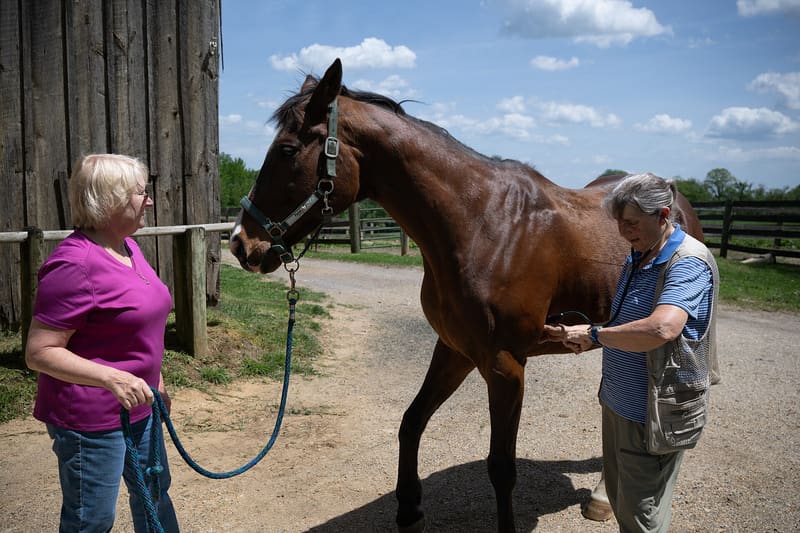

- The sale repository. At the big sales, sellers lodge X-rays and other reports in a repository that buyers' vets can read. Tattersalls' rules say the repository is for vets. So on every route, you need a vet to read it for you.
- Buying yourself: you find and book the vet, at each sale or yard, and you decide what the report means. Fine if you have a vet you trust and know what to ask.
- Your trainer: usually uses the yard's regular vet. Convenient and often excellent. If you want a second opinion on a big purchase, ask for it before the sale, not after.
- An agent: should book a vet who is independent of the seller, read the report with you in plain words, and walk away if it says so. With us, nothing is bid on without an independent vet first.
More in racehorse vetting explained and protecting a racehorse purchase.
Can you get into the sale? Access, credit and private horses
Yes, you can bid yourself, but you must register with the sale company and be approved for credit before you bid. Agents and established trainers usually have this in place already, and they hear about private horses that never reach a catalogue.
- Registering yourself. Sale companies ask for identity and bank details and set a credit level. Keeneland, for example, has a register-and-request-credit form, and a separate form to name an agent who signs for horses in your name. Do it days before the sale, not in the car park.
- Buying through someone. With an agent or trainer, the horse is still yours and is bought in your name; they just hold the paddle. Read the sale company's conditions of sale either way: they say when payment is due and who carries the risk after the hammer.
- Private sales. Many good horses in training change hands privately, between yards, before or after a sale. This is where contacts matter most, and where an agent or a well-connected trainer saves the most time. Read buying a racehorse privately.
- Worldwide choice. One trainer knows their own country best. An agent who works across the sales can compare horses from Britain, Ireland, France, America, Australia, Japan and the Gulf. See the sales we buy from.
How much of your time does each route need?
Buying yourself takes days per sale plus homework. Your trainer or an agent can cut that to a brief, a couple of calls and a written yes.
| Task | Yourself | Trainer | Agent |
|---|---|---|---|
| Reading the catalogue (often more than 1,000 horses) | Many evenings | Trainer does it | Agent does it, sends a shortlist |
| Seeing horses at the barns | Days on site | Trainer goes | Agent goes, sends notes and video |
| Vet reports | You book and read | Trainer's vet | Independent vet, explained to you |
| Bidding | You, in the ring or on the phone | Trainer | Agent, to your written limit |
| Paperwork, transport, insurance | You | Trainer's office | Agent arranges; you pay suppliers |
Khalid timed it. Doing it himself for one sale would have meant five days in Newmarket in December. His company would have survived. His family's patience might not have.
Which route suits you?
Pick the route that covers your weak spot. If it is knowledge, use a professional. If it is time, use a professional. If it is neither, and the horse is cheap, do it yourself.
Buy it yourself if...
- You have owned horses for years and can read a catalogue page and a vet report.
- You can be at the sale, or the yard, in person.
- You have your own vet and a trainer who will take the horse.
- The budget is modest, so a fee would be a large share of the price.
Let your trainer buy if...
- You already have a trainer you trust, and you plan to stay with them.
- The trainer has a good record of buying for clients, and puts any buying fee in writing.
- You are happy for the choice to be shaped by what suits that one yard.
Use an agent if...
- You live far from the sales, for example in the Gulf or Asia, and buy in Europe, America or Australia.
- You want to choose from the whole market, not one yard's favourites, and then pick the right trainer for that horse.
- You spend enough that one bad purchase costs far more than the fee.
- You are busy, and want one person to manage the search, vet, paperwork and shipping.
Use an agent and a trainer if...
You want both. This is how many of the biggest owners buy: the agent finds and checks the horse, the trainer approves it, and the licensed trainer trains it. It only works if both put their terms in writing and talk to each other. Our partner trainers work exactly like this, and we are happy to work with your own trainer too. See how to choose a racehorse trainer.
When do you NOT need a bloodstock agent?
When the horse is cheap, you already have expert help you trust, or you are buying from someone you know well. We would rather tell you now than take a fee you did not need to pay.
- Small budgets. Our minimum fee is US$5,000. On a US$20,000 horse that is a quarter of the price. A sensible trainer and a good vet are usually enough.
- You have a trainer you trust who buys well. If they put their terms in writing and you are happy to stay in their yard, you may not need anyone else.
- You know the market. Experienced owners with their own vet and contacts can do it themselves, and many enjoy it.
- A private sale between people you know. If you have watched the horse race, the seller is someone you trust and your vet checks it, an agent adds less.
- Claiming races and small local sales. Speed and a local trainer's eye matter more here than a worldwide search.
In every one of these cases, two rules still apply: an independent vet before you pay, and every fee in writing.
How Silk Road Bloodstock works, plainly
5% of the purchase price, minimum US$5,000, agreed in writing before we start. Your money goes straight to the seller or the sale company, never through us. Licensed partner trainers train; we place and supervise.
- The fee: 5% of the purchase price, minimum US$5,000, in a written agreement before any search. Budgets from US$50,000.
- Your money: you pay the seller or the sale company directly. It never goes through our account.
- Both sides: if we are ever paid by both buyer and seller on a deal, both are told in writing first. No surprises.
- The search: the best horses from all over the world, at the sales and from private yards, checked by an independent vet before any bid.
- The trainer: we place the horse with one of our licensed partner trainers, or your own trainer, and supervise the plan. We do not train horses ourselves.
- The honest bit: we cannot promise a win, a price or a profit. Nobody honest can. Owning a racehorse is a passion, not a way to make money.
A plain word before you choose
The three routes all lead to the same sales ring. The horse does not know who bought it. What you are really choosing is who looks after your interests between the catalogue and the horsebox.
Khalid chose an agent and kept his trainer. The agent found three horses, the trainer chose one, the vet passed it, and Khalid signed a single page that said who was paid what. His Cousin With a Spreadsheet checked it twice and could not find a column to complain about.
Want a horse found, checked and bought for you?
Email us your budget, where the horse will race and whether you already have a trainer. We source the best horses from all over the world, with independent vets, clear written terms and a plan before any bid. Budgets from US$50,000. And if you do not need an agent, we will tell you on day one.
Email info@silkroadbloodstock.com first, from anywhere in the world. Phone +971 52 311 2385 second (Dubai, GMT+4). WhatsApp as backup.
5% fee (min US$5,000), agreed in writing. You pay the seller directly; your money never goes through us. If we are ever paid by both sides, both are told in writing first.
Already own a horse, or want to sell one?
Licensed trainers train; we help you choose one from our partner trainers, place the horse and supervise the plan. Selling a horse in training? We find the right buyer, worldwide.
Know an owner who is weighing up these three routes? Our introducer programme pays 20% of our fee on deals you introduce, paid from our fee and disclosed to the client in writing.
Related guides
- What does a bloodstock agent do? (And what 5% pays for)
- Choosing a racehorse trainer: 12 questions to ask before you sign
- Racehorse vetting: what a vet check can and can't tell you
- Buying a racehorse privately
- What does a horse really cost?
- From syndicate share to your own racehorse
The Silk Road Letter
Twice a month: the sales worth watching, what horses really cost, and the catalogue jokes nobody tells you. Free. Unsubscribe in one click.
Frequently asked questions
Do I need a bloodstock agent to buy a racehorse?
No, it is not a legal requirement. Anyone approved by the sale company can bid, and you can buy privately. An agent is worth it when you cannot give the time, do not have your own vet and trainer network, buy from abroad, or spend enough that a mistake costs more than the fee.
How much does a bloodstock agent charge?
Usually about 5% of the purchase price at auction, normally paid by the buyer. Private sales are often 5% to 10%. Some sale companies also publish a payment to the buyer's agent or trainer, so always ask who else pays your agent, and get the answer in writing.
Do trainers charge a fee to buy a horse for me?
Terms vary. Some trainers charge a buying commission, often similar to an agent's. Others charge nothing if the horse will be trained by them, because they expect the training fees. Ask before the sale, and get it in writing.
Can I buy at a sale from abroad without an agent?
Yes, if you register with the sale company in advance and are approved for credit, but you still need someone you trust to see the horse, a vet to read the X-rays and scope, and a plan for paperwork and shipping. Most overseas buyers use an agent or their trainer for that part.
How much does Silk Road Bloodstock charge?
5% of the purchase price, minimum US$5,000, agreed in writing before we start. Budgets from US$50,000. You pay the seller or the sale company directly; your money never goes through us. If we are ever paid by both sides, both are told in writing first.
Spotted an error? Email info@silkroadbloodstock.com and we will fix it within 48 hours.
Sources
Checked 23 October 2026. Fees and terms vary by person, country and sale company, and can change; always ask for them in writing.
- Keystone Law, "Welcome to racehorse ownership", Rachel Flynn, 17 June 2015 (agents normally charge 5% of the purchase price; trainers' terms vary and may be no commission if they train the horse)
- Gayle Van Leer, Ownership 101: bloodstock agents (5% of the hammer price at auction, 5-10% in private sales; undated)
- LoveRacing.nz, "Buying a racehorse: find an expert" (many trainers do not charge to help you buy, but expect to train the horse)
- Arqana, buyer information (5% of the purchase price paid to the buyer's bloodstock agent or trainer)
- Bloodstock Industry Code of Practice (Britain and Ireland, sales after 16 August 2021: bribery and luck money banned; conflicts need prior informed consent in writing)
- Thoroughbred Daily News, "Banishment of Bribery, Bidding-Up Key in New Bloodstock Industry Code", 4 August 2021
- Keeneland, buyer resources (Register & Request Credit form, Buyer's Authorized Agent form)
- Tattersalls, Notices to Purchasers: Repository and Repository Rules (vets only)