The Silk Road Journal · Costs · Ownership · Five countries
Racehorse Ownership Costs in 2027: What to Budget in the UK, Ireland, France, the UAE and Hong Kong
Buying the horse is the exciting bill. This guide is about the other one: the one that arrives every month, whether the horse runs or not. Five countries, every line we could source, the date on every figure, and a budget table you can show your accountant without either of you crying.
Layla, her Husband Who Reads Invoices and the Horse Who Eats Like a Teenager are invented. Figures are sourced at the end, with dates; we mark anything older than 2024, or not confirmed, as such. Our own estimates are labelled as ours. Nothing here is financial, tax or legal advice, and no horse in this article is for sale.
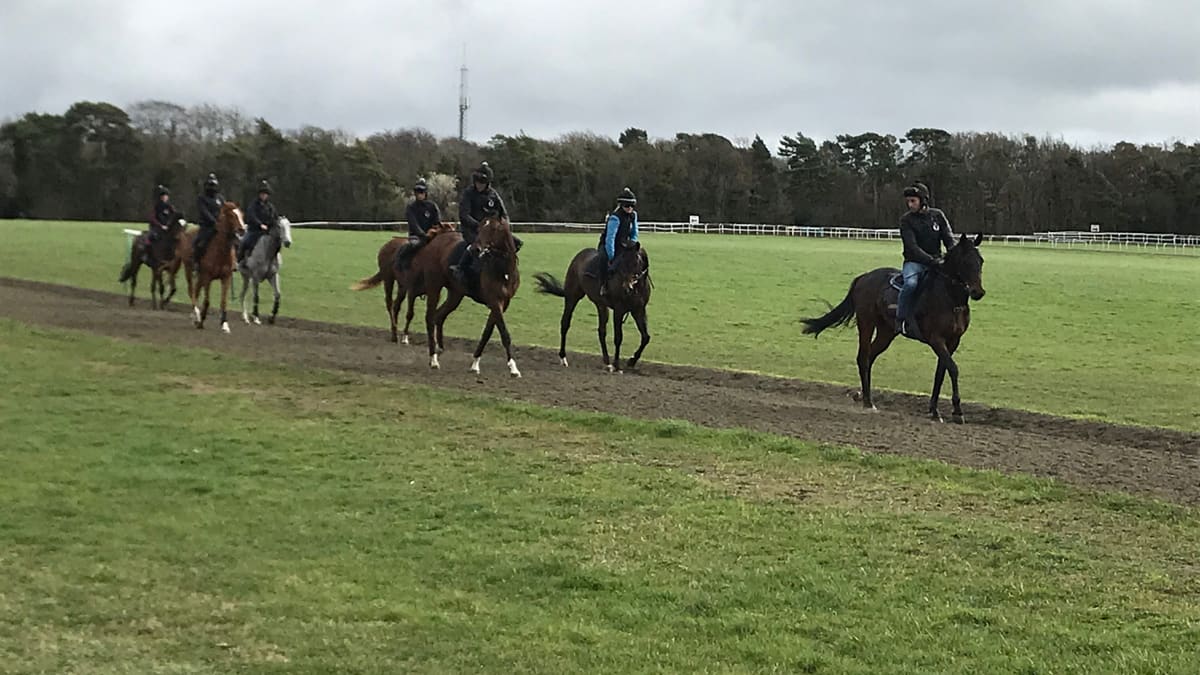

For one Flat horse in training in 2027, plan roughly US$34,000 to US$46,000 a year in Britain, US$31,000 to US$36,000 in Ireland, US$28,000 to US$33,000 in France, US$30,000 to US$45,000 in the UAE and US$51,000 to US$62,000 in Hong Kong, before insurance. These are our estimates, built from published figures, some older than 2024 (marked below). The training fee is about two-thirds to four-fifths of the bill; vets, farrier, gallops, entries, jockeys and transport make up the rest. Insurance, if you take it, adds about 3% to 3.8% of the horse's value a year. Prize money rarely covers the lot, so budget as if it will not.
Layla (invented, 41, a surgeon in Dubai) bought her first horse in her head about forty times before she bought one in real life. Each time she got as far as the price, smiled, and stopped. Her Husband Who Reads Invoices asked the question that matters: "Fine. And then what does it cost every month?" Nobody she asked gave the same answer twice.
We have already written what a racehorse really costs to buy, from sale medians to the guineas joke. This guide is the sequel: the yearly running budget, country by country, so you can choose where to race with your eyes open.
The 2027 budget table: one horse in training, per year
One Flat horse, owned outright, running about eight times a year. Local currency first, then rough US dollars. Insurance is shown separately because not every owner takes it.
| Country | Main bill (published) | Our yearly estimate, all in | About US$ |
|---|---|---|---|
| Britain | £50-£60 a day at yards that publish rates (2025-26), plus VAT where charged; Newmarket gallops £165 + VAT a month (2025) | £26,000-£35,000 | US$34,000-46,000 |
| Ireland | €1,900 a month average training fee (HRI, cited February 2026) | €27,000-€31,000 | US$31,000-36,000 |
| France | €1,641 a month average pension (France Galop, cited 2021: older than 2024) | €24,000-€29,000 | US$28,000-33,000 |
| UAE | About AED 110,000 a year to keep a horse in training (Dubai Media Office, 2021: older than 2024) | AED 110,000-165,000 | US$30,000-45,000 |
| Hong Kong | HK$30,000 a month basic livery, capped (HKJC, 2024/25, frozen again in 2025); HK$25,000 for a new horse's first four months | HK$400,000-480,000 | US$51,000-62,000 |
| Insurance (any country) | Mortality cover, about 3%-3.8% of insured value a year (broker guide, 2026) | US$3,000-3,800 on a US$100,000 horse | optional |
Rough conversions, October 2026: £1 = US$1.32, €1 = about US$1.15, US$1 = AED 3.6725 (pegged), US$1 = about HK$7.8 (pegged within a band). The ranges are ours: we added the published main bill to sourced or estimated extras, line by line, below. A horse at a top yard, a horse that travels a lot, or a horse with one expensive leg will sit above the top of these ranges. Want to try your own numbers? Use our racehorse cost calculator.
What goes into a yearly racehorse budget?
Nine lines, in roughly this order of size: training fee, vet and physio, gallops, farrier, race entries, jockey fees, transport, insurance and paperwork. The first line is the big one; the other eight are where surprises live.
- Training fee ("bed, board and personal trainer"). A day rate or monthly fee for the stable, feed, staff and daily exercise. In France it is called the pension; in Hong Kong, livery.
- Vet, dentist, physio. Routine checks, vaccinations, scopes, X-rays, and the occasional night call the horse will choose for maximum drama.
- Gallops fees. Paying to use the training grounds. In Newmarket it is still nicknamed the "Heath Tax".
- Farrier. Shoes and racing plates, every few weeks.
- Race entries and declarations. A fee to enter, often more for richer races.
- Jockey fees. A set riding fee per ride, plus a share of any prize money.
- Transport. The horsebox to the races and back, and a travelling groom.
- Insurance. Optional, but most owners of a valuable horse take mortality cover.
- Registration and paperwork. Owner registration, colours, name, account fees. Small, but they never forget you.
Layla's Husband Who Reads Invoices printed this list and stuck it to the fridge. The Horse Who Eats Like a Teenager did not yet exist, but the fridge was already nervous.
Britain: what does a racehorse cost per year in the UK?
Plan about £26,000 to £35,000 a year for one Flat horse (about US$34,000 to US$46,000), more at the biggest yards. The last full owners' survey, from 2015, said £22,595, and costs have risen since.
| Line | Figure | Date and status |
|---|---|---|
| Training fee | £350 a week at one yard; £60 + VAT a day at another; about £18,250-£21,900 a year | Trainers' own websites, 2025-26. Big Newmarket and Lambourn yards often charge more; their rates are usually not published (not confirmed) |
| Gallops (Newmarket) | £165 + VAT a month, about £2,376 a year with VAT; Lambourn £160 + VAT (2024) | Jockey Club Estates, 2025 |
| Vet, dentist, physio, farrier | £2,500-£5,000 a year | Our estimate: no recent published average (not confirmed) |
| Jockey | £173.54 a ride on the Flat, £235.90 over jumps; about £1,390 for eight Flat rides | ROA, from 1 January 2026 |
| Entries | £28.08 handling fee per entry, plus race entry fees from about £20 to thousands; about £400-£1,200 a year | ROA, 2026; the yearly total is our estimate |
| Transport | £1,000-£2,500 a year | Our estimate (not confirmed) |
| Owner registration and colours | £135-£140 a year as an active owner; colours from £73.17 a year | BHA via ROA, 2025-26 |
| Benchmark | £22,595 a year (Flat), £16,325 (jumps) | ROA survey 2015: older than 2024 |
Two British extras worth knowing. First, VAT: many training bills carry it, and the ROA runs a VAT scheme that may help owners register and reclaim it, so ask your accountant before the first invoice, not after the twelfth. Second, the active and dormant owner rule: from October 2025 the yearly owner subscription only applies if you have had a runner in the past twelve months.
More on choosing where in Britain: racing in Britain, Ireland or France from Dubai and how to choose a racehorse trainer.
Ireland: what does a racehorse cost per year?
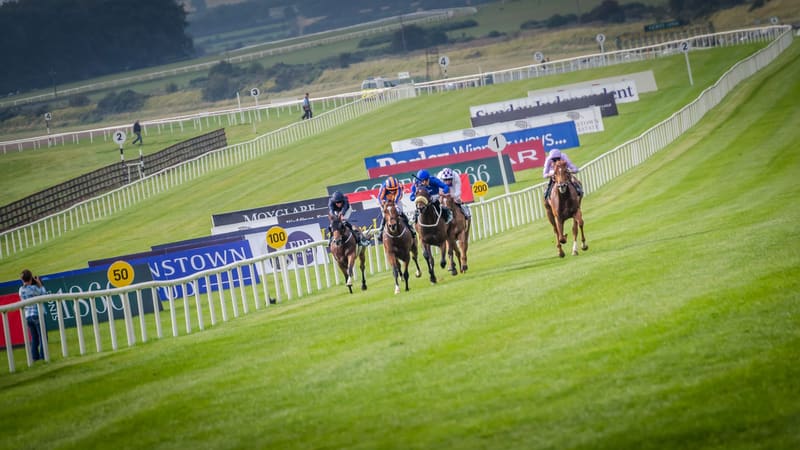
Plan about €27,000 to €31,000 a year (about US$31,000 to US$36,000). Horse Racing Ireland puts the average training fee at €1,900 a month, or €22,800 a year.

| Line | Figure | Date and status |
|---|---|---|
| Training fee | €1,900 a month average, €22,800 a year | HRI figure, quoted by The Irish Field, 18 February 2026 |
| Vet and medical | About €1,500 a year (we allow up to €3,000) | Deloitte study for HRI, 2016 data: older than 2024 |
| Farrier | €40-€70 a month on sample bills (sometimes included in the fee) | The Irish Field, 2016: older than 2024 |
| Travel to the races | €100-€150 a run once the round trip passes 50 miles | The Irish Field, 2016: older than 2024 |
| Jockey and entries | €175 a Flat ride, €200 over jumps; entry 0.8% and declaration 0.2% of race value in smaller races | Irish Racehorse Owners guide, undated (not confirmed for 2027); HRI raised most entry fees 10% in 2026 |
| Registration | Lodgement of at least €500 | Irish Racehorse Owners guide, undated (not confirmed) |
Ireland has a quiet advantage for Gulf owners: some of the strongest jumps and middle-distance yards in the world, at fees that are often below the big British centres. The honest catch: competition for prize money is fierce, and the Irish Field's own writer estimated a modest handicapper must win about three races a year just to cover its costs.
France: what does a racehorse cost per year?
Plan about €24,000 to €29,000 a year (about US$28,000 to US$33,000). France Galop's national average pension was €1,641 a month, or €19,692 a year, in a figure quoted in 2021; expect it to be higher today.
| Line | Figure | Date and status |
|---|---|---|
| Pension (board and training) | €1,641 a month average, €19,692 a year | France Galop, quoted by MoneyVox, August 2021: older than 2024 |
| Vet, farrier, travel to the races | €3,000-€6,000 a year | Our estimate: the source names these costs but gives no amounts (not confirmed) |
| Entries and jockey | €1,500-€3,000 a year | Our estimate (not confirmed) |
| How much racing pays back, on average | Race earnings covered 40%-50% of owners' costs on average | France Galop, quoted 2021: older than 2024. An average across all horses; many earn nothing |
France has two things owners love: a long programme of races with good prize money at every level, and owners' premiums on many races (bonuses paid to owners on top of prize money, with rules on who qualifies). It also has French paperwork, which is excellent once you have finished it. France Galop also notes the pension can be split among co-owners, which is how many people start.
The Silk Road Letter
Twice a month: the sales worth watching, what horses really cost, and the catalogue jokes nobody tells you. Free. Unsubscribe in one click.
The UAE: what does a racehorse cost per year?
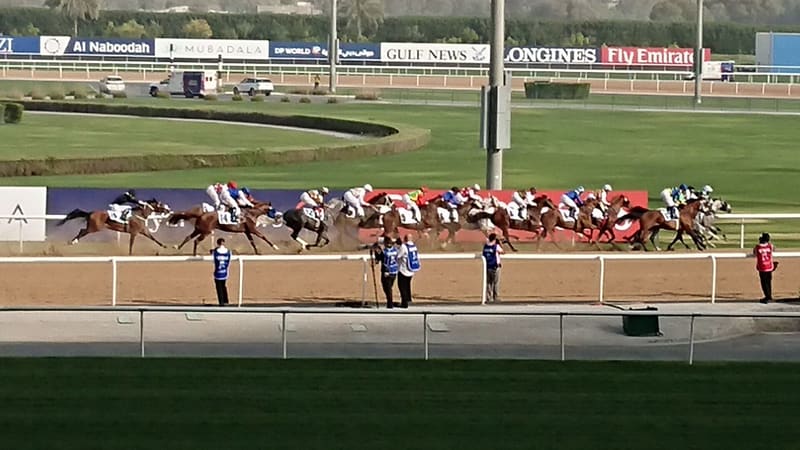
The official figure is about AED 110,000 (US$30,000) a year to keep a racehorse in training, from 2021. We budget AED 110,000 to 165,000 (US$30,000 to US$45,000), because summer is the hidden line.

| Line | Figure | Date and status |
|---|---|---|
| Keeping a horse in training | About AED 110,000 (US$30,000) a year | Dubai Media Office, 23 October 2021: older than 2024. No published day rate found for 2025-26 |
| Racing season | Early November to the end of March, about 60 meetings | Emirates Racing Authority, undated |
| Minimum prize money | About US$15,000 a race | Emirates Racing Authority, undated (not confirmed for 2026-27) |
| Summer (April to October) | Rest in the UAE, or travel to race in Europe: AED 0-55,000 extra | Our estimate (not confirmed); depends on the plan |
The UAE runs on a winter calendar. That makes it the most sociable place in the world to own a horse in January, and the most expensive place to think about one in August. Many owners send horses to Europe for the summer, which turns one budget into two half-budgets plus a flight. Read owning a racehorse in Dubai: your first season and racehorse transport before you decide.
Hong Kong: what does a racehorse cost per year?
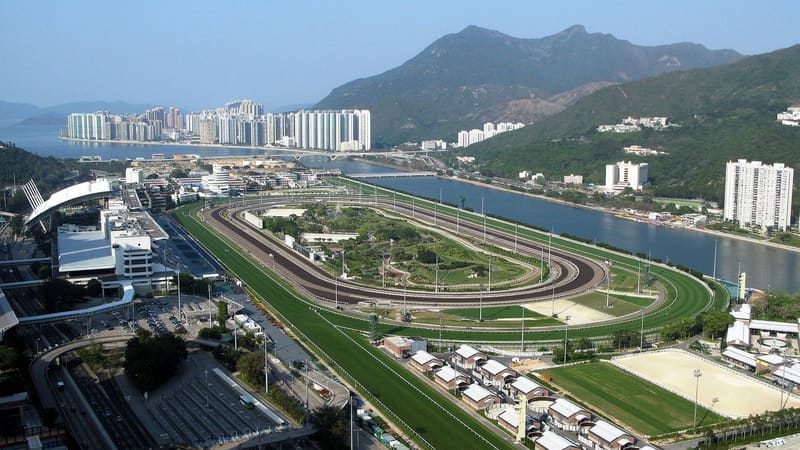
Plan about HK$400,000 to HK$480,000 a year (about US$51,000 to US$62,000). The basic livery fee is capped at HK$30,000 a month, and HK$25,000 for a new horse's first four months.

| Line | Figure | Date and status |
|---|---|---|
| Basic livery | HK$30,000 a month (cut from HK$38,200); HK$25,000 for the first four months after a new horse arrives; HK$340,000-360,000 a year | HKJC, cut in 2024/25 and frozen again (TDN, 28 February 2025). The 2026/27 level is not confirmed |
| Vet, farrier, riding fees, other extras | HK$60,000-120,000 a year | Our estimate: not itemised in the Club's announcements (not confirmed) |
| Travel subsidy | Up to HK$100,000 towards bringing a new horse in | HKJC, 2024-25 |
| Export grant on retirement | HK$50,000 towards exporting the horse | HKJC, 2024-25 |
Hong Kong is different in one big way: you usually need a permit to import a horse, and most new owners buy a horse from abroad (a PP, which has usually raced, or a PPG, which has not). The Club then helps with the trip and the first months' livery. Read Hong Kong PP and PPG permits explained and how to buy a PP or PPG from Europe or Australia this winter.
How much is racehorse insurance per year?
Mortality cover for a racing Thoroughbred is typically about 3% to 3.8% of the insured value a year, according to a 2026 broker guide. On a US$100,000 horse, that is about US$3,000 to US$3,800.
- What it covers: usually death, or humane destruction on welfare grounds. Read whether it pays the market value at the time of loss or an agreed value: that one line changes everything.
- From the fall of the hammer: many buyers insure from the moment they buy, including transit. Arrange it before the sale, not in the car park.
- Extras: loss of use, vet fees and transit cover cost more, and vary by insurer, age and use. Get two quotes in writing.
A worked example: year one with a US$150,000 horse in Ireland
The first year costs more than any other: the horse, the buying costs, the trip, and twelve months of running bills, all at once.
| Line | About US$ |
|---|---|
| The horse | 150,000 |
| Our buying fee (5%, min US$5,000) | 7,500 |
| Sale-company charges, if any (read the conditions of sale) | varies |
| Independent vetting and transport to the yard | varies by country |
| Insurance, 3%-3.8% of value | 4,500-5,700 |
| Running costs in Ireland, our estimate | 31,000-36,000 |
So a US$150,000 horse is closer to a US$195,000 first year, before the extras that depend on the sale and the journey. Your trainer's written estimate replaces our ranges with real numbers. For the purchase side in detail, see what a racehorse costs to buy and our fees and how we work.
How can you spend less without cutting corners?
Share the horse, choose the right country for the horse, ask for a written estimate, and plan the year's races before the year starts. Never save on the vet.
- Own with friends. A partnership splits every line in this guide. See sole ownership vs partnership.
- Match the horse to the country. A horse rated for Irish handicaps does not need a Newmarket Group-race yard bill.
- Ask what the day rate includes. Two trainers at the same price can send very different invoices.
- Plan the race programme. Fewer long trips, and entries made on purpose, not out of hope.
- Sort VAT early in Britain, and check owner registration rules in each country before the first bill.
- Do not save on the vet. A cheap scan now beats an expensive summer in the box.
How Silk Road Bloodstock works, plainly
Two prices, both agreed in writing. Buying: 5% of the purchase price, minimum US$5,000. Training and management with our licensed partner trainers: from US$2,000 per horse per month.
- The buying fee: 5% of the purchase price, minimum US$5,000, in a written agreement before any search. Budgets from US$50,000 per horse.
- Training and management: with our licensed partner trainers, from US$2,000 per horse per month, agreed in writing before the horse arrives. Exactly what it covers depends on the trainer and the country, and it is written down line by line. Extras such as vet, farrier, entries and transport are billed separately at cost, and you see every bill. More on racehorse management.
- Your money: you pay the seller, the sale company and suppliers directly. It never goes through our account.
- Both sides: if we are ever paid by both buyer and seller on a deal, both are told in writing first.
- The search: the best horses from all over the world, at the sales and from private yards, checked by an independent vet before any bid.
- The honest bit: licensed trainers train; we place and supervise. We cannot promise a win, a price or a profit. Nobody honest can. Owning a racehorse is a passion, not a way to make money.
A plain word before you budget
Every country on this list will look after a good horse well. The difference is the shape of the bill: Britain charges by the day and the gallop, Ireland and France average a little less, the UAE squeezes racing into winter, and Hong Kong charges the most but helps the most. None of them sends a bill for the excitement, which is free and, in our experience, worth it.
Layla chose Ireland in the end. Her trainer sent a one-page estimate, line by line. Her Husband Who Reads Invoices read it twice, found nothing to complain about, and complained about that instead. The Horse Who Eats Like a Teenager now exists, and lives up to its name.
Want a horse found, checked and kept within your budget?
Email us where you would like to race, your budget for the horse and your yearly running budget. We source the best horses from all over the world, with independent vets, clear written terms and a written yearly estimate from a licensed partner trainer before any bid. Budgets from US$50,000. If your budget does not fit the country you want, we will tell you on day one, and suggest one that does.
Email info@silkroadbloodstock.com first, from anywhere in the world. Phone +971 52 311 2385 second (Dubai, GMT+4). WhatsApp as backup.
Buying: 5% (min US$5,000). Training and management with partner trainers: from US$2,000 per horse per month. Both in writing. You pay the seller directly; your money never goes through us. If we are ever paid by both sides, both are told in writing first.
Already own a horse, or want to sell one?
Licensed trainers train; we help you choose one from our partner trainers, place the horse and supervise the plan. Selling a horse in training? We find the right buyer, worldwide.
Know someone pricing up their first horse? Our introducer programme pays 20% of our fee on deals you introduce, paid from our fee and disclosed to the client in writing.
Related guides
- What does a horse really cost? (The purchase side)
- Dubai owners: racing in Britain, Ireland or France
- Owning a racehorse in Dubai: your first season
- Hong Kong PP and PPG permits explained
- Sole ownership vs partnership
- Your first 90 days as a racehorse owner
- Do you need a bloodstock agent?
The Silk Road Letter
Twice a month: the sales worth watching, what horses really cost, and the catalogue jokes nobody tells you. Free. Unsubscribe in one click.
Frequently asked questions
How much does it cost to keep a racehorse for a year in 2027?
For one Flat horse in training, plan roughly US$28,000 to US$46,000 a year in Britain, Ireland, France or the UAE, and roughly US$51,000 to US$62,000 in Hong Kong, before insurance. These are our estimates built from published figures, some of them older than 2024. Insurance, if you take it, is usually about 3% to 3.8% of the horse's value a year.
Which country is cheapest to keep a racehorse in?
On published figures, France and Ireland are usually a little cheaper than Britain for training fees, and the UAE's official estimate is about AED 110,000 (US$30,000) a year, from 2021. Hong Kong costs the most per horse, but its basic livery fee is capped and the Jockey Club pays travel and export subsidies. Cheapest is not the same as best value: choose the country that suits the horse.
What is included in a racehorse training fee?
Usually the stable, feed, bedding, staff and daily exercise. Vet, farrier, dentist, physio, gallops fees, race entries, jockey fees, transport and insurance are usually extra. Ask the trainer for a written list of what the day rate covers before the horse arrives.
Does prize money cover the cost of a racehorse?
For most horses, no. France Galop said in 2021 that race earnings covered on average 40% to 50% of owners' costs, and many horses earn nothing. Budget as if prize money is a happy surprise. Owning a racehorse is a passion, not a way to make money.
What does Silk Road Bloodstock charge?
Buying: 5% of the purchase price, minimum US$5,000, agreed in writing before we start. Training and management with our licensed partner trainers: from US$2,000 per horse per month, agreed in writing, with extras such as vet, farrier, entries and transport billed separately at cost. You pay the seller and suppliers directly. If we are ever paid by both sides, both are told in writing first.
Spotted an error, or have a newer figure? Email info@silkroadbloodstock.com and we will fix it within 48 hours.
Sources
Checked 23 October 2026. Fees change, often every January; always ask your trainer for a written estimate. Figures older than 2024, or not confirmed, are marked in the tables above.
- Racehorse Owners Association, "Costs of ownership" (2015 survey: £22,595 Flat, £16,325 jumps; 2026 jockey fees £173.54 / £235.90; entry handling £28.08; owner subscription, colours and registration fees from 1 January 2026)
- ROA, jockey riding fees
- Jockey Club Estates, Newmarket gallops fees (£165 + VAT per horse per month, 2025)
- Jockey Club Estates, Lambourn gallops fees (£160 + VAT per horse per month, 2024)
- Ruth Carr Racing, "Owning horses" (training about £350 a week; page dated 2026)
- Patrick Owens Racing, "How much does it cost to own a racehorse in the UK?" (£60 + VAT a day; page dated 2026)
- The Irish Field, opinion on 2026 prize money, 18 February 2026 (HRI: training fees €1,900 a month on average, €22,800 a year; entry fees up 10%)
- The Irish Field, "Industry report: the fees being charged by trainers today", 21 October 2016 (sample bills, farrier, travel €100-€150 a run; older than 2024)
- The Irish Field, "How much does it cost to own a racehorse?" (Deloitte data for HRI: vet about €1,500 a year; older than 2024)
- Irish Racehorse Owners, "Selecting your trainer" (day rates, jockey fees, entries; undated)
- MoneyVox, 21 August 2021, quoting France Galop (average pension €1,641 a month, €19,692 a year; earnings cover 40-50% of costs on average; older than 2024)
- Dubai Media Office, 23 October 2021 (about AED 110,000 / US$30,000 a year to keep a racehorse in training in the UAE; older than 2024)
- Emirates Racing Authority, "Racehorse ownership" (season November to March, about 60 meetings, minimum prize money about US$15,000; undated)
- Thoroughbred Daily News, "Measures introduced to reduce cost of ownership in Hong Kong", 11 April 2024 (livery cut from HK$38,200 to HK$30,000; HK$25,000 first four months; HK$50,000 export grant; travel subsidy up to HK$100,000)
- Thoroughbred Daily News, "Ownership benefits enhanced by HKJC", 28 February 2025 (livery freeze continued, capped at HK$30,000)
- Equine Insurance NZ, Thoroughbred insurance guide, 2026 (mortality premiums typically 3.0-3.8% of insured value a year)
- Markel, bloodstock product guide, September 2024 (market value vs agreed value)