The Silk Road Journal · Buying · Hong Kong
The Hong Kong International Sale: a Guide for Permit Holders
About twenty horses. Hundreds of permit holders. One evening at Sha Tin, and more polite elbowing than a dim sum queue on a Sunday. Here is how the Hong Kong Jockey Club's own sale works, what horses cost in 2026, and when the smarter move is to buy your own PP or PPG instead.
A light-hearted look at the horse world. Mr Lam, his Brother-in-Law Who Reads the Form in the Lift and the Family Group Chat are invented. Facts are sourced at the end. No betting tips, nothing here is financial, tax or legal advice, and no horse in this article is for sale.
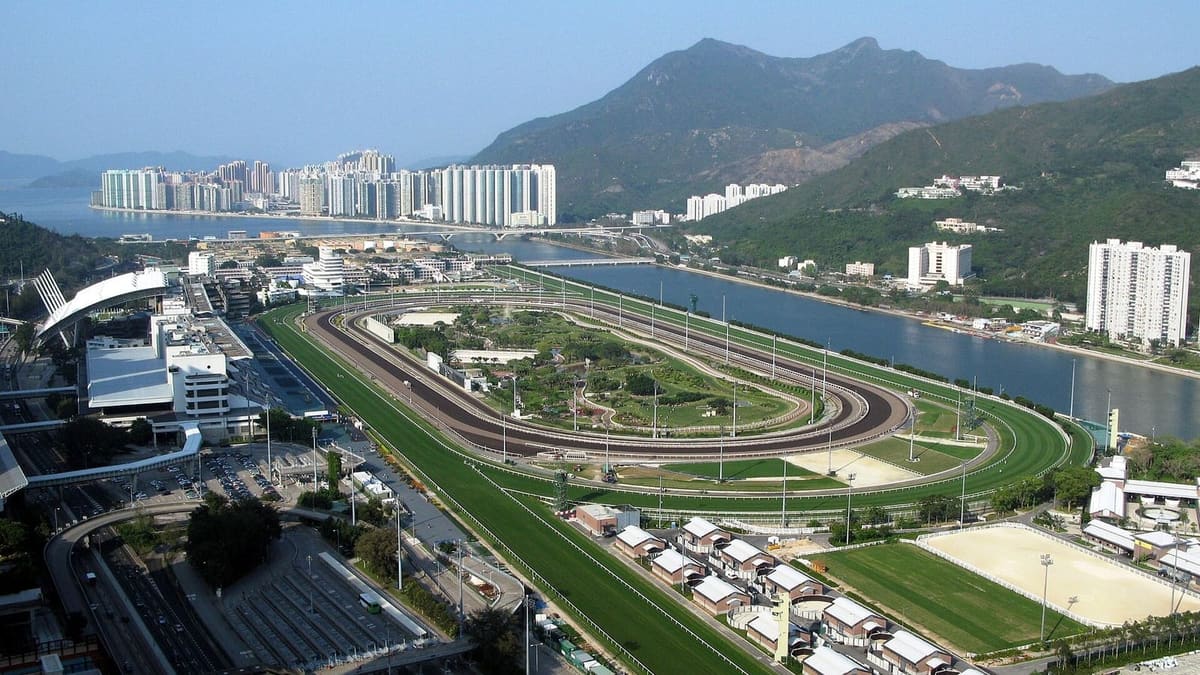

The Hong Kong International Sale is the Hong Kong Jockey Club's own auction of young, mostly unraced horses that the Club's agents buy overseas, import and educate before the sale. Only owners entitled to import a horse, such as permit holders, can bid. In 2026 it moved from its usual March slot to Friday 3 July because of quarantine complications: 16 horses sold for HK$76.2 million, an average of about HK$4.76 million (roughly US$610,000). The 2027 date was not confirmed when we checked (check official site). It is a good option for some owners. For many others, a privately bought PP or PPG, chosen from the whole world, is the better use of a hard-won permit.
Mr Lam (invented, 58, runs a shipping company, has waited three years for a permit) finally got one in June. He went to the sale in July with a catalogue, a pen and a firm limit. His Brother-in-Law Who Reads the Form in the Lift (also invented) went with him, to "help". Lot 2 sold for HK$9.2 million. Mr Lam's pen stopped working at about HK$5 million. So did his limit. So did the Brother-in-Law.
This guide is for Mr Lam before the next sale. It is also for permit holders and future applicants in Hong Kong, mainland China, Singapore and the Gulf who want to know what the sale is, what it costs, and what else they can do with a permit.
What is the Hong Kong International Sale?
The Club's own shop window. It buys young horses abroad, brings them to Hong Kong, educates them and sells them at auction to owners who can import a horse. It has run since 1995.
Hong Kong is a closed racing world. There is no breeding industry and no open market of local horses. Every new racehorse is imported, and an owner needs the Club's permission, a permit, to bring one in. The International Sale is one way to use that permit: instead of finding a horse yourself overseas, you buy one the Club has already sourced, imported and seen gallop at Sha Tin.
- Who sources the horses: buying agents appointed by the Club. In 2026 the Club named separate agents for the southern and northern hemispheres; reports say horses sourced in Europe by the new northern-hemisphere agent will first be offered at the 2027 sale.
- Where they come from: the 2026 catalogue of 22 horses came from Australasia, Europe and, for the first time in many years, South Africa.
- What buyers see: horses already in Hong Kong, educated, and breezed (galloped fast over a short distance) at Sha Tin before the sale. In 2026 the breeze was over 200 metres on 20 June.
- What the Club says it is for: the sale's executive manager told reporters it is "certainly not a profit-making exercise", and that it serves owners who do not have their own agent or trainer to source a horse.
That last line matters. The sale was built for owners without someone to search the world for them. If you do have someone, you have more choices.
Who can bid, and how do permits work?
Only owners entitled to import a horse. Reports say you need a valid import permit, such as a PP, PPG or replacement permit, or a place on the Club's relevant reserve, tender or auction lists. The Club sets the rules; check official site.
Permits are scarce. For 2026, reports say 792 applications went into the ballot for 460 owners' permits. A horse bought at the International Sale is often called an International Sale Griffin (ISG): an unraced horse bought through the Club's sale, rather than a PP (a horse that has already raced) or a PPG (an unraced horse you buy privately). How each permit type can be used is set by the Club; check official site.
| Route | What you buy | Who finds the horse | The Brother-in-Law says |
|---|---|---|---|
| International Sale (ISG) | A young horse already in Hong Kong, educated and breezed | The Club's buying agents | "It's already here. Let's buy two." |
| Private Purchase Griffin (PPG) | An unraced horse you choose overseas | You and your agent, worldwide | "Unraced? How do we know it's fast?" |
| Private Purchase (PP) | A horse with race form that meets the Club's import criteria | You and your agent, worldwide | "I've seen its races. In the lift." |
For the full permit picture, read Hong Kong PP and PPG permits explained.
What did horses sell for in 2026?
A lot more than in 2025. Sixteen horses sold for HK$76.2 million in 2026, against HK$45.1 million for 15 horses in 2025. The average rose to about HK$4.76 million and the median to HK$4.6 million. Past prices are not a forecast.
| Hong Kong International Sale | 2025 | 2026 |
|---|---|---|
| Date | March | Friday 3 July (moved from March) |
| Horses sold | 15 | 16 (22 catalogued) |
| Total | HK$45.1 million | HK$76.2 million |
| Average | About HK$3.0 million | About HK$4.76 million (roughly US$610,000) |
| Median | HK$2.6 million | HK$4.6 million |
| Top price | Not checked | HK$9.2 million (roughly US$1.18 million) |
Why the jump? More permits, more applicants, a sale held after the ballot this time, and a record crowd: reports said up to 800 owners and guests were expected, up from about 550. When many permit holders are chasing about twenty horses, prices do what prices do. The 2025 sale had been weak; the Club ordered a review afterwards, and six of 21 catalogued horses had been withdrawn before that sale on veterinary advice.
US dollar figures are approximate, at about HK$7.8 to the US dollar. For the cost of keeping a horse once it is yours, see what a racehorse really costs.
International Sale or your own PP or PPG: which is better?
Neither is always better. The sale is convenient and the horse is already in Hong Kong. A private purchase gives you the whole world to choose from, more control over price and type, and the chance to buy a horse with race form.
| International Sale | Private PP or PPG | |
|---|---|---|
| Choice | About 20 horses, chosen by the Club's agents | Sales and private sellers worldwide |
| Competition | Hundreds of permit holders in one room | Usually you and the seller |
| Import work | Already done | Your agent and the Club's process, with quarantine; plan for it |
| Form | Mostly unraced; you see an education and a breeze | A PP has real race form and a rating; a PPG is unraced |
| Price | Set by the room on the night | Negotiated, to your written limit |
| Timing | One evening a year (date set by the Club) | Any time the permit allows |
Our honest view: if you have no trainer, no agent and no time, the sale is a sensible, well-run option, and nobody should feel embarrassed buying there. If you want a horse with proven form, a particular type, or simply more choice than one evening allows, a private PP or PPG is usually the stronger plan. Many owners do both: they register for the sale and keep a private shortlist ready, so being outbid on the night is not the end of the season.
Our step-by-step guide to buying a PP or PPG from Europe or Australia this winter covers the private route, and the Hong Kong owners page explains how we work with permit holders.
The Silk Road Letter
Twice a month: the sales worth watching, what horses really cost, and the catalogue jokes nobody tells you. Free. Unsubscribe in one click.

If you buy at the sale: how to do it well
Treat it like any other auction: read everything, watch every breeze twice, ask your trainer, and set your limit in writing before you arrive. The room will be excited. You do not have to be.
- Check you are eligible. Confirm with the Club, in writing, that your permit or list position lets you bid at the next sale, and what you must sign beforehand (check official site).
- Register with the sale company well before you bid. Here, the sale company is the Club. Ask about deposits, payment terms and the conditions of sale.
- Watch the education and the breeze. A fast 200 metres is nice. How the horse moves, pulls up and behaves is often more useful. Ask for the videos and watch them on a big screen, not in a lift.
- Read the vet information. Ask what veterinary information is available on each lot, and have your own vet read it. Remember 2025, when six horses were withdrawn before the sale on veterinary advice.
- Talk to your trainer. Your trainer will train the horse, so ask which lots suit their style and which they would rather not have.
- Set a written limit, and a plan B. Decide your top price per lot and what you will do if you are outbid: wait a year, or use the permit privately.
Can an agent bid for you at the International Sale? Ask the Club; the rules are theirs (check official site). We can still help before and after: reading the catalogue, the videos and the vet information with you, and preparing a private shortlist in case the room gets carried away.
When is the 2027 sale, and what changes?
Not confirmed when we checked. The sale has usually been held in March; 2026 moved to July because of quarantine issues. Reports say European-sourced horses from the Club's new northern-hemisphere agent will first appear in 2027. Check official site.
Whatever the date, the useful work starts months earlier: knowing your permit, choosing a trainer, setting a budget in Hong Kong dollars, and deciding whether you will bid, buy privately, or keep both doors open. Our global owner's calendar lists the big international sales, and the Hong Kong International Races at Sha Tin in December are a good time to talk to trainers.
Who trains the horse?
A trainer licensed by the Hong Kong Jockey Club. We never train; we help you choose and we supervise the plan.
In Hong Kong, only Club-licensed trainers train, and stable places are limited, so your trainer must agree to take the horse. We work alongside your trainer and with our partner trainers abroad, where a PP or PPG may be found, vetted and prepared before it travels. You get plain reports by email.
The most common mistakes permit holders make
Spending a scarce permit in a rush, chasing the room, ignoring the vet information and having no plan B.
- Treating the sale as the only option. It is one option. The world is bigger than one Friday evening.
- Bidding with the room, not with the plan. 800 excited people do not pay your training bills.
- Choosing a horse before choosing a trainer. In Hong Kong, the trainer's yes comes first.
- Watching the breeze once. Watch it twice. Then watch the walk back.
- Forgetting the cost of keeping the horse. The price is the start, not the total.
- Taking the Brother-in-Law. Or at least taking his pen away.
A plain word before you buy
A Hong Kong permit is one of the hardest things in racing to get. Spend it as carefully as you got it. The International Sale is a convenient, well-organised way to buy a young horse already in Hong Kong. A private PP or PPG gives you more choice and more control. Both can be right. Rushing is never right.
We cannot promise a win, a rating or a price. Nobody honest can, and we never give betting tips. Owning a racehorse is a passion, not a way to make money. What we can promise is an honest view of your options, a careful worldwide search, independent vets, a written limit and plain reports by email.
Mr Lam now has a written limit, a plan B and a new pen. The Brother-in-Law has been given a very important job: holding the coats.
Use your Hong Kong permit well. Email us first.
Email us your permit type, your budget and your trainer. We will tell you plainly whether the International Sale or a private PP or PPG fits you, and if you go private, we source the best horses from all over the world, check them against the Club's criteria with independent vets, and negotiate to your written limit. Budgets from US$50,000.
Email info@silkroadbloodstock.com first, from anywhere in the world. Phone +971 52 311 2385 second (Dubai, GMT+4). WhatsApp as backup.
5% fee (min US$5,000), agreed in writing. You pay the seller directly; your money never goes through us. If we are ever paid by both sides, both are told in writing first.
Already own a horse, or want to sell one?
Licensed trainers train; we help you choose one from our partner trainers, place the horse and supervise the plan. Selling a horse that could suit a Hong Kong permit holder? We find the right buyer, worldwide.
Know a permit holder in Hong Kong or mainland China? Our introducer programme pays 20% of our fee on deals you introduce, paid from our fee and disclosed to the client in writing.
Related guides
- Hong Kong PP and PPG permits explained for owners
- Hong Kong owners: how to buy a PP or PPG from Europe or Australia this winter
- Keeneland November Breeding Stock Sale 2026: a guide for Gulf and Asian buyers
- Buying after the Breeders' Cup: the November-December sales 2026
- Racehorse vetting: what a vet check can and can't tell you
- Choosing a racehorse trainer: 12 questions to ask
The Silk Road Letter
Twice a month: the sales worth watching, what horses really cost, and the catalogue jokes nobody tells you. Free. Unsubscribe in one click.
Frequently asked questions
What is the Hong Kong International Sale?
An auction run by the Hong Kong Jockey Club of young, mostly unraced horses that the Club's own agents buy overseas, import to Hong Kong and educate before the sale. It is only for owners who are entitled to import a horse, such as permit holders. It was first held in 1995.
When is the 2027 Hong Kong International Sale?
At the time of writing the Club had not published a 2027 date that we could confirm. The sale is usually held in March, but the 2026 sale moved to Friday 3 July because of quarantine complications. Check the Hong Kong Jockey Club's official site.
What did horses sell for at the 2026 Hong Kong International Sale?
Sixteen horses sold for HK$76.2 million, an average of about HK$4.76 million and a median of HK$4.6 million, with a top price of HK$9.2 million, as reported by TTR AusNZ. In 2025, 15 horses sold for HK$45.1 million. Past prices are not a forecast.
Who can bid at the Hong Kong International Sale?
Reports say a bidder must hold a valid import permit, such as a PP, PPG or replacement permit, or be on the Club's relevant reserve, tender or auction lists. The exact rules are set by the Hong Kong Jockey Club, so check its official site before the sale.
How much does Silk Road Bloodstock charge?
5% of the purchase price, minimum US$5,000, agreed in writing before we start. Budgets from US$50,000. You pay the seller directly; your money never goes through us. If we are ever paid by both sides, both are told in writing first.
Spotted an error? Email info@silkroadbloodstock.com and we will fix it within 48 hours.
Sources
Checked 23 October 2026. The sale, its rules and the permit system are run by the Hong Kong Jockey Club and can change; always check its official website. Figures from news reports are as reported.
- TTR AusNZ, 5 July 2026 (2026 sale at Sha Tin: 16 sold, HK$76.2 million, average HK$4,762,500, median HK$4.6 million, top HK$9.2 million; 2025: 15 sold, HK$45.1 million)
- The Straight, 2026 (first held 1995; moved from March to July over quarantine; 792 applications for 460 permits; 22 horses from Australasia, Europe and South Africa; 200m breeze at Sha Tin on 20 June; up to 800 owners and guests; northern-hemisphere agent's European horses from the 2027 sale; "certainly not a profit-making exercise")
- Thoroughbred Daily News, "Quarantine issues delay Hong Kong International Sale" (originally set for Friday 6 March)
- South China Morning Post, 2026 sale report (HK$9.2 million top price)
- Thoroughbred Daily News, HKJC chief calls review of "disappointing" 2025 International Sale (six of 21 catalogued horses withdrawn on veterinary advice)
- TTR AusNZ, 3 July 2026 (bidders need a valid PP, PPG or replacement permit, or a place on the relevant reserve, tender or auction lists; 2026 sale moved from March to July over quarantine)
- HKJC, Previously Raced Horses (PP) Import Criteria
- Hong Kong Jockey Club, official racing site (International Sale, permits and owner information)