The Silk Road Journal · Selling · How to sell your racehorse series
Racehorse sale agreement: what to put in writing before the horse leaves
Most private sales that go wrong were never written down. Here are the twelve lines that stop a happy handshake turning into a long email chain.
A plain checklist for sellers and buyers. Faris and Auntie Mariam are invented. Facts are sourced at the end. Nothing here is legal advice: for a big sale, ask a racing solicitor to read the agreement first. No horse in this article is for sale.
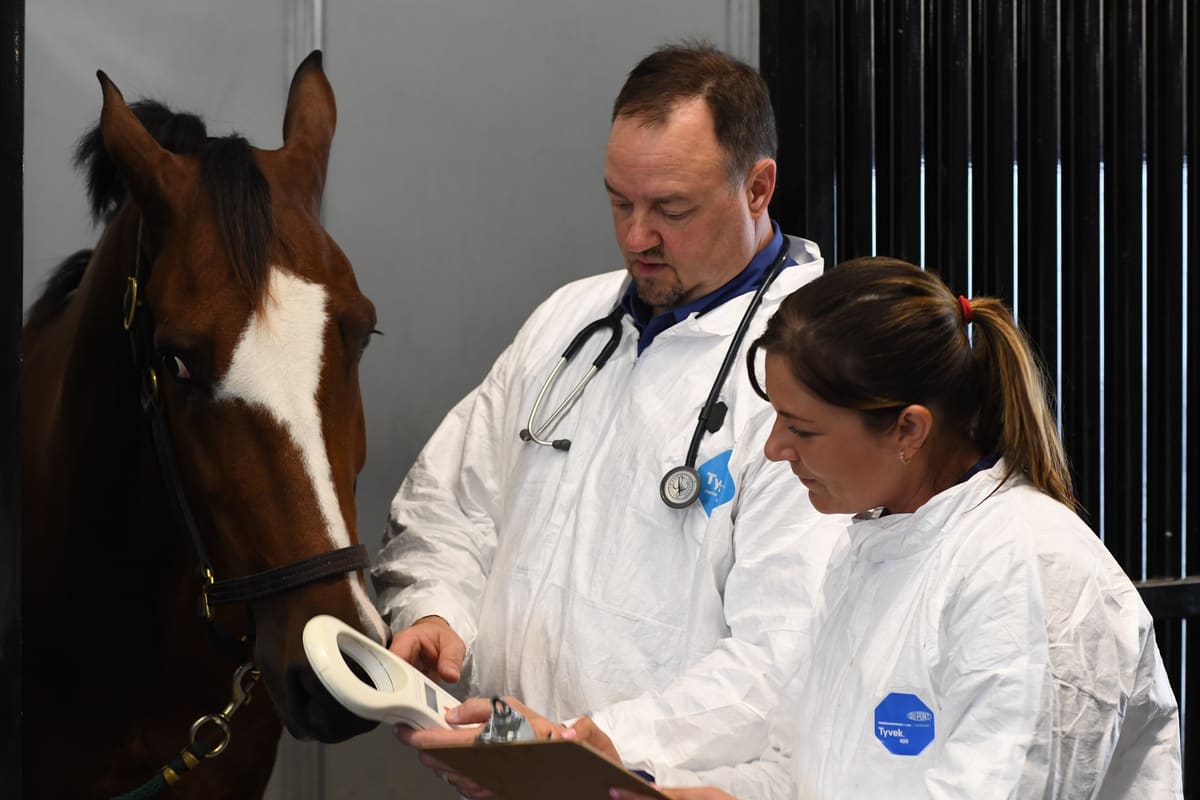

Always put a private racehorse sale in writing. The agreement names the seller, the buyer and the horse (name, passport or UELN, microchip), the price and currency, who pays for the vetting and transport, what the seller declares about the horse, when the money must arrive, when risk and ownership pass, and who completes the transfer of ownership. Take payment in full, cleared, before the horse or the passport leaves.
Faris (invented) sold a horse to a friend over coffee. The friend remembers a price "including transport". Faris remembers a price "plus transport". Auntie Mariam, who remembers everything, asks to see the paper. There is no paper.
Why a handshake is not enough
In a private sale almost every term is open to negotiation, so anything not written down is open to memory.
An auction gives you printed conditions of sale. A private sale gives you only what you and the buyer agree. Equine lawyer Milt Toby puts it simply: the seller and the buyer should sign a written bill of sale or purchase agreement every time a horse is sold. The Thoroughbred Breeders' Association and the ROA publish template agreements for leasing as a framework; for a sale, use a form your own lawyer is happy with.
The 12 lines every racehorse sale agreement needs
- The parties: full legal names and addresses of the seller (every registered owner, or the person allowed to sign for them) and the buyer.
- The horse: name, year of birth, sex, colour, passport or UELN number and microchip number.
- The price and currency: written in figures and words, and whether VAT applies.
- What the price includes: passport, tack, engagements already paid, transport, or none of these.
- Deposit: if any, how much, and when it is returned.
- Vetting: which vet the buyer uses, by what date, and what happens if the vet finds a problem.
- The seller's declaration: known injuries, operations, vices and medication, in plain words.
- Payment: amount, bank account of the registered owner, and the date it must be cleared.
- Delivery: where and when the buyer collects, and who pays for transport and insurance in transit.
- Risk: the exact moment the horse becomes the buyer's risk (and should be insured by the buyer).
- Transfer of ownership: who sends the passport and the form to the registering body, and by when.
- Agents and commissions: who is paid what by whom, so nothing is hidden.
Not ready for a full brief? Ask Sami one question.
Answer by email within 24 hours.
We use your email only to answer you. No newsletter unless you ask for it. Privacy. Prefer your own email app? info@silkroadbloodstock.com
What you say about the horse: declarations and warranties
Tell the truth in writing. An honest declaration sells faster than a glowing one and protects you later.
- Declare what you know: past injuries, surgery, wind operations, box-walking or crib-biting, and any recent medication.
- Let the buyer's vet do the rest. The buyer usually chooses and pays the vet. See our vet, X-rays and passport guide.
- Be careful with promises. "Will win in the Gulf" is a hope, not a term. Write facts (rating, race record from the official site), not forecasts.
Payment: how the money should move
Payment in full, cleared, to the registered owner's own bank account, before the horse or the passport leaves.
- Name the currency. A price in pounds, euros or dollars is three different prices by the time the money arrives.
- Never ask a buyer to pay, or agree to be paid, through a third party you do not know.
- When we introduce a buyer, the buyer pays you directly by bank transfer. Sale money never passes through us, and we invoice our fee only after ownership has transferred.
The Silk Road Letter
Twice a month: the sales worth watching, one buying tip and one real market number (plus the odd catalogue joke). Free with it: our 2026-27 sale calendar (PDF) and a one-page guide to what a racehorse really costs. We email a link to confirm first. Unsubscribe in one click.
Risk, insurance and the day ownership passes
Write down the moment the horse becomes the buyer's responsibility: on payment, on collection, or on a set date. Until then, keep your own insurance in place. From then on, the buyer's insurance should start. A horse that is injured in the box on the way home is a very bad time to discover that nobody agreed this.
Transfer of ownership: passport and registration
In Britain, Weatherbys records the change of ownership with the passport and its form; Retraining of Racehorses says a new owner must register with Weatherbys within 30 days.
Ireland and France have their own steps; see selling a horse out of training in the UK, Ireland and France. If the horse is exported, the buyer's country adds its own import papers, so agree who arranges and pays for them.
When an agent or trainer is involved
The Bloodstock Industry Code of Practice (Britain and Ireland, 2021) bans secret payments to agents, and lets an agent act for both buyer and seller only with prior informed consent in writing. Check your training agreement too: clause 22 of the ROA/NTF agreement lets the trainer charge a percentage of the sale price if a rate is written in. Put every fee in the agreement. Auntie Mariam insists. Auntie Mariam is right.
Selling privately? Email us first.
Send "SELL", the horse's name and where it is trained. We check the details against official records, agree the fee in writing, and introduce the horse only with your OK. The buyer pays you directly, and we invoice only after ownership has transferred.
Email info@silkroadbloodstock.com first, from anywhere in the world. Phone +971 52 311 2385 second. WhatsApp as backup.
Our selling terms: listing is free. We charge 5% of the final price (minimum US$5,000) only if the horse sells to a buyer we introduce, including through our website, within 6 months of that introduction. Nothing to pay if it doesn't sell. If we are ever paid by both sides, both are told in writing first. Our fee is paid by bank transfer or Western Union only. Full details: fees and process.
Are you the trainer?
You stay the owner's contact. If the horse sells to a buyer we introduce, you receive 20% of our fee, paid out of our fee and never added to the price, and the owner is told in writing. Terms for trainers.
Buying instead?
We buy for clients wherever they live and race, from the best sales and private sellers all over the world. 5% (min US$5,000), agreed in writing, and you pay the seller directly.
The "How to sell your racehorse" series
- How to enter a horse in a bloodstock sale
- How to sell a share in a racehorse
- How long does it take to sell a racehorse?
- How to sell a racehorse in training: auction, private or agent (the main guide)
- How much is my racehorse worth? (2026 guide)
- Selling a racehorse privately vs at auction
- Selling a horse out of training: costs, timing, paperwork
- Selling a racehorse to Gulf and Asian buyers
- Vet, X-rays and passport: what a buyer will ask the seller
- What does a bloodstock agent do? (And what 5% pays for)
Arabic edition: عقد بيع خيل السباق: ماذا تكتب فيه.
The Silk Road Letter
Twice a month: the sales worth watching, one buying tip and one real market number (plus the odd catalogue joke). Free with it: our 2026-27 sale calendar (PDF) and a one-page guide to what a racehorse really costs. We email a link to confirm first. Unsubscribe in one click.
Frequently asked questions
Do I need a contract to sell a racehorse privately?
You should always have one. In a private sale almost every term is negotiable, so a written bill of sale or purchase agreement is the only record of what was agreed.
What should a horse sale agreement include?
The parties, the horse's identity (passport or UELN and microchip), price and currency, what is included, vetting, the seller's declaration, payment, delivery, when risk passes, transfer of ownership, and every agent's or trainer's commission.
When should the buyer pay for the horse?
In full, cleared, into the registered owner's bank account before the horse or the passport leaves the seller.
Who pays for the vetting when a racehorse is sold?
Usually the buyer, who chooses the vet. The agreement should say which vet, by what date, and what happens if the vet finds a problem.
Who changes the ownership after a private sale in Britain?
The ownership change is recorded by Weatherbys with the passport and its form. Retraining of Racehorses says a new owner must register with Weatherbys within 30 days.
Spotted an error? Email info@silkroadbloodstock.com and we will fix it within 48 hours.
Sources
Checked 25 October 2026. Fees and rules change, so check the source before you decide. Nothing here is financial or legal advice, and no horse in this article is for sale.
- Milt Toby, JD, "Private Sales of Horses", TheHorse.com (everything in a horse sale is negotiable; a written bill of sale or purchase agreement every time)
- Thoroughbred Breeders' Association, Selling and Leasing (TBA/ROA template agreements as a framework)
- Bloodstock Industry Code of Practice (applies from 16 August 2021): secret payments banned, dual agency only with prior informed consent in writing
- ROA/NTF training agreement and notes, clause 22 (trainer's commission on sale)
- Retraining of Racehorses, change of ownership (register with Weatherbys within 30 days)
- Weatherbys, change of ownership