The Silk Road Journal · Selling · How to sell your racehorse series
Selling a racehorse privately vs at auction
The auction ring is a stage with a clock. A private sale is a quiet conversation with no clock at all. Both work. Here is how to choose without regretting it at dinner.
A light-hearted look at the horse world. Faris, Auntie Mariam and the Man Who Knew the Sire are invented. Facts are sourced at the end. Nothing here is financial, legal or veterinary advice, and no horse in this article is for sale.
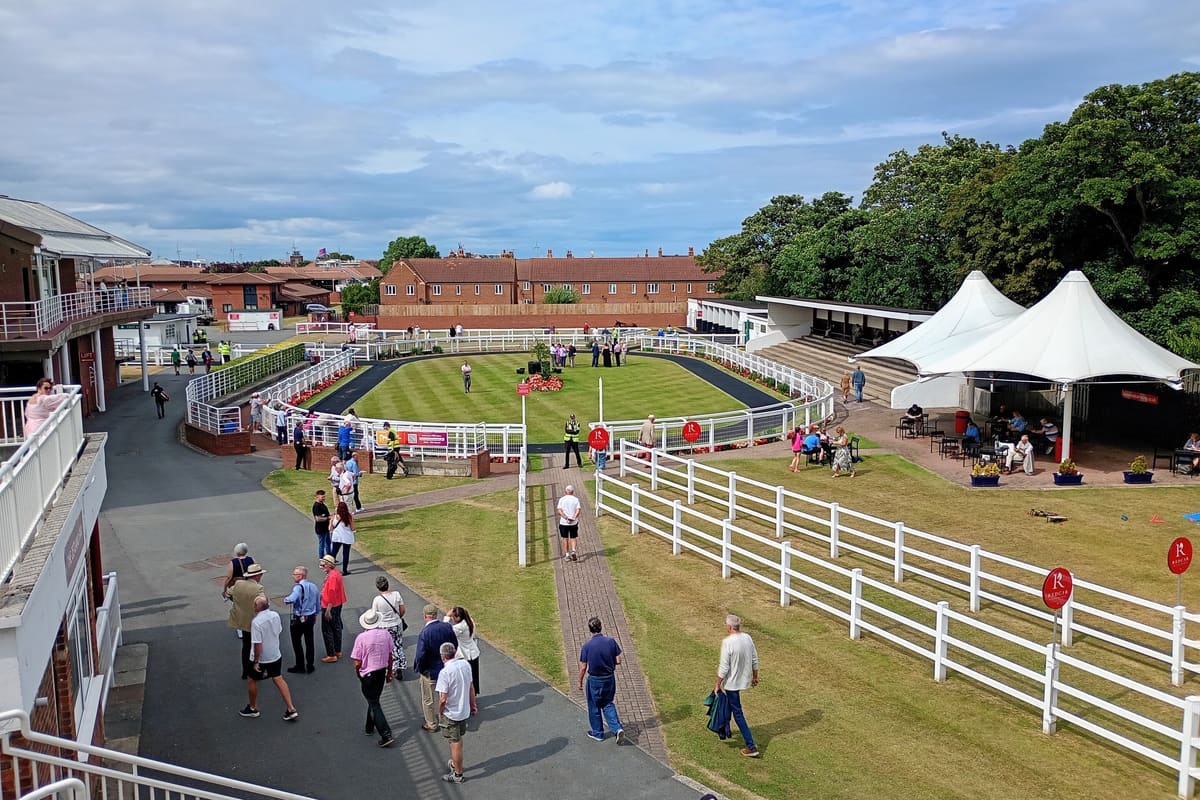

Sell at auction when your horse has fresh form, you want a fast, public price and the sale date suits you. Sell privately when you want no public result, the horse needs time or a specific type of buyer, or you live far from the sales. Auction costs an entry fee (about £640-£800 a lot at Tattersalls) plus commission, paid even if the horse does not sell. A private sale has no entry fee, but you or an agent must find the buyer and handle the contract.
Faris (invented) has two advisers. The Man Who Knew the Sire wants an auction: "Let the market decide." Auntie Mariam wants a private sale: "Let me decide." Both are right, just not about the same horse.
Private sale or auction: the side-by-side
Each route trades money for time, or time for privacy.
| Question | Live auction | Online auction | Private sale |
|---|---|---|---|
| Cost if not sold | Entry fee (about £640-£800 at Tattersalls) | Small entry fee (GoffsGo £49) | Nothing with us; your time if alone |
| Cost if sold | Vendor commission (5% at Tattersalls) + VAT | 1.5% (GoffsGo); ThoroughBid: buyer pays 5% | Agent's fee if you use one (ours: 5%, min US$5,000) |
| Result public? | Yes, including "not sold" | Yes | No |
| Speed | Fixed date, entries close weeks before | Fast: bidding runs about a day | Weeks to months |
| Buyers | Whoever is in the ring that day | Registered online bidders | Buyers you or your agent reach, worldwide |
| Vetting | Short pre-bid check; X-ray repository | Vet certificate, online repository | Full private vetting by the buyer's vet |
| Money | Sale company collects | Platform collects | Written contract; paid before the horse and passport leave |
Fees are from each sale company's published notices and change every year, so read the current one before you enter.
When does an auction win?
- Fresh form. A horse that ran well last week is easiest to sell to a crowd.
- Price discovery. If nobody knows what the horse is worth, competition finds out.
- A wide audience on one day. The 2025 Tattersalls Autumn Horses in Training Sale drew buyers from more than 30 countries.
- A deadline. The hammer falls on a set day. Some sellers need that.
The catch: if the bidding stops below your reserve, the horse goes home with a public "not sold" next to its name and the entry fee spent. In 2025, about 13 in every 100 horses offered at that sale went home unsold.
When does a private sale win?
- Privacy. No public price, and no public "not sold".
- A horse that needs explaining. A long break, a change of trip, a minor vet finding with a good answer. A conversation explains; a sales ring does not.
- The right buyer is not in the ring. Gulf and Asian owners often buy through the winter, when their own seasons run. They rarely all fit in one sales ring on one Tuesday.
- You live far away. An owner in Dubai, Hong Kong or New York cannot easily manage entries, inspections and collection in Newmarket.
The catch: it can take longer, and you or your agent must find the buyer, check the money and write the contract. Auntie Mariam enjoys contracts. Most people do not.
The Silk Road Letter
Twice a month: the sales worth watching, one buying tip and one real market number (plus the odd catalogue joke). Free with it: our 2026-27 sale calendar (PDF) and a one-page guide to what a racehorse really costs. We email a link to confirm first. Unsubscribe in one click.
Are online auctions the middle way?
Often, yes. They are cheaper to enter, faster, and still public.
GoffsGo lists a £49 entry and 1.5% vendor commission, only if sold. Tattersalls Online has a smaller entry fee than its live sales (£160 + VAT in its June 2026 notice) with commission if sold. On ThoroughBid, the vendor keeps the full hammer price and the buyer pays 5%. For a lower-priced horse, these can cost less than any agent, including us. We say so openly.
What rules apply to agents in a private sale?
In Britain and Ireland, the Bloodstock Industry Code of Practice (2021) bans secret payments to agents. An agent may act for both buyer and seller only with prior informed consent, in writing.
- Ask every agent who pays them, how much, and whether anyone else pays them on the same horse.
- Get the fee in writing before any buyer sees the horse.
- Check your training agreement. Clause 22 of the British ROA/NTF agreement lets a trainer charge a percentage of the sale price if a rate is written in, whether or not they helped.
Our terms: listing is free, 5% (minimum US$5,000) only if the horse sells to a buyer we introduce, and if we are ever paid by both sides, both are told in writing first.
The private sale checklist
- An honest description, weak points included, with recent video and race replays.
- Papers ready: passport, proof of ownership, who can sign. See our vet, X-rays and passport guide.
- The buyer's vet examines the horse. The buyer usually pays.
- A written agreement: price, currency, what is included, who pays transport, when ownership passes.
- Payment in full, cleared, before the horse or the passport leaves.
- Transfer of ownership with the passport-issuing body (in Britain, Weatherbys).
One route we do not recommend: Facebook groups. Meta's commerce policies ban person-to-person animal sales on Marketplace and in buy-and-sell groups, so posts get removed and accounts restricted.
My horse was bought back at auction. Can I sell it privately now?
Usually, once you are free to. Some sale companies handle offers on unsold horses for a set time: Arqana, for example, says it takes private offers on bought-back horses for 10 days after its sales. Read your own sale's conditions or ask the sale office before you agree anything elsewhere.
Faris chose private. The Man Who Knew the Sire says the market decided. Auntie Mariam says she did. The horse, as usual, said nothing and ate.
Private or auction? Ask us first.
Send "SELL", the horse's name and where it is trained. We tell you honestly which route we would choose for that horse, and why. Listing is free, and nobody sees your horse without your written OK.
Email info@silkroadbloodstock.com first, from anywhere in the world. Phone +971 52 311 2385 second. WhatsApp as backup.
Our selling terms: listing is free. We charge 5% of the final price (minimum US$5,000) only if the horse sells to a buyer we introduce, including through our website, within 6 months of that introduction. If we are ever paid by both sides, both are told in writing first. Full details: fees and process.
Are you the trainer?
You stay the owner's contact. If the horse sells to a buyer we introduce, you receive 20% of our fee, paid out of our fee and never added to the price, and the owner is told in writing. Terms for trainers.
Buying instead?
We buy for clients wherever they live and race, from the best sales and private sellers all over the world. 5% (min US$5,000), agreed in writing, and you pay the seller directly.
Horse not sold at the Horses in Training sale? Our After-the-Sale Desk replies within 24 hours.
The "How to sell your racehorse" series
- How to sell a racehorse in training: auction, private or agent (the main guide)
- How much is my racehorse worth? (2026 guide)
- Selling a horse out of training: costs, timing, paperwork
- Selling a racehorse to Gulf and Asian buyers
- Vet, X-rays and passport: what a buyer will ask the seller
- What does a bloodstock agent do? (And what 5% pays for)
The Silk Road Letter
Twice a month: the sales worth watching, one buying tip and one real market number (plus the odd catalogue joke). Free with it: our 2026-27 sale calendar (PDF) and a one-page guide to what a racehorse really costs. We email a link to confirm first. Unsubscribe in one click.
Frequently asked questions
Is it better to sell a racehorse privately or at auction?
Auction suits horses with fresh form when you want a fast, public price. A private sale suits sellers who want no public result, horses that need explaining, and owners who live far from the sales.
How much does it cost to sell a racehorse at auction?
At a Tattersalls live sale, an entry fee of about £640-£800 a lot plus 5% vendor commission and VAT. The entry fee is paid even if the horse does not sell. Online auctions are cheaper: GoffsGo lists £49 plus 1.5% if sold.
Can an agent take money from both the buyer and the seller?
In Britain and Ireland, the Bloodstock Industry Code of Practice allows it only with prior informed consent in writing, and secret payments are banned. Always ask every agent who pays them.
Can I sell my horse privately after it was not sold at auction?
Usually yes, once you are free to sell. Some sale companies handle offers on unsold horses for a set time after the sale, so check your sale's conditions first.
Can I sell my racehorse on Facebook?
Meta's commerce policies ban person-to-person animal sales on Marketplace and in buy-and-sell groups, so posts can be removed and accounts restricted.
Spotted an error? Email info@silkroadbloodstock.com and we will fix it within 48 hours.
Sources
Checked 25 October 2026. Fees and rules change, so check the source before you decide.
- Tattersalls, Autumn Horses in Training Sale statistics (2025: 1,157 offered, 1,009 sold)
- TrueNicks, "Tattersalls HIT sale concludes with steady trade", 31 October 2025 (aggregate, average, median, buyers from 30+ countries, chairman's comments)
- Tattersalls Cheltenham April 2026 sale notice (entry fee £800)
- Tattersalls Newmarket July 2024 sale notice (entry fee £640, withdrawal fee)
- Tattersalls Online June Sale 2026, sale information notice (entry £160 + VAT, 5% vendor commission, vet certificate within 14 days)
- GoffsGo help page (£49 entry, 1.5% vendor commission)
- Racing Post on ThoroughBid (vendor keeps the hammer price, buyer pays 5%)
- Arqana buyer information (private offers on bought-back horses for 10 days)
- ROA: Bloodstock Industry Code of Practice (2021): secret payments banned, dual agency only with prior informed consent
- ROA/NTF training agreement and notes, clause 22 (trainer's commission on sale)
- Oversight Board decision on Meta's animal-sale policy