The Silk Road Journal · Buying · Hong Kong
Hong Kong Racing Calendar 2026-27: the Dates That Matter to an Owner
Racegoers want to know when the next Wednesday night at Happy Valley is. Owners need a different calendar: when a new horse can arrive, settle and actually run before the season ends in July. Here are both.
Email Sami your brief: answer within 24 hoursOr call +971 52 311 2385
Facts are sourced at the end and were checked on 25 October 2026. No betting tips, nothing here is financial, tax or legal advice, and no horse in this article is for sale.
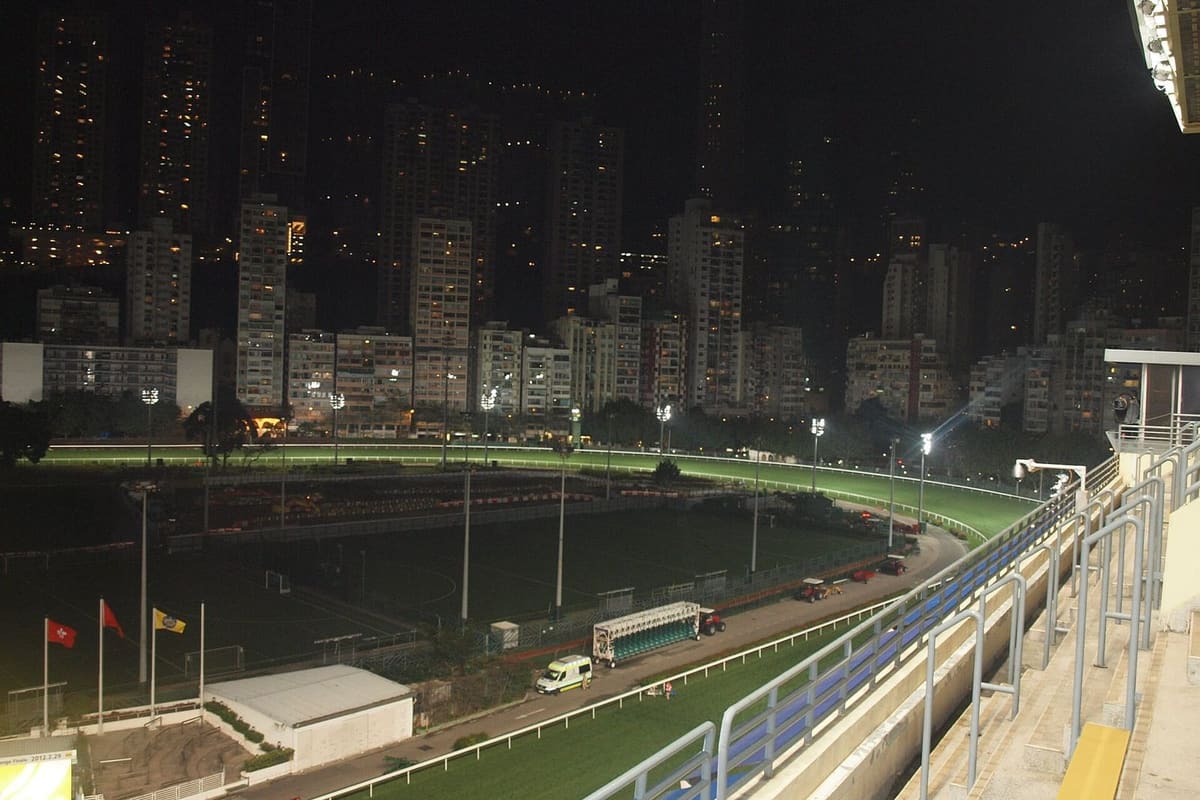

The 2026-27 Hong Kong season has 88 race meetings: 49 at Sha Tin and 39 at Happy Valley, made up of 40 day, 7 twilight and 41 night meetings. It opened at Sha Tin on Sunday 6 September 2026 and runs to July 2027. The two international days are the LONGINES Hong Kong International Races on Sunday 13 December 2026 and FWD Champions Day on Sunday 25 April 2027. For an owner, the key fact is the clock: a horse bought abroad this winter needs quarantine, travel and settling time, so it should be bought by about February to have a real spring campaign.
When does the Hong Kong racing season 2026-27 start and end?
It started on Sunday 6 September 2026 at Sha Tin and runs to July 2027. Hong Kong races from September to July, then stops for the summer.
The Hong Kong Jockey Club (HKJC) runs every meeting. The 2026-27 programme, as reported when the Club published it in August 2026:
| 2026-27 season | What was published |
|---|---|
| Opening day | Sunday 6 September 2026, Sha Tin (Happy Valley opened on Wednesday 9 September) |
| Meetings | 88: Sha Tin 49, Happy Valley 39 |
| Type | 40 day, 7 twilight, 41 night (Happy Valley is almost all night racing) |
| LONGINES Hong Kong International Races | Sunday 13 December 2026, Sha Tin (the season's 29th meeting) |
| FWD Champions Day | Sunday 25 April 2027, Sha Tin (the 66th meeting) |
| BMW Hong Kong Derby | Usually mid-March (the 2026 Derby was on 22 March 2026); 2027 date: check official site |
| Last meeting | July 2027; exact date: check official site |
The full day-by-day fixture list, race cards and any changes are on the Club's own racing site. Fixtures can move for weather (typhoons are a real thing here), so always check the official list before you book a flight.
Why does the calendar matter more to an owner than to a racegoer?
Because every Hong Kong racehorse is imported, and import takes months. The calendar tells you when you must buy, not just when you can watch.
Hong Kong has no breeding industry and no open local market. Every new horse comes from abroad, and an owner needs a permit from the Club's yearly ballot to bring one in: a PP (a horse that has already raced) or a PPG (an unraced horse). The 2026 ballot issued 460 permits, 120 PP and 340 PPG, and the reserve lists were published on 4 June 2026. If permits are new to you, read Hong Kong PP and PPG permits explained first.
So the real owner's calendar looks like this:
- June: ballot results and reserve lists. The permit is the starting gun.
- June to February: the buying window that matters. The big European sales (Tattersalls in October and December, Arqana, Goffs) and the Australian market are all in play. Our step-by-step guide to buying a PP or PPG this winter covers this.
- After purchase: vet checks against the Club's criteria, export paperwork, pre-export quarantine, the flight and arrival quarantine (the Hong Kong rules are set by the AFCD and the Club). Plan in months, not weeks.
- Settling and trials: a new horse rarely runs the week it lands. Your trainer decides when it is ready.
- Spring: the four-year-old Classic series ends with the Derby in March, Champions Day is 25 April, and the season closes in July.
Buy in November and you may have a spring campaign. Buy in May and you may be buying a horse for next season, paying for the summer first.
The Silk Road Letter
Twice a month: the sales worth watching, one buying tip and one real market number (plus the odd catalogue joke). Free with it: our 2026-27 sale calendar (PDF) and a one-page guide to what a racehorse really costs. We email a link to confirm first. Unsubscribe in one click.
Not ready for a full brief? Ask Sami one question.
Answer by email within 24 hours.
We use your email only to answer you. No newsletter unless you ask for it. Privacy. Prefer your own email app? info@silkroadbloodstock.com
What does a Hong Kong season cost an owner?
The horse is the big number. The keep is predictable: the Club caps the basic livery fee at HK$30,000 a month, and each new import carries a HK$100,000 payment.
| Line | Hong Kong dollars | Roughly |
|---|---|---|
| Basic livery fee (capped from 2025) | HK$30,000 a month, HK$360,000 a year | US$3,827 a month (about HK$30,000, S$4,890, ¥600,000, RM15,628) |
| Club import payment, per new horse | HK$100,000 (reported; it goes to the retired racehorse programme) | US$12,755 |
| Our buying fee | 5% of the price, minimum US$5,000 | On a US$300,000 horse: US$15,000 (about HK$117,600, S$19,170, ¥2.35 million, RM61,260) |
Vets, farriers, transport and insurance come on top; ask your trainer for a written estimate before you buy. For a five-country comparison, see racehorse ownership costs in 2027.
Currency lines are approximate, at mid-market rates on 25 October 2026 (1 US$ = about HK$7.84, S$1.28, ¥157, RM4.08). We quote our fee in US dollars, in writing.
Which race days matter most in 2026-27?
For owners buying abroad: the December international day, the spring Classic series and Champions Day. They show which kind of horse wins in Hong Kong, and which kind travels.
The Hong Kong International Races on 13 December bring horses from Europe, Japan and beyond for four Group 1 races at Sha Tin. They also fall the week after the Tattersalls December Mares Sale (30 November to 2 December 2026), which is a useful reminder that the buying and the racing calendars overlap. FWD Champions Day in April is the second international day. Between them, the Derby series in March is where four-year-olds that came in as PPGs, or as PPs from Europe and Australia, show what they are.
Watching these days with a pen is the cheapest education in Hong Kong racing: note the distances, the ratings the winners carried when they arrived, and where they were bought.
What timing mistakes do new Hong Kong owners make?
Buying too late in the season, choosing a horse before a trainer agrees to take it, and forgetting that summer is not racing time.
- Treating the permit as the finish line. It is the start. The clock runs from June.
- Shopping before your trainer says yes. Stable places are limited; the trainer's agreement comes first.
- Buying in late spring for "this season". Quarantine and settling time often push the first run into the next season.
- Ignoring the rating rules. A PP has to meet the Club's import criteria; check them for 2026-27 before you fall in love.
- Reading the calendar like a punter. You are not choosing a night out. You are choosing a horse's year.
A plain word before you buy
We cannot promise a win, a rating, a permit or a price. Nobody honest can, and we never give betting tips. Owning a racehorse is a passion, not a way to make money. What we can promise is an honest view of your options, a careful worldwide search, independent vets, a written limit and plain reports by email. Licensed trainers train; we help you choose one and supervise the plan.
Ready to talk about a horse? Email us first.
Email us your budget, where you want to race and when. We reply within 24 hours. If it fits, we source the best horses from all over the world, check them with independent vets and negotiate to your written limit. Budgets from US$50,000.
Email info@silkroadbloodstock.com first, from anywhere in the world. Phone +971 52 311 2385 second. WhatsApp as backup.
5% fee (min US$5,000), agreed in writing. You pay the seller or sale company directly, by bank transfer; your money never goes through us. If we are ever paid by both sides, both are told in writing first.
Already own a horse, or want to sell one?
Selling a horse that could suit a buyer in Asia or the Gulf? We find the right buyer, worldwide, and the fee is paid only if it sells.
Related guides
- Hong Kong International Races 2026
- How to own a racehorse in Hong Kong
- Japanese racehorses for sale
- Malaysia horse racing 2026-27
- Macau horse racing: what happened
- Hong Kong PP and PPG permits explained · Singapore owners after Kranji · Buying a European racehorse from Japan
The Silk Road Letter
Twice a month: the sales worth watching, one buying tip and one real market number (plus the odd catalogue joke). Free with it: our 2026-27 sale calendar (PDF) and a one-page guide to what a racehorse really costs. We email a link to confirm first. Unsubscribe in one click.
Frequently asked questions
When does the Hong Kong racing season 2026-27 start?
The 2026-27 season opened at Sha Tin on Sunday 6 September 2026, with the first Happy Valley meeting on Wednesday 9 September. It runs until July 2027; check the Hong Kong Jockey Club's official fixture list for the exact last day.
How many race meetings are there in the 2026-27 Hong Kong season?
88 meetings: 49 at Sha Tin and 39 at Happy Valley. They are made up of 40 day meetings, 7 twilight meetings and 41 night meetings, as published by the Hong Kong Jockey Club in August 2026.
When are the Hong Kong International Races 2026?
The LONGINES Hong Kong International Races are on Sunday 13 December 2026 at Sha Tin, the 29th meeting of the season. FWD Champions Day, the second international day, is on Sunday 25 April 2027.
When should I buy a horse to race in Hong Kong this season?
As early as the permit allows. Every horse is imported, and vetting, export, quarantine, the flight and settling take months. A horse bought by around February has a realistic chance of a spring campaign; a horse bought in late spring is often a horse for next season.
How much does Silk Road Bloodstock charge?
5% of the purchase price, minimum US$5,000, agreed in writing before we start. Budgets from US$50,000. You pay the seller directly; your money never goes through us.
Spotted an error? Email info@silkroadbloodstock.com and we will fix it within 48 hours.
Sources
Checked 25 October 2026. Rules, fees and dates are set by each racing authority and sale company and can change; always check the official site. Figures from news reports are as reported. Past prices are not a forecast.
- iRace, 14 August 2026: 88 race meetings set for the 2026-27 season (Sha Tin 49, Happy Valley 39; 40 day, 7 twilight, 41 night; HKIR Sunday 13 December 2026, 29th meeting; FWD Champions Day Sunday 25 April 2027, 66th meeting; September 2026 to July 2027)
- People's Daily Online, 8 September 2026: Hong Kong season opening at Sha Tin
- The Standard (Hong Kong): HKJC 2026-27 season opening
- Wikipedia: Hong Kong Derby (run in mid-March; 2026 edition on 22 March 2026 at Sha Tin)
- Hong Kong Jockey Club: horse import permit ballot
- HKJC Racing News, 28 February 2025: ownership boosts (livery fee cap, horses per owner)
- HKJC: Previously Raced Horses (PP) import criteria
- AFCD (Hong Kong government): import of horses