The Silk Road Journal · Sport horses
Buying a Showjumper or Dressage Horse in Europe, from Anywhere in the World
Studbooks, trial rides, X-rays, passports, flights and quarantine. And the one question that saves the most money: "Who else is being paid on this deal?"
A light-hearted guide. Faris, Auntie Mariam, the Man Who Knew the Sire and the Vet Who Says "Hmm" are invented. Facts are sourced at the end. This is not veterinary, legal or import advice: always check with your own vet and the authorities in your country.
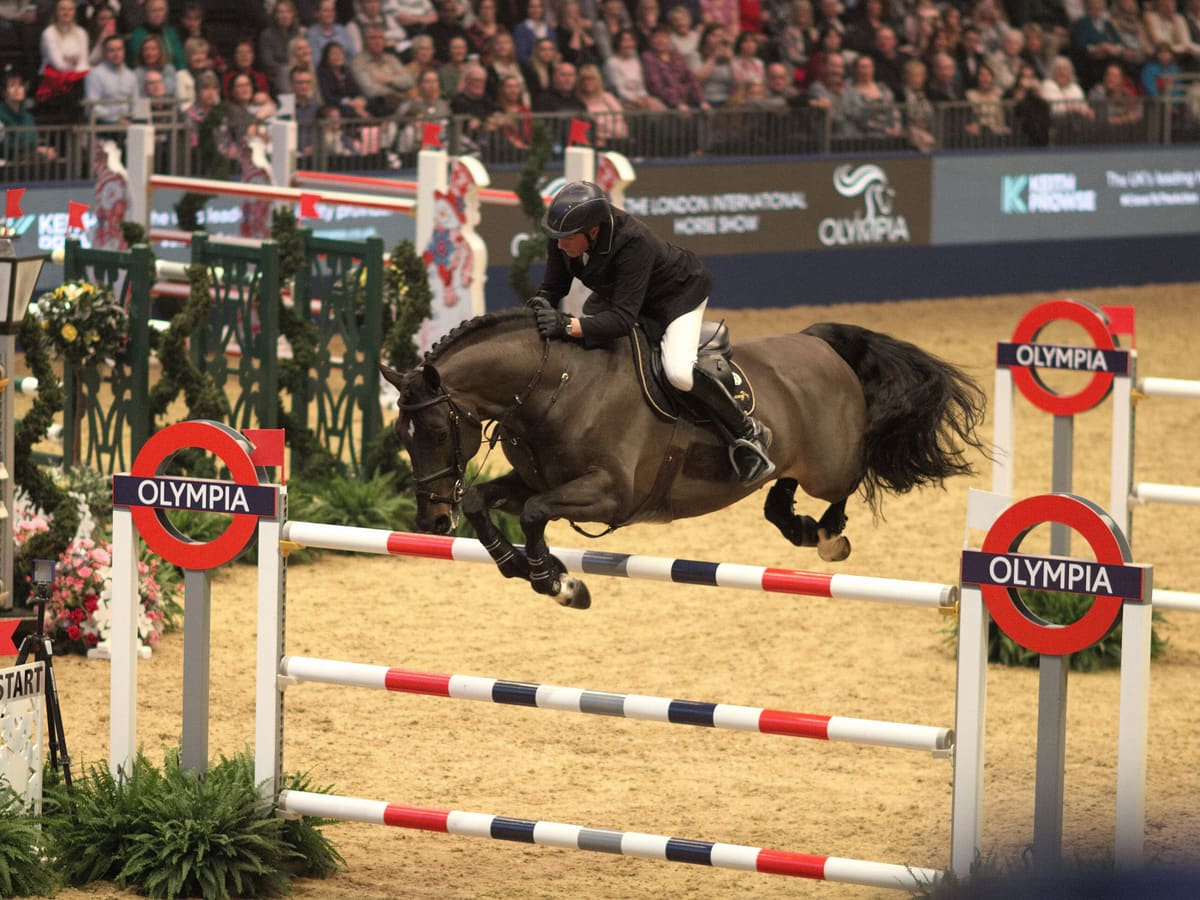

To buy a showjumper or dressage horse in Europe from abroad: set a clear goal and budget, shortlist horses from recognised studbooks, see each one jump or work (on video, then ridden by someone you trust), book an independent vet with X-rays, check the passport and FEI papers, and plan the flight and quarantine before you pay. Agree every fee in writing.
If racing has three dinner guests, the Thoroughbred is the athlete who leaves before dessert, the Arabian is the poet, and the sport horse is the engineer. The engineer arrives on time, measures the table and asks why the chairs are not level. Buying one should be just as precise. It rarely is.
Faris learned this last spring. He runs a family business, owns a spreadsheet for everything, and has a daughter who has jumped 1.20 m on a borrowed horse and now wants her own. "One warmblood," Faris announced in the majlis. "Something sensible." The Man Who Knew the Sire put down his coffee. "I know a man in Holland," he said. Every majlis has someone who knows a man in Holland. Auntie Mariam opened a new notebook.
Why buy a sport horse in Europe?
Because that is where most of the world's leading sport horse studbooks are. In the 2025 WBFSH studbook rankings, the French Selle Français led show jumping for a third year in a row, and the Dutch KWPN led dressage.
Behind KWPN in dressage came Oldenburg, Hanoverian, Danish Warmblood and Westfalen. In jumping, four German studbooks made the top 10: Holsteiner, Oldenburg Springpferde, Westphalian and Hanoverian. The Belgian BWP won the jumping title in 2021 and 2022.
So Europe has depth, choice and a great many horses at every level. It also has a great many people who will tell you their horse is the one. Choice is wonderful. Choice without a plan is how Faris ended up with 41 videos on his phone by Tuesday.
KWPN, Hanoverian, Holsteiner, BWP: which studbook should I choose?
Choose the horse, not the studbook. A studbook tells you where a horse is registered and something about its family. It does not tell you whether this horse suits this rider. Rankings measure results across thousands of horses; you are buying one.
| Studbook | Country | WBFSH ranking notes |
|---|---|---|
| KWPN (Royal Dutch Warmblood) | Netherlands | 1st in dressage |
| Selle Français | France | 1st in show jumping, third year running |
| Oldenburg | Germany | 2nd in dressage; Oldenburg Springpferde in jumping top 10 |
| Hanoverian | Germany | 3rd in dressage; in jumping top 10 |
| Holsteiner | Germany | In jumping top 10 |
| BWP (Belgian Warmblood) | Belgium | Jumping title in 2021 and 2022 |
The papers show the sire and dam lines, and they are worth reading. But the Man Who Knew the Sire will read them aloud as if they were a poem, and pause meaningfully at every name. Pedigree is a clue. The horse's own record, movement and attitude are the evidence.
What kind of horse do I need for my level?
Start with the rider, not the horse. Write down who will ride it, at what height or test level, how often, and for how many years. Then buy for the rider you have today, with a little room to grow.
- The amateur's partner (often called a "schoolmaster"). An older, experienced horse that has done the job many times. Usually safer and more forgiving. Expect closer vetting questions because of the miles it has done.
- The young prospect. A 4- to 6-year-old with good movement and a good jump, but no record yet. Cheaper than the finished article, with more risk and years of work by a professional rider and coach ahead.
- The proven horse for international classes. A horse already placing at the level you want. You are paying for a record you can check, which is the most honest thing in this market.
Faris's first list contained a 4-year-old "who will be Grand Prix", a 15-year-old "who has done everything", and a horse whose main selling point was its colour. Auntie Mariam asked one question: "Which of these can my niece ride on Saturday?" Two names were crossed out.
How do I try a horse when I live abroad?
In stages. First ask for recent, unedited videos of the horse jumping or working, ideally a full round or a full test, not a highlights reel. Then a live video call. Then a trial ride by the rider who will own it, or by a professional rider or coach you trust.
Ask to see the horse:
- tacked up, groomed and loaded by its usual handlers, then by your person;
- jumping a course, or riding a full test, not just one perfect fence;
- on two different days, if you can, ideally once without a long warm-up.
For horses that compete internationally, the FEI database shows registered horses and their FEI results. Compare that record with the sales video. If the video shows a horse flying over 1.50 m and the record shows mostly smaller classes, ask why, kindly.
Horse's Diary, Day 1: A human filmed me jumping the same fence nine times. On the ninth I did it beautifully. That is the one they kept. I ate.
What should a pre-purchase vetting include for a sport horse?
Book your own independent vet, never the seller's. The British Horse Society says to "use your own, or an independent vet" and that it is "strongly advised not to use the seller's vet". For a sport horse, most buyers add X-rays.
In the UK, both the 2-stage and the 5-stage vetting include walk and trot with flexion tests and lungeing on hard and soft ground, where safe. A flexion test means the vet holds a leg bent for a short time, then watches the horse trot away. The 5-stage adds ridden exercise, a rest and a final trot-up. A blood sample is usually taken and stored for about six months.
X-rays are extra, and the views vary by country. In Germany, a new X-ray guideline came into force on 1 April 2026, raising the standard set for sound warmbloods aged 3 and over from 18 views to 22. Ask your vet which views suit the horse's job, and who will read them if the horse is in another country.
Then there is the Vet Who Says "Hmm". He looks at the X-rays the way a jeweller looks at a stone, and says nothing for a long time. "Hmm" is the most expensive word in English, and the cheapest one to hear before you sign. Ask what it means for this rider and this job. Our full guide to vetting explained covers what a vet check can and cannot promise.
A vetting is an opinion on one day. It is not a guarantee of future soundness, results or ribbons.
The Silk Road Letter
Twice a month: the sales worth watching, what horses really cost, and the catalogue jokes nobody tells you. Free. Unsubscribe in one click.
What papers does a sport horse need: passport, microchip and FEI ID?
Every horse needs its national passport with a matching microchip. To compete at FEI events outside its home country, it also needs an FEI passport, or an FEI recognition card wrapped around an approved national passport. A horse may only have one official identification document.
The FEI's own guidance says a horse must be microchipped to get either document, and British Equestrian notes they are issued by national federations and must be revalidated every four years. Identification, vaccination record and document validity are checked at every FEI event.
Before you pay, your vet should check that the chip reads the same number as the passport, and that the markings drawn in the passport match the horse. This sounds obvious. It is also the one check that cannot be fixed with a nice video. Auntie Mariam checks the chip number twice, then once more, out loud.
If the horse will compete for a new country or a new rider, ask both national federations early about registration and transfers. Paperwork is the one thing in this sport that never refuses a fence; it simply takes a long time to arrive at it.
How much does a showjumper or dressage horse cost?
It depends on age, training, record, health and the level the horse has proven. There is no reliable public price list for private sport horse sales, so we do not quote invented ranges. Proven international horses cost far more than young prospects.
Budget for more than the price. Add the vetting and X-rays, transport to the airport, the flight, quarantine, insurance, import permits and fees, and the agent's fee. Then add a little more for whatever the Man Who Knew the Sire forgot to mention. Cost-Meter so far: horse, vet, flight, quarantine, insurance, Auntie Mariam's patience. It only moves one way.
Send us your goal and budget and we will tell you honestly what it buys today, and when the answer is "not that horse". Our full cost guide covers yearly running costs too.
How do I ship a horse from Europe to the Gulf, Asia, the USA or Australia?
By air, through a specialist horse shipper, with the import rules of your country met before the horse leaves. The rules differ a lot by destination, and they change. Always check the official source for your country before you agree a delivery date with the seller.
- USA: for EU countries such as Italy, USDA APHIS lists a 3-day federal import quarantine, plus extra CEM testing for mares and stallions from CEM-affected countries. Geldings are exempt from CEM rules, which makes them simpler to import.
- Australia: horses must complete pre-export quarantine at an approved facility, then at least 14 days of post-arrival quarantine, mostly at the government facility at Mickleham, Victoria.
- UAE: an import permit from the Ministry of Climate Change and Environment, a government health certificate, and tests and vaccinations set by the ministry. Other Gulf countries have their own rules.
- Asia: each country sets its own permits, tests and quarantine. Ask the shipper and the local authority before you sign anything.
The horse will fly business class in all but name, with a groom, and arrive with better air miles than its owner. Faris has made peace with this. Our worldwide page explains how we work with clients in each region.
Why do commissions matter so much in sport horse buying?
Because hidden and double commissions have a long, documented history in this market. A 2012 Practical Horseman Q&A said US commissions of 10% to 15% were standard, sometimes on both sides, and that less reputable agents "do sometimes draw secret commissions" or act for buyer and seller at once.
The same article notes that Florida, California and Kentucky have laws on horse sales that forbid dual agency without the written consent of both sides. The Chronicle of the Horse has written about price padding, where the buyer pays more than the seller ever receives and nobody explains the gap.
This is the moment for the Mariam Audit. Auntie Mariam reads the invoice aloud. "Price of horse. Fee to agent. Fee to the agent's friend. 'Arrangement fee.' What arrangement?" Silence follows. It is always the same silence.
Here is how we work, in plain words:
- Our buying fee is 5% of the price, minimum US$5,000, agreed in writing before we start.
- You pay the seller directly. Your money never goes through us, so there is no gap to pad.
- If a seller ever offers us a fee, you are told in writing first, before you decide.
- You see the seller's price, the vet's report and every invoice yourself.
Licensed coaches and professional riders ride and produce the horses; we find, check, negotiate and report. Our fees and process page has a worked example, and what a bloodstock agent does explains what the 5% pays for.
Your sport horse buying checklist
| Step | What to ask for | Red flag |
|---|---|---|
| Goal | Rider, level, years, budget, written down | "We will see when we see it" |
| Videos | Unedited, recent, full round or test | Highlights only, music on |
| Record | FEI or national results | Video and record tell different stories |
| Trial | Your rider, or a professional you trust | "No trial, many people are interested" |
| Vet | Your own independent vet, X-rays, flexions | "Use our vet, it is quicker" |
| Papers | Passport, chip match, FEI document | "The passport is at the other yard" |
| Shipping | Import rules checked for your country | Delivery date before the permit |
| Money | Fees in writing, pay the seller directly | Payment to a third party "for speed" |
Is buying a sport horse from abroad a good idea?
It can be, if you treat it as the purchase of a partner for a rider, not a trophy. The right horse is the one that suits the person who rides it, passes an independent vet for its job, has papers that match, and arrives legally and safely in your country.
Owning a sport horse is a passion, not a way to make money. Nobody can promise results, ribbons or a resale price, and you should be wary of anyone who does. What good preparation does is remove the avoidable surprises: the horse that only goes well for its own rider, the X-ray question nobody asked, the passport that does not match, the fee nobody mentioned.
Faris did buy his daughter a horse in the end. It was not from the man in Holland. It was an experienced, quiet gelding with a long record at the right height, a clean vetting, a passport that matched its chip, and an invoice Auntie Mariam read once and approved. The engineer at the dinner table would have nodded.
Want help buying a showjumper or dressage horse in Europe?
We help clients in the Gulf, Asia, the USA, Australia and everywhere else find the best sport horses in Europe, with trial rides by professional riders, independent vets and shipping planned before you pay. Email us the rider, the level, the budget and where you live.
Email info@silkroadbloodstock.com first, from anywhere in the world. Phone +971 52 311 2385 (UAE) second. WhatsApp as backup.
5% fee (min US$5,000), agreed in writing. You pay the seller directly; your money never goes through us. If a seller ever offers us a fee, you are told in writing first.
Selling a showjumper or dressage horse?
List it free, wherever it lives. You pay 5% only if it sells to a buyer we introduce (including through our site), within 6 months of the introduction.
Related guides
- Vetting explained: what a vet check can and can't tell you
- What does a bloodstock agent do? (And what 5% pays for)
- Meet Sami Adham, our bloodstock agent
- How we work with clients worldwide
- Fees and how we work
The Silk Road Letter
Twice a month: the sales worth watching, what horses really cost, and the catalogue jokes nobody tells you. Free. Unsubscribe in one click.
Frequently asked questions
Which studbook is best for show jumping or dressage?
There is no single best one. In the 2025 WBFSH rankings, Selle Français led show jumping for a third year and KWPN led dressage. Judge the horse in front of you, not only the papers.
Can I buy a sport horse in Europe without flying there?
Yes, with care. Use videos, live video calls, a trusted rider to try the horse for you, and an independent vet that you choose. We arrange this for clients worldwide.
What papers does a showjumper need to compete abroad?
For FEI events outside its home country, an FEI passport or an FEI recognition card on an approved national passport, a microchip and a valid vaccination record. Ask your national federation.
What does Silk Road Bloodstock charge to buy a sport horse?
5% of the price, minimum US$5,000, agreed in writing. You pay the seller directly. If a seller ever offers us a fee, you are told in writing first.
Spotted an error? Email info@silkroadbloodstock.com and we will fix it within 48 hours.
Sources
Checked 22 October 2026.
- The Irish Field, "Breeding the table toppers" (2025 WBFSH show jumping studbook ranking, 17 October 2025)
- Eurodressage, KWPN tops 2025 WBFSH studbook ranking for dressage
- British Horse Society, pre-purchase veterinary examination (independent vet, flexion tests, X-rays extra, blood stored six months)
- Examion, new German X-ray guideline for pre-purchase exams (1 April 2026, 18 to 22 views)
- FEI, What is an FEI passport / FEI recognition card?
- British Equestrian, FEI passports (microchip, revalidation every four years)
- FEI database (registered horses and results)
- USDA APHIS, importing horses from Italy (EU): 3-day quarantine, CEM rules, geldings exempt
- Australian Government, importing live horses (pre-export quarantine, minimum 14 days post-arrival, Mickleham)
- Australian Government MICoR, UAE horses (import permit from the UAE Ministry of Climate Change and Environment, health certificate)
- Practical Horseman, "How does the horse sale commission system work?" (27 April 2012)
- The Chronicle of the Horse, "Dishonest deal: price padding, hidden commissions and dual agency"